Scotland has introduced legally binding bird flu prevention measures across the entire country following an increase in infections among wild birds and domestic poultry. The emergency biosecurity rules took effect at 12 noon on Tuesday, 10 November 2026, placing new obligations on commercial poultry producers, smallholders and people keeping birds at home.
The Scottish Government has declared the whole country an Avian Influenza Prevention Zone (AIPZ) after veterinary surveillance identified a heightened risk of highly pathogenic avian influenza entering poultry flocks from infected wild birds, particularly during the autumn migration period.
The declaration applies throughout mainland Scotland, the Highlands and Islands, regardless of whether an outbreak has been confirmed locally. It will remain in force until ministers amend or revoke it.
The measures do not constitute a general order requiring all poultry to be housed indoors. Birds can continue to use outdoor areas where the prescribed safeguards are followed. However, owners must prevent contact with wild birds and protect feeding areas, drinking water and housing from contamination.
The distinction matters for Scotland’s free-range poultry industry and the thousands of households keeping small numbers of chickens, ducks or geese. The legal obligations are not limited to commercial farms.
Six Outbreaks Confirmed Across Great Britain
The decision follows six confirmed outbreaks of avian influenza in kept birds across Great Britain during the current October-to-April disease season. Two have occurred in Scotland and four in England.
Scotland’s first confirmed outbreak of the season was identified on 2 October at Ness on the Isle of Lewis, where the highly pathogenic H5N5 strain was detected in a backyard flock.
Authorities imposed protection and surveillance restrictions around the affected premises. Those local restrictions were lifted on 5 November following cleansing, disinfection and mandatory surveillance.
A second Scottish outbreak was confirmed on 2 November at an egg-producing premises near Biggar in the Scottish Borders. Laboratory testing identified the H5N1 strain, prompting the establishment of a three-kilometre protection zone and a 10-kilometre surveillance zone.
Unlike the Lewis restrictions, the Biggar disease-control zones remained in force when the new national measures were introduced. Bird keepers within these local zones face additional controls, including restrictions on movements of poultry, eggs, manure and other potentially contaminated materials.
The Scottish Government also reported that nine of 65 dead wild birds tested across Great Britain since 21 October had returned positive results for avian influenza. Of the birds tested, 56 came from England, eight from Scotland and one from Wales.
Those figures represent birds submitted for surveillance testing, rather than an estimate of infection rates across the wild bird population.
Veterinary authorities have also identified an increase in poultry outbreaks across Europe, particularly in Belgium, Germany and Norway. These developments have heightened concern about the potential for infected migratory birds to introduce the virus into previously unaffected areas.
The Scottish Government’s updated outbreak guidance, issued on 10 November, assesses the risk of highly pathogenic H5 influenza in wild birds as high. It assesses the risk of exposure for poultry and other captive birds across Great Britain as medium where biosecurity is inadequate and low where stringent precautions are followed.
What Bird Owners Are Now Legally Required to Do
The legal declaration goes considerably further than general advice to maintain clean poultry houses.
Under the Avian Influenza and Influenza of Avian Origin in Mammals (Scotland) Order 2006, keepers must take appropriate and practicable precautions against transmission of the virus between premises.
Outdoor poultry areas must be fenced to contain the birds. Ducks and geese must be kept separately from other poultry, including in outdoor areas, subject to specified exceptions such as zoos.
Access to ponds, watercourses, waterlogged ground and other exposed water sources must be prevented through suitable fencing or netting. Drinking water, feed and bedding must be protected from wild birds and rodents, while feeding must take place indoors or beneath covered structures designed to discourage wild birds.
Footwear must be cleaned and disinfected when entering and leaving areas occupied by birds, or changed between designated areas. Disinfectant foot dips must be provided at appropriate entry and exit points.
Keepers must also inspect buildings for holes, damaged roofs, leaking gutters and other defects that might allow contaminated water, wild birds or rodents to enter. Problems identified during inspections must be repaired without undue delay.
Movements of people, vehicles and equipment into poultry areas must be limited to essential purposes, including animal care, egg collection, necessary movements of birds and official inspections.
The declaration additionally requires records of certain visitors, vehicles and movements of birds or eggs. These obligations extend beyond the largest commercial businesses.
For holdings containing more than 500 poultry, further measures apply. These include enhanced hygiene barriers, restricted access, thorough disinfection of vehicles and equipment, and detailed records of bird numbers, illness, deaths, feed consumption and egg production.
Larger operators must report specified abnormal changes in flock health and productivity. The declaration identifies thresholds including mortality at least three times the normal daily rate and reductions exceeding five per cent in egg production or feed and water consumption.
Failure to comply with the declaration may constitute an offence under Section 73 of the Animal Health Act 1981. The declaration specifies penalties on summary conviction of up to six months’ imprisonment, a level-five fine on the standard scale, or both.
Scotland Reintroduces Controls Lifted in June
The nationwide order marks the return of measures that had been withdrawn at the beginning of summer.
Scotland’s previous Avian Influenza Prevention Zone was revoked at noon on 4 June 2026, when ministers concluded that the prevailing veterinary evidence no longer justified national restrictions.
Five months later, renewed detections and the approaching winter have prompted their reintroduction.
The Scottish Government’s Chief Veterinary Officer, Sheila Voas, has emphasised that the immediate concern is the threat to captive birds rather than a widespread danger to human health.
She said migratory birds were increasing the risk of the virus entering domestic flocks and described strict biosecurity as the most effective protection available.
For farmers, the consequences of infection can be substantial. When highly pathogenic avian influenza is confirmed at a poultry premises, the government’s disease-control policy requires the affected flock to be culled. Movement controls and veterinary investigations can also affect neighbouring businesses.
This explains why even a small backyard outbreak can have consequences beyond the premises where the virus was first detected.
The Wider Threat to Scotland’s Wild Birds
Avian influenza is not confined to the agricultural sector.
Scotland’s seabird colonies have already experienced major losses from highly pathogenic avian influenza, particularly during outbreaks between 2021 and 2023.
In August 2026, NatureScot reported that the disease had caused a 22 per cent decline in Scotland’s northern gannet population during 2022, with substantially greater losses at some individual colonies.
At Sula Sgeir, off the Western Isles, the estimated decline associated with avian influenza was between 23 and 41 per cent.
These losses demonstrate the virus’s wider ecological significance. Infections among wild birds threaten vulnerable populations directly, while also creating opportunities for transmission into domestic flocks through contaminated water, droppings, equipment and the surrounding environment.
The new prevention zone is directed primarily at poultry and other captive birds. It does not impose equivalent restrictions on Scotland’s free-living wild bird populations.
What the Public Should Do
Public Health Scotland continues to assess the risk from avian influenza to the general population as very low.
Food Standards Scotland also considers the food safety risk to consumers very low. Properly cooked poultry, poultry products and eggs remain safe to eat.
People should avoid touching sick or dead wild birds.
The Scottish Government advises reporting a single dead bird of prey, swan, goose, duck or gull, or five or more dead wild birds of other species found together, through the official UK dead-wild-bird reporting service.
Bird keepers should watch for sudden or unexplained deaths, swelling around the head, discoloured combs, breathing difficulties, loss of coordination, reduced feed consumption and a significant fall in egg production.
Suspected avian influenza in captive birds must be reported immediately to the Animal and Plant Health Agency. A veterinary investigation and laboratory testing are required to establish whether the disease is present.
Bird owners must also comply with the separate Scottish Kept Bird Register requirements, which generally apply even to people keeping a single bird. Registration is free and details must be updated at least annually. Limited exemptions exist for certain birds, including parrots and finches kept without outdoor access.
The national prevention zone will be reviewed as veterinary authorities assess the developing winter situation. Any future decision to introduce compulsory housing across Scotland would require an additional legal measure.
For now, the priority is to prevent an infection circulating in wild birds from entering domestic flocks, while maintaining surveillance and additional restrictions around confirmed outbreaks.
Sources
Avian Influenza Prevention Zone — Official Announcement. Scottish Government, 10 November 2026.
https://www.gov.scot/news/avian-influenza-prevention-zone-3/
Avian Influenza Prevention Zone: Declaration and Legal Annex. Scottish Government, 10 November 2026.
https://www.gov.scot/publications/avian-influenza-prevention-zone-all-scotland/
Avian Influenza (Bird Flu) Outbreaks and Current Risk Levels. Scottish Government, updated 10 November 2026.
https://www.gov.scot/publications/avian-influenza-outbreaks/
Avian Flu Near Biggar, Scottish Borders (AIV 2026/22). Scottish Government, 2 November 2026.
https://www.gov.scot/publications/avian-flu-bird-flu-near-biggar-scottish-borders-aiv-2026-22/
Avian Flu: Ness, Isle of Lewis (AIV 2026/20). Scottish Government, updated 5 November 2026.
https://www.gov.scot/publications/avian-flu-bird-flu-ness-isle-of-lewis-aiv-2026-20/
Avian Influenza: How to Spot and Report the Disease. Scottish Government, updated 26 October 2026.
https://www.gov.scot/publications/avian-influenza-bird-flu/
Scottish Kept Bird Register. Scottish Government, registration guidance current November 2026.
https://www.gov.scot/publications/avian-influenza-bird-flu/pages/register-your-birds/
Guidance for Public Health Management of Zoonotic Influenza in Scotland. Public Health Scotland, Version 1.2, 6 February 2026.
https://www.publichealthscotland.scot/publications/guidance-for-public-health-management-of-zoonotic-influenza-in-scotland/
Latest Guga Hunt Statement: Avian Influenza and Gannet Population Evidence. NatureScot, 3 August 2026.
https://www.nature.scot/latest-guga-hunt-statement
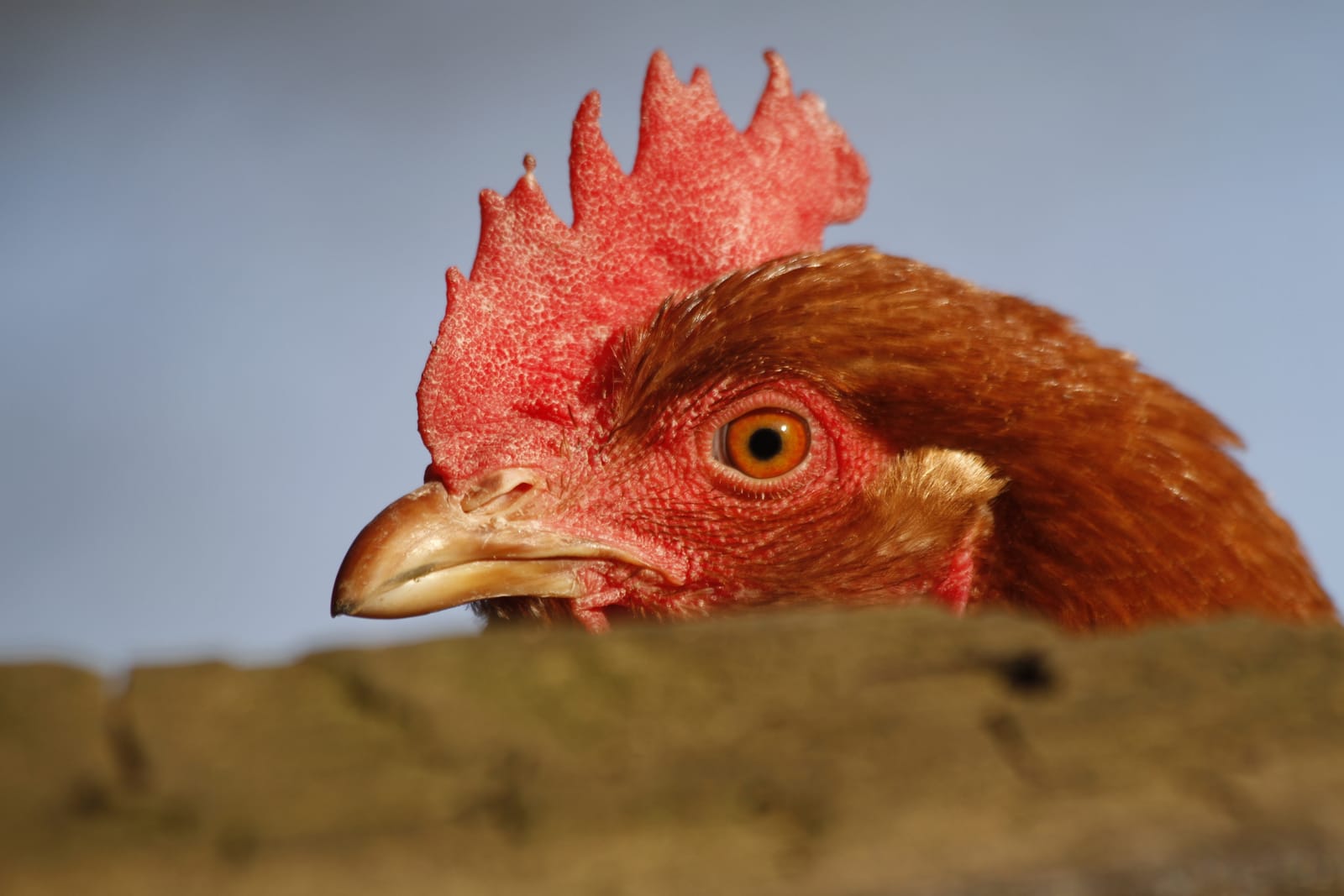
Free Range Chickens — Photograph and Reuse Licence. AcornToOak, Wikimedia Commons, 22 February 2023.
https://commons.wikimedia.org/wiki/File:Free_Range_Chickens.jpg