
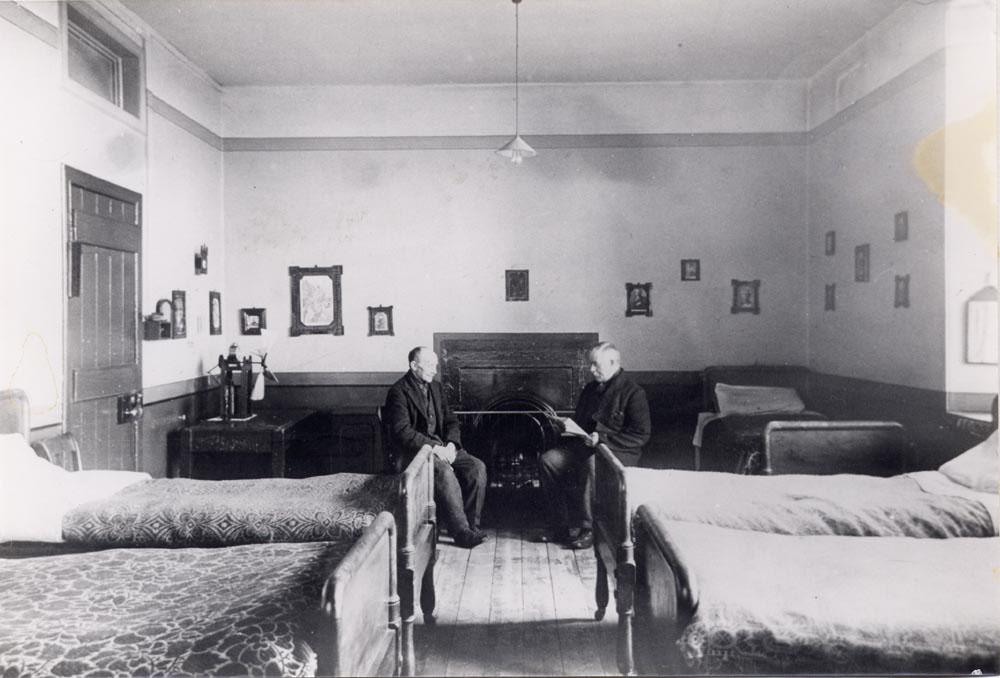
In February 1850, the Scottish Board of Supervision issued a detailed rulebook governing the lives of people who entered Scotland’s poorhouses. It specified what they could eat, when they must rise, how they would be dressed, where their children would sleep and what punishments could be imposed for disobedience. Adults could be confined alone for certain offences, milk could be withheld as punishment, and children could be physically disciplined with an approved rod.
The regulations were intended for institutions housing some of Scotland’s most vulnerable people: the elderly, the sick, disabled adults, orphans and families unable to support themselves. They also reveal how closely poverty, personal conduct and public assistance had become connected in nineteenth-century Scottish administration.
What makes the document particularly revealing is that its authors did not regard strict discipline simply as a means of maintaining order. They wanted the poorhouse itself to help authorities decide who genuinely required assistance.
The Board explained that a properly regulated institution could test the claims of applicants whose circumstances were considered doubtful. To achieve that purpose, its discipline had to be sufficiently restrictive to discourage people whom officials believed capable of supporting themselves.
The surviving regulations provide an unusually detailed account of the conditions Scotland’s authorities considered appropriate for the poor. They also expose the considerable distance between the charitable system admired by some eighteenth-century commentators and the tightly regulated institutions that developed during the Victorian period.
Before the Poorhouse: The Kirk, the Parish and the Poor
Scotland’s arrangements for supporting the poor developed over several centuries. The first parliamentary measures dealing with begging and destitution appeared in 1424, when the authorities began formally distinguishing between people considered capable of working and those unable to maintain themselves.
That distinction continued to shape Scottish welfare for generations. People who could work were generally expected to support themselves, while assistance was directed principally towards the elderly, infirm, sick and orphaned.
Following the Scottish Reformation of 1560, responsibility for poor relief increasingly rested with individual parishes. Kirk sessions, working alongside local landowners known as heritors, administered funds collected for those in need.
The money came from church collections, donations, charitable bequests and various fees and fines. In some parishes, landowners made voluntary contributions rather than accept a compulsory assessment on property.
Assistance was usually provided without requiring the recipient to enter an institution. This was known as outdoor relief and might consist of money, oatmeal, clothing, fuel or other necessities.
The system was local, and the amount available depended partly on the resources and decisions of each parish.
The surviving records show how closely such arrangements could be connected with individual circumstances. In 1782, the kirk session at Cleish in Fife recorded assistance for an elderly parishioner named Margaret Henderson. Recognising her age and infirmity, the session authorised a weekly allowance of one shilling.
The following winter, when severe shortages of meal and grain threatened local families, the same kirk session and the heritors agreed to advance money from the poor fund to help purchase food for distribution at reduced prices.
Such entries preserve the names and circumstances of people whose lives might otherwise have left little trace in Scotland’s written history. They also show that relief could be provided within the community rather than through institutional accommodation.
A System Once Admired by Political Economists
During the late eighteenth and early nineteenth centuries, Scotland’s poor relief arrangements attracted favourable attention from some political economists and parliamentary observers.
Writing in 1792, James Anderson contrasted the Scottish system with the more elaborate statutory arrangements operating in England. He believed that Scotland’s reliance on parish responsibility and charitable support offered advantages over a system increasingly shaped by compulsory assessments and formal administration.
In 1818, the General Assembly of the Church of Scotland provided evidence about Scottish poor relief for parliamentary consideration. English politicians examining their own Poor Laws regarded the Scottish experience as potentially instructive.
Yet contemporary admiration did not establish that Scottish poverty was adequately relieved everywhere.
By the early nineteenth century, industrialisation, economic depression and changes in traditional employment were placing increasing pressure on the parish system. Families dependent on trades such as handloom weaving could find their livelihoods undermined by changing markets and machinery.
As the number of people seeking assistance increased, the resources of individual kirk sessions were often insufficient.
A Royal Commission appointed in 1843 investigated the Scottish arrangements and published its findings in 1844. Its conclusions challenged the favourable picture presented by earlier commentators.
The commissioners found that allowances were frequently inadequate and sometimes failed to provide even the basic necessities of life. In some parishes, the level of assistance depended more on the money available to the kirk session than on the actual needs of the person receiving it.
These findings helped establish the case for reform.
The Poor Law of 1845 Changes the System
On 4 August 1845, Parliament passed the Poor Law (Scotland) Act, introducing a new framework for administering public relief.
The legislation established parochial boards responsible for assistance within their respective parishes and created a central Board of Supervision to oversee the system.
Inspectors of the Poor were responsible for examining applications and determining whether claimants qualified for assistance. Parochial boards were required to maintain records of those receiving relief, while the central authority could examine aspects of their administration.
The reform did not abolish outdoor relief or require every Scottish parish to establish a poorhouse. Assistance could continue to be provided to people living in their own homes.
Nor did Scotland simply adopt the English workhouse system introduced under the Poor Law Amendment Act of 1834.
One fundamental difference concerned eligibility. In Scotland, able-bodied people who were unemployed were generally excluded from statutory poor relief. Assistance was principally intended for those unable to maintain themselves because of age, disability, illness or other recognised incapacity.
Another difference was that poorhouse construction remained optional. Larger parishes, or combinations of parishes with a population exceeding 5,000, could establish institutions with the approval of the Board of Supervision.
These institutions were intended to accommodate people whose needs could not be met adequately through assistance at home. They also gave local authorities a place in which applicants whose claims were disputed could be offered relief under institutional conditions.
The distinction between a Scottish poorhouse and an English workhouse was therefore important in law, even though both developed systems of strict institutional discipline.
Why the Authorities Wanted Stricter Rules
The circular accompanying the 1850 regulations provides a revealing explanation of the change in official attitudes.
Before the reforms, the Board observed, many poorhouses had operated more like almshouses. Their residents were generally elderly, infirm or without relatives able to care for them. Admission was regarded as charitable assistance, and the arrangements could be comparatively informal.
Residents sometimes enjoyed weekly opportunities to leave the institution, visit friends or spend small amounts of money earned through work. Relatives could visit, bringing tobacco or other permitted comforts.
The Board even recalled an early petition from male poorhouse residents complaining that their weekly pocket-money allowance was too small.
However, the authorities believed that the new legal framework had changed expectations. As applicants became more aware of their rights and the means of challenging decisions, parochial boards faced increasing pressure to provide assistance.
The Board feared that some claims might be exaggerated or made by people who had other means of support.
Its answer was to use the poorhouse as a test of eligibility.
The circular argued that strict discipline could discourage those who were not genuinely entitled to assistance. It expressly contemplated conditions sufficiently restrictive to be “more irksome than labour” for those whom officials considered undeserving.
That passage is important because it identifies the purpose behind the rules. The restrictions were not solely administrative arrangements for feeding and housing large numbers of people. They were also intended to influence the decision to seek assistance in the first place.
At the same time, the Board expressly rejected a universal requirement that every poor person enter a poorhouse. It recognised that outdoor relief remained appropriate for many people and that attempting to force all applicants into institutions would be unacceptable.
Entering the Poorhouse: A Name, a Medical Examination and a Change of Clothes
Under the regulations issued on 2 February 1850, admission required written authorisation from an Inspector of the Poor or another properly appointed official.
An applicant could not simply arrive and take possession of a bed. The admission order had to be current, generally issued within the preceding three days, although longer periods were permitted for people travelling from more distant locations.
Once admitted, the person’s name, religious persuasion and other required particulars were entered in a register.
New arrivals were initially placed apart from the established residents until examined by the medical officer. Those found to be suffering from illness could be directed to a sick ward, while others were assigned to accommodation according to the institution’s classification system.
Before joining the other inmates, residents were required to be thoroughly washed and dressed in poorhouse clothing.
The clothes they had worn on arrival were cleaned, recorded and placed in storage, with their owner’s name attached. The regulations specified that these belongings were to be returned when the person left.
Residents could also be searched for prohibited articles when admitted or returning from temporary leave.
The arrangements reflected contemporary concerns about hygiene and infectious disease, but they also placed clothing, personal possessions and daily movement under institutional control.
Families Could Enter Together but Live Apart
The 1850 regulations divided inmates into five principal groups: men over fifteen, boys between two and fifteen, women over fifteen, girls between two and fifteen, and children under two.
Separate accommodation and yards were to be assigned to the different classes wherever the building allowed.
Residents were generally required to remain within their designated sections without communicating with other groups, subject to exceptions authorised for medical care, nursing and institutional duties.
The practical consequence was that members of the same family could be housed in different parts of the building.
A mother, father and older children admitted together would not necessarily sleep, eat or spend their days together. Their separation followed the institution’s age and sex classifications rather than the ordinary arrangements of family life.
Nevertheless, the regulations did not make every family separation permanent or prohibit all contact without exception. The extent of separation depended on the institution’s accommodation and the arrangements authorised by its management.
Adult inmates who were not themselves dependants could generally request discharge and leave after twenty-four hours’ notice. Children and dependent inmates were subject to additional consent requirements, while adults responsible for dependants were ordinarily required to take them when leaving.
Admission to a poorhouse was therefore not the same as imprisonment, but residence involved substantial restrictions on personal freedom and family contact.
The Bell That Controlled the Day
For residents considered capable of undertaking work, daily life followed a timetable determined by the local house committee.
A bell signalled when inmates were to rise, begin work, finish work, eat their meals and retire for the night.
Half an hour after the morning bell, residents were required to assemble for roll call. Their names were checked, and officials inspected their appearance and cleanliness.
Meals were ordinarily eaten in the dining hall, with exceptions for children, the sick and others unable to attend.
Residents were not generally permitted to return to the sleeping wards during working hours or meal intervals without permission.
The rules required inmates to work according to their capacity. The proceeds of work undertaken within the institution belonged to the parish authority rather than automatically becoming personal earnings.
Children were also expected to receive instruction. Boys and girls were to spend at least three working hours each day learning reading, writing, arithmetic and Christian religious principles, together with preparation for future employment.
Religious observance formed another part of daily life. Morning and evening prayers were expected, together with Sunday worship, although the regulations provided exemptions for residents whose religious principles prevented attendance at the ordinary services.
The rules also prohibited ordinary work on Sundays, apart from necessary household duties and cooking, and made specific allowances for certain religious holidays observed by Episcopalian and Roman Catholic residents.
What the Poor Were Allowed to Eat
Food was regulated in considerable detail. Rather than allowing each institution to decide independently what was sufficient, the Board of Supervision established seven dietary classes according to age, health and capacity for work.
A healthy elderly person who was not working was allocated three ounces of meal and half an imperial pint of milk at breakfast. Dinner consisted of six ounces of bread and one and a half imperial pints of broth. Supper repeated the breakfast allowance.
Adults undertaking work received a larger allowance, including four ounces of boiled meat with their principal meal.
Infirm residents were assigned a different diet, which included rice soup and tea, while young children received portions adjusted according to age.
The regulations specified not only the quantity of food but also how particular dishes were to be prepared. Broth was to contain measured amounts of meat, barley, peas and vegetables, while the rice soup prescribed for infirm residents followed its own detailed recipe.
Substitutions were permitted. Depending on the dietary class, soup, cheese, white fish or boiled potatoes could replace particular meals on a limited number of days each week.
The rules required food to be wholesome and allowed medical officers to prescribe different diets for sick residents. They also restricted changes that would reduce the nutritional value of the official allowances.
The quantities therefore represented prescribed rations rather than evidence that every inmate in every Scottish poorhouse always received exactly those meals. Actual provision would have depended on local implementation, supplies, medical instructions and compliance with the regulations.
Nevertheless, the detailed measurements show how completely the authorities intended to regulate an ordinary activity such as eating.
Solitary Confinement, Reduced Rations and Punishment
The disciplinary provisions are among the most striking parts of the 1850 document.
Residents could be classified as disorderly for refusing authorised work, using abusive language, making noise when silence was required, playing cards, entering another ward without permission or behaving improperly during prayers.
Officials could impose additional work and withhold milk or buttermilk for a limited period. Other dietary reductions required the involvement of the house committee and medical officer.
Repeated or more serious offences could result in a resident being classified as refractory.
Those offences included assault, drunkenness, deliberately damaging property, attempting to remove poorhouse belongings without permission, or trying to leave the premises by an unauthorised route.
The rules permitted solitary confinement, ordinarily for no more than twenty-four hours, although a longer period could be allowed where necessary to bring a person before a magistrate.
For certain aggravated offences, the governor could order confinement for up to twelve hours without first obtaining a special committee decision.
Another punishment involved making a resident wear clothing different from that worn by the other inmates for up to forty-eight hours.
These penalties were subject to stated safeguards. Sick or infirm residents, pregnant women, nursing mothers and children under twelve could not ordinarily be subjected to reduced diets or confinement without prior medical certification that the punishment would not endanger their health.
The regulations also placed restrictions on conditions of confinement and required rooms used for punishment to be examined by a medical officer.
These protections did not eliminate the harshness of the disciplinary system. They demonstrate that the authorities formally recognised that certain punishments could carry risks requiring medical supervision.
Children Could Be Beaten Under the Regulations
The 1850 rules also expressly permitted corporal punishment of children, subject to defined conditions.
Such punishment could be administered only by specified officers, including the schoolmaster, schoolmistress, governor or matron. The implement had to be approved by the house committee or visiting committee, and at least six hours had to pass after the offence had been established.
The rules prohibited corporal punishment of children believed to be over fifteen. They also specified that a female child could be punished only by the matron or schoolmistress.
Any officer administering corporal punishment was required to report the circumstances to the governor.
The existence of these regulations establishes that the authorities permitted the practice. It does not establish how frequently children were beaten, which institutions imposed such punishments or how individual children experienced them.
Those questions require examination of surviving punishment registers, committee minutes and other local records.
Even so, the provisions reveal that physical discipline formed part of the officially authorised means of controlling children who depended on the poorhouse for accommodation and care.
The Medical Officer Was Also Responsible for Welfare
Alongside the disciplinary provisions, the regulations imposed substantial duties on the medical officer.
Every poorhouse was expected to appoint a properly qualified medical practitioner who would attend regularly and respond to illness, accidents and emergencies.
The officer examined new arrivals, directed the treatment and accommodation of sick residents, prescribed special diets and maintained records of patients under his care.
He was also required to report defects in ventilation, heating, drainage, diet or accommodation that might damage residents’ health.
The causes of deaths within the institution were to be recorded in reports submitted to the governing committee.
Separate visiting committees were expected to inspect poorhouses at least weekly, checking the quality of food, cleanliness, accommodation and the treatment of residents.
These provisions reflected an effort to impose minimum standards of care and accountability on institutions that might otherwise operate according to widely differing local practices.
Whether those standards were consistently achieved is a separate historical question. The regulations describe official obligations, not a guarantee that every poorhouse fulfilled them.
The Buildings That Still Tell the Story
Scotland’s poorhouses were not confined to one architectural type or one period of construction. Some towns already possessed institutions before the reforms of 1845, while others built substantial new facilities under the supervision of the parochial authorities.
Dunfermline provides an example of how the purpose of these buildings changed over time.
Its former poorhouse at Leys Park dates from 1843, shortly before the national reforms. The building was later extended and altered, becoming both a poorhouse and a hospital in the early twentieth century.
Following the creation of the National Health Service in 1948, the property became the Northern Hospital, providing care principally for patients with long-term and chronic illnesses. It closed as a hospital in 1985 and subsequently passed into use as a nursing home.
In Glasgow, the former Govan Poorhouse was constructed between 1867 and 1872 to designs by James Thomson. Its substantial three-storey frontage, central clock tower and distinctive roofed pavilions reflected the scale of institutional provision required in an expanding industrial city.
The surviving building later formed part of the Southern General Hospital estate, while the former poorhouse hospital block also received statutory protection.
Such buildings illustrate the connection between poor relief and the development of public healthcare. Institutions originally intended to accommodate the destitute increasingly assumed responsibilities for the sick, elderly and chronically infirm.
Their later histories also explain why the physical remains of Scotland’s Poor Law system are sometimes encountered today as former hospitals or care institutions rather than buildings still identified as poorhouses.
The End of the Poorhouse System
The administration of Scottish poor relief continued changing after the Victorian period.
In 1894, the Board of Supervision was replaced by the Local Government Board for Scotland, and parochial boards gave way to parish councils.
During the following decades, greater attention was directed towards medical treatment, public health and the care of people who could not live independently.
The Local Government (Scotland) Act 1929 transferred Poor Law responsibilities away from parish councils to larger local government authorities. Many former poorhouses continued operating as public assistance institutions or developed more specialised welfare and medical functions.
The Poor Law system was finally abolished through the post-war welfare reforms associated with the National Assistance Act 1948. The creation of the National Health Service also transformed the future of many buildings previously used to house and care for the destitute.
The 1850 regulations consequently belong to a particular period in Scotland’s social history, when the authorities attempted to combine public responsibility for the poor with the belief that receiving assistance should involve close supervision and personal discipline.
Their survival allows that history to be examined in the government’s own words, rather than solely through later descriptions of Victorian poverty.
They show a system concerned with providing food, shelter, medical attention and education, but equally determined to regulate movement, family contact, personal possessions, conduct and punishment.
For the men, women and children who entered these institutions, the difference between assistance at home and residence in a poorhouse could be profound. The first allowed them to remain within their community; the second placed much of their ordinary daily life under the authority of the institution.
The registers, architectural plans, medical records and punishment books that survive in Scottish archives now provide a means of recovering the individual histories behind those rules.
Sources
Scottish Poorhouse Rules, 1850: Circular and Rules and Regulations for the Management of Poorhouses — Board of Supervision for Relief of the Poor, Edinburgh, 2 February 1850; historical text transcribed by Peter Higginbotham.
Poor Law (Scotland) Act 1845 — Parliament of the United Kingdom, 4 August 1845.
Poor Relief Records — National Records of Scotland, updated 2 February 2026.
Our Records: The Kirk Session and the Poor — Scotland’s People and National Records of Scotland, 21 June 2021.
Poor Law (Scotland): Parliamentary Debate — House of Commons, 2 April 1845.
The Workhouse in Scotland: Historical Development and Institutions — Peter Higginbotham, The Workhouse, undated.
Former Dunfermline Poorhouse and Northern Hospital, Leys Park Road (LB26029) — Historic Environment Scotland, statutory listing record.
Former Govan Poorhouse, Glasgow (LB33306) — Historic Environment Scotland, listed 12 October 1989; supplementary information updated 6 October 2025.
Former Govan Poorhouse Hospital Block, Glasgow (LB33307) — Historic Environment Scotland, listed 12 October 1989.