
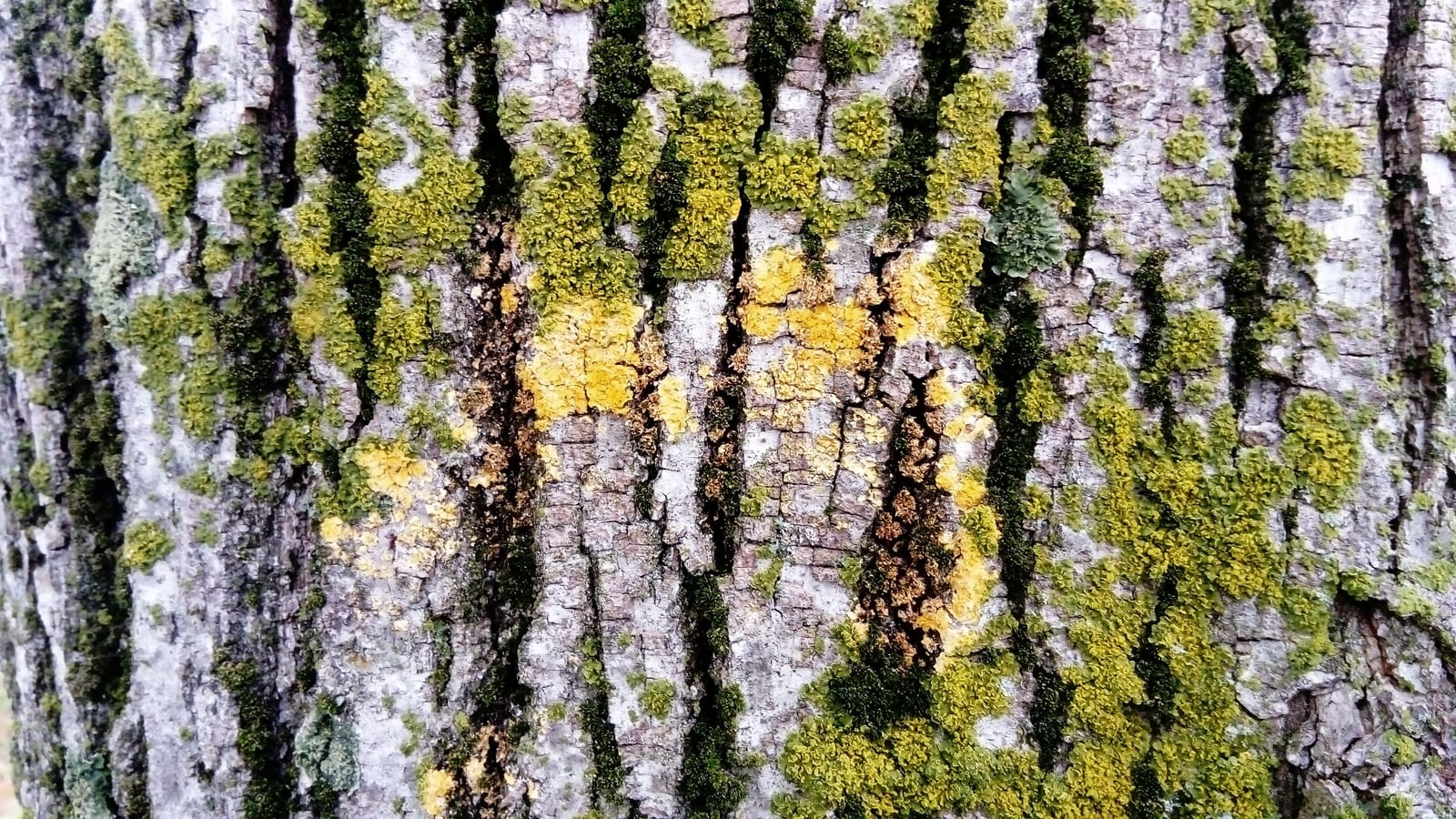
A new £2.7 million research programme led from Scotland will search wild Sphagnum populations across Britain and Ireland for mosses that already cope unusually well with drought, then investigate the genetics, physical structure and even airborne chemical signals behind their survival. The work could eventually influence how degraded peatlands are restored as Scotland moves towards a target of more than 400,000 hectares of restoration by 2040.
Scientists are preparing to search peatlands across Britain and Ireland for populations of Sphagnum moss that appear naturally better equipped to survive drought, in an attempt to identify biological traits that could eventually be used to make peatland restoration more resilient to a drying climate.
The two-year project, called FutureMoss, will be led by the James Hutton Institute and has been awarded £2.7 million through the Advanced Research and Invention Agency. About £2 million of the funding will go to the Hutton, with researchers from the University of the Highlands and Islands, the UK Centre for Ecology & Hydrology and the University of Dundee also participating.
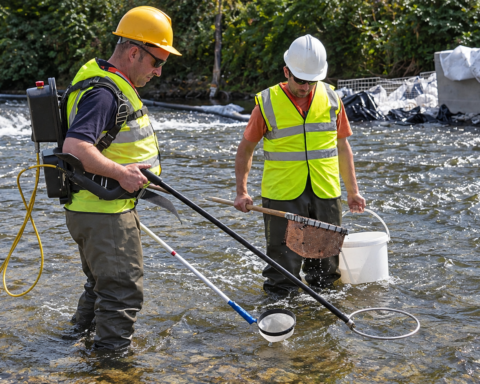
Rather than beginning with a laboratory-designed moss, the researchers intend first to look for adaptation that has already occurred in nature. Local Sphagnum populations will be examined for differences in their ability to withstand dry conditions and recover afterwards. The team will then investigate the genetic and biological characteristics associated with those differences and attempt to develop new drought-tolerant material through controlled breeding.
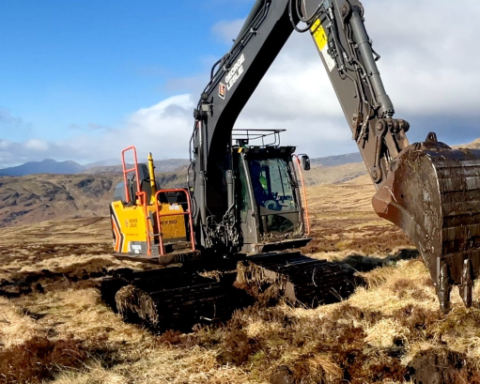
The work moves peatland restoration into an unusual area of climate adaptation. Restoration has traditionally concentrated heavily on repairing the conditions around damaged peat: blocking drains, raising water tables, reprofiling eroded ground, stabilising exposed surfaces and allowing characteristic bog vegetation to return. FutureMoss asks an additional question. If the climate into which a bog is being restored is becoming more prone to drought, are some populations of one of its most important plants inherently better prepared for those conditions than others?
A Small Plant With an Outsized Role
Sphagnum is not simply vegetation growing on top of a peat bog. In many northern peatlands it is one of the organisms responsible for creating and maintaining the conditions from which peat develops.
The moss grows as a dense carpet at the surface. Beneath the living layer, partially decomposed plant material accumulates in wet, oxygen-poor conditions. Over long periods that accumulation forms peat and stores carbon that would otherwise return more readily to the atmosphere.
Sphagnum is particularly effective at retaining water. Unlike vascular plants, it does not depend upon a system of true roots to draw water from the soil, and its dominant leafy stage does not regulate water loss through the leaf stomata familiar in higher plants. Its architecture instead allows water to be retained within specialised cells and, importantly, in the tiny spaces throughout the moss carpet.
Research into Sphagnum water relations has found that most of the water in a moss carpet is held outside the living cells, within the pore spaces created by its leaves and branches. Large specialised hyaline cells provide an additional reservoir, holding water particularly tightly as the moss begins to dry.
That ability helps Sphagnum maintain the wet conditions on which the wider bog depends. It does not, however, make the moss immune to prolonged drought.
Different Mosses Fail at Different Points
The scientific basis for looking for unusually resilient Sphagnum has strengthened considerably in recent years.
A 2025 laboratory study of two Sphagnum species found sharply different moisture thresholds below which damage to photosynthesis became irreversible. In Sphagnum palustre, the threshold was approximately 12 grams of water for every gram of dry biomass. In Sphagnum squarrosum, it was about 18 grams per gram. The first species retained moisture more effectively and endured drought for longer before passing its critical threshold.
The experiment did not establish that those particular species are the answer for Scottish restoration sites. It demonstrated something more fundamental to the FutureMoss proposition: different Sphagnum can respond very differently to the same process of drying, and there are biological limits beyond which simply rewetting the moss does not immediately restore normal functioning.
A broader scientific review published in New Phytologist the same year found that drought responses operate at several levels, from individual cells and plant structure through to whole Sphagnum communities. Drought can affect photosynthesis, growth, respiration, methane exchange and the hydrology of the surrounding peatland. Species identity, position relative to the water table and the physical structure of the moss can all alter the response.
FutureMoss will move the investigation further into variation within and between natural populations. Researchers intend to find local populations that show stronger drought resistance or a better capacity to recover, then examine what is responsible.
That could involve characteristics visible in the plant’s structure, differences in physiology and differences written into its genome.
The Moss May Also Give Away Its Condition Through the Air
One of the less obvious parts of the project involves what Sphagnum releases into the atmosphere.
Researchers from the UK Centre for Ecology & Hydrology will examine chemical signals produced by the moss during drought, looking for patterns that could help identify varieties particularly capable of tolerating water stress.
Mosses release small quantities of biogenic volatile organic compounds into the air. Previous research on Sphagnum has identified compounds including isoprene, monoterpenes and sesquiterpenes, among others. Their emissions can change as the plant is placed under environmental stress.
In one experiment published in 2024, researchers subjected Sphagnum material from boreal peatlands to a 43-day drought. Total volatile emissions and isoprene emissions fell during the drought. Other compounds responded differently, and some effects persisted after the moss was rewetted. Sesquiterpene emissions remained depressed six weeks into the recovery period.
FutureMoss will examine whether chemical changes of this kind can serve as useful indicators when researchers compare populations. If particular chemical signatures reliably accompany resistance or recovery, they could give the project another means of identifying promising moss without relying on appearance alone.
Finding the Survivors, Then Trying to Combine Their Traits
The next stage is more experimental.
The Hutton says FutureMoss will develop methods to produce new drought-tolerant Sphagnum varieties and intends to establish controlled breeding, which it describes as a first for Sphagnum.
That claim requires some qualification. Earlier German research programmes have explicitly described work on the breeding of peat moss. A project running from 2017 into the early 2020s collected wild Sphagnum material from multiple European populations, genetically characterised it, selected highly productive material and carried out what the researchers called “Smart Sphagnum Breeding”. Related work included production of polyploid cultivars and field testing of selected and bred lines for Sphagnum farming.
That earlier work was directed principally towards improving productivity and mass cultivation of peat moss as a renewable horticultural material, rather than FutureMoss’s stated objective of producing climate-resilient material for ecological function and restoration. The public description of FutureMoss does not yet explain precisely how its proposed controlled-breeding method differs technically from the earlier European work. The claim of a first therefore remains the Hutton’s description rather than an independently established historical first.
The more consequential aspect of FutureMoss is its target trait. The project is attempting to take naturally occurring differences in drought performance, identify the mechanisms behind them and determine whether useful characteristics can be combined or developed deliberately.
Nothing in the material published about FutureMoss says that the project will genetically engineer Sphagnum. It sits within a much wider ARIA research programme that includes projects using advanced biotechnology in other species, but the publicly stated FutureMoss approach centres on natural variation, genetics, biological traits and controlled breeding.
Nor are experimental mosses about to be planted across Scottish bogs. ARIA requires research under its Accelerated Adaptation programme to take place in contained settings during the programme period and says there will be no releases into wild populations while that funding is under way.
Why Drought Has Become a Restoration Problem
The timing of the project coincides with a substantial expansion of peatland restoration in Scotland.
Scotland contains about two million hectares of peatland, roughly a quarter of the country’s land surface and a large proportion of the UK’s total peat resource. Between 2012 and March 2026, Peatland ACTION and other funding streams delivered restoration interventions across approximately 105,000 hectares.
The Scottish Government’s Climate Change Plan, published in March, now sets an ambition to increase annual peatland restoration by 10 per cent each year to 2030, maintain the resulting rate afterwards and take cumulative restoration beyond 400,000 hectares by 2040.
That expansion makes the long-term condition of restored sites increasingly significant. The success of restoration cannot be measured simply by the completion of engineering work or the number of hectares treated. A damaged bog can be rewetted comparatively quickly; rebuilding the ecological processes of a functioning peatland can take considerably longer.
A 2026 NatureScot review of evidence from restored peatlands found that recovery of some of the feedback mechanisms that give near-natural bogs their resilience may take more than a decade. During earlier stages of recovery, restored sites can remain vulnerable to extreme drought.
The review found evidence from England and Ireland that restored plots containing Sphagnum were better able to maintain important peatland functions during drought than comparable areas without a Sphagnum layer. It also found that the legacy of previous drainage, forestry and other land uses can continue to influence how a restored bog responds years after physical restoration work has taken place.
NatureScot identified unanswered questions about the effect of repeated droughts and about whether the timing of drought relative to the restoration process changes a site’s eventual success.
This creates a complication for a restoration programme operating over several decades. The climate experienced by a restored peatland in 2040 will not necessarily resemble that under which the surviving fragments of its original vegetation developed.
Scotland’s Restoration Target Is Moving Into a Different Climate
The Scottish Government’s current climate plan recognises peatland restoration primarily as a means of reducing greenhouse-gas emissions from damaged peat, but also identifies healthy peatlands as part of Scotland’s adaptation to changing weather. Wet peatlands can retain water, influence flows during drought and heavy rainfall, support specialised wildlife and reduce the exposure of dry organic soils to severe fire.
The vulnerability works in both directions. Restoration can improve resilience to drought, but drought can also interfere with restoration before those protective characteristics have fully returned.
That is where Sphagnum becomes more than an indicator that restoration is progressing. A sufficiently established moss layer can influence the water balance and physical behaviour of the peat surface itself.
NatureScot’s evidence review records Scottish work on what peatland researchers call “bog breathing”: the movement of the peat surface as water levels change. During drought, a functioning peat surface can partially collapse downwards as the water table falls, helping the upper layers remain in contact with moisture rather than being left suspended above it. Research in Scotland has linked that behaviour with the ability of near-natural peatlands to retain moisture and recover from dry periods.
Sphagnum is part of the living surface through which those hydrological and ecological feedbacks develop. The question facing FutureMoss is whether the biological material used to rebuild that surface can itself be made more capable of enduring the climatic conditions expected during its recovery.
Two Years to Test the Idea
FutureMoss remains an experiment rather than a new restoration prescription.
The project has two years to locate useful natural variation, determine which characteristics are associated with drought resistance and recovery, examine genetic and chemical markers, and develop methods for producing new material. Any eventual use on restoration sites would require further evidence beyond the contained research now being funded.
There are also ecological questions that extend beyond whether a moss survives a dry spell. Sphagnum species occupy different niches within a bog. A species suited to a wet pool is not interchangeable with one adapted to the raised surface of a hummock, and NatureScot’s restoration guidance already cautions against planting Sphagnum outside the conditions to which the species is suited.
Local genetic suitability is another consideration. Existing restoration projects have often sought to use locally sourced or appropriate material rather than treating Sphagnum as a single uniform plant. Selecting one characteristic, such as drought tolerance, would therefore have to be considered alongside the wider ecological role and genetic diversity of the moss being restored.
ARIA’s wider Accelerated Adaptation programme has been established specifically to test questions of that kind. Alongside projects aimed at accelerating adaptation in trees, pollinators, amphibians and other organisms, it includes separate work on modelling, independent validation, ethics and governance. The agency says interventions in wild populations require consideration not only of whether something can be done technically, but of its ecological and social consequences.
For FutureMoss, the starting material will come from nature itself. Somewhere among Sphagnum populations already growing across Britain and Ireland, the researchers expect to find mosses that respond to drought differently from their neighbours.
The first task is to find them. The next is to establish why they survive. Only after that will the project be able to determine whether the characteristics carried by those plants can be turned into something useful for the peatlands being restored into Scotland’s changing climate.
Sources
Hutton to Lead £2.7 Million Project to Safeguard Peat Moss Against Changing Climate
The James Hutton Institute, 23 September 2026
https://www.hutton.ac.uk/hutton-to-lead-2-7-million-project-to-safeguard-peat-moss/
Accelerated Adaptation: Funded Projects
Advanced Research and Invention Agency, current programme record accessed 23 September 2026
https://aria.org.uk/opportunity-spaces/resilient-climate-and-ecosystems/accelerated-adaptation/funded-projects
Accelerated Adaptation: Responsible Research
Advanced Research and Invention Agency, current programme record accessed 23 September 2026
https://aria.org.uk/opportunity-spaces/resilient-climate-and-ecosystems/accelerated-adaptation/responsible-research
Scotland’s Climate Change Plan: 2026–2040
Scottish Government, 24 March 2026
https://www.gov.scot/publications/scotlands-climate-change-plan-2026-2040/
Peatland ACTION – Reviewing the Wide Range of Benefits of Restored Peatlands in Scotland
NatureScot Research Report 1426, 2026
https://www.nature.scot/doc/naturescot-research-report-1426-peatland-action-reviewing-wide-range-benefits-restored-peatlands
Recovery of Sphagnum from Drought Is Controlled by Species-Specific Moisture Thresholds
Scientific Reports, 1 July 2025
https://www.nature.com/articles/s41598-025-05348-8
The Effects of Drought on Sphagnum Moss Species and the Implications for Hydrology in Peatlands
New Phytologist, 7 July 2025
https://nph.onlinelibrary.wiley.com/doi/10.1111/nph.70361
Impact of Severe Drought on Biogenic Volatile Organic Compounds Emissions from Sphagnum Mosses in Boreal Peatlands
Science of the Total Environment, 15 November 2024
https://www.sciencedirect.com/science/article/pii/S0048969724058947
Mechanisms Behind Species-Specific Water Economy Responses to Water Level Drawdown in Peat Mosses
Annals of Botany, 2020
https://academic.oup.com/aob/article/126/2/219/5809350
Breeding and Mass Propagation of Peat Moss in Sphagnum Farming to Create a Sustainable Supply of Renewable Raw Material for Horticultural Growing Media (MOOSzucht)
German Research Information System for Agriculture and Food, project period 15 May 2017–14 May 2020; record accessed 23 September 2026
https://www.fisaonline.de/en/analyse-research-strategically/overview-of-funding-programmes/details/?tx_fisaresearch_fundingprogrammes%5Baction%5D=projectDetails&tx_fisaresearch_fundingprogrammes%5Bcontroller%5D=Projects&tx_fisaresearch_fundingprogrammes%5Bp_id%5D=15670
Peatland ACTION Technical Compendium: Stabilisation and Revegetation
NatureScot, current guidance accessed 23 September 2026
https://www.nature.scot/doc/peatland-action-technical-compendium-restoration-7-stabilisation-and-revegetation