
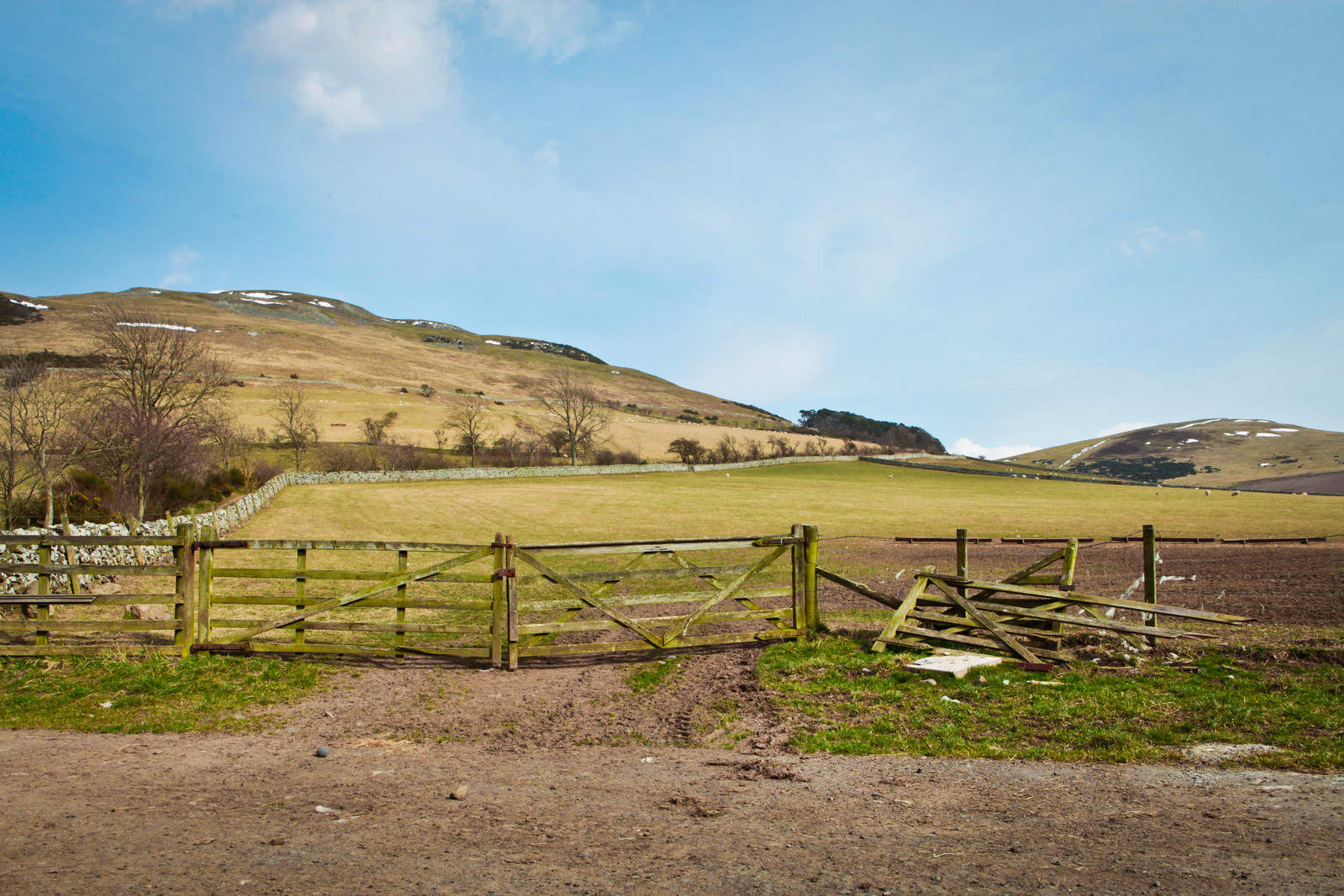
Compulsory purchase orders allow authorised bodies to acquire land without the consent of the owner where statutory powers and public-interest tests are met. The Government describes them as a tool that can help deliver projects ranging from major infrastructure and regeneration schemes to the refurbishment of individual empty homes and derelict properties.
The proposed reforms include a single Compulsory Purchase Act for Scotland, changes intended to make approval procedures faster and more certain, electronic service of notices and documents, and powers allowing authorities to create new rights or take temporary possession rather than acquire land permanently in all cases.
The proposals also include a single mechanism for taking possession after a CPO has been approved, codification of compensation rules, repeal of outdated legislation and measures intended to encourage quicker settlement of compensation claims and advance payments.
The Earlier Reform Record
The reform programme has a long paper trail.
The Scottish Law Commission published Discussion Paper 159 on compulsory purchase in December 2014. That document examined the law governing compulsory purchase in Scotland and invited views on reform.
The Scottish Government published a progress report on compulsory purchase reform in December 2024. That report recorded the work already undertaken and set out the Government’s intention to develop a reform package.
A consultation paper was then published in September 2025. The consultation closed in December 2025. A post-consultation update followed in February 2026.
The consultation responses summary and the Government’s way forward were both published on 26 August 2026.
The sequence shows a policy subject moving from law-reform discussion to legislation planning over more than a decade.
Compensation And Hope Value
The consultation responses summary records strong support for the principle of equivalence in compensation. Under that principle, compensation is intended to put a person whose land is acquired in the same financial position, so far as money can achieve, as if the land had not been acquired.
The Government says compensation rules will be codified while outdated and anomalous legislation is repealed.
Some issues remain under further consideration. The way forward paper identifies statutory loss payments and the extent to which compensation takes account of “hope value” as areas needing further work.
The Government says it will commission research to build a stronger evidence base on hope value.
Hope value refers to value based on the prospect of future development or alternative use, rather than only the current use of the land. The treatment of hope value can affect the cost of acquiring land and the financial position of owners whose land is taken.
Compulsory Sale And Lease Orders
The way forward paper also covers compulsory sale and lease orders.
The Government says it will further explore the case for compulsory sale orders, drawing on evidence gathered through the consultation.
Compulsory sale orders have previously been discussed in Scotland as a possible tool for bringing vacant, derelict or neglected land and buildings back into use by requiring sale rather than public acquisition.
Compulsory sale and lease orders sit beside other land and property measures already present in Scottish public policy, including community right to buy, vacant and derelict land work, housing delivery and town-centre regeneration.
The Scottish Parliament Information Centre published a briefing on community right to buy in May 2026. That briefing forms part of a wider recent policy record around land, ownership, local control and community-led development.
The Land Uses Involved
The Government’s own framing places CPO reform across several policy areas.
The publication is listed under building, planning and design, economy, energy, housing, public sector and transport. The examples given by the Government include infrastructure, regeneration, empty homes and derelict properties.
Those areas now overlap with several current pressures in Scotland: housing delivery, derelict land, public infrastructure, transport projects, energy networks, net zero projects and town-centre repair.
The reform proposals are procedural, but the uses of the powers are practical. They concern land, title, compensation, objections, possession, project delay, infrastructure delivery and the ability of public authorities to assemble sites.
The Government says the reformed system will need to ensure that those affected are given opportunities to challenge, are treated with respect and are compensated fairly.
The next dated stage will be legislation introduced to the Scottish Parliament.
Sources
Modernising compulsory purchase orders, 26 August 2026
https://www.gov.scot/news/modernising-compulsory-purchase-orders/
Compulsory Purchase Reform in Scotland: The Way Forward, 26 August 2026
https://www.gov.scot/publications/compulsory-purchase-reform-scotland-way-forward/pages/1/
Compulsory Purchase Reform in Scotland: The Way Forward — Compulsory Sale and Lease Orders, 26 August 2026
https://www.gov.scot/publications/compulsory-purchase-reform-scotland-way-forward/pages/2/
Compulsory Purchase Reform: Consultation Responses Summary, 26 August 2026
https://www.gov.scot/publications/compulsory-purchase-reform-consultation-responses-summary/
Compulsory Purchase Reform: Consultation Responses Summary — Compensation, 26 August 2026
https://www.gov.scot/publications/compulsory-purchase-reform-consultation-responses-summary/pages/8/
Compulsory Purchase Reform in Scotland — consultation feedback, 26 August 2026
https://consult.gov.scot/planning-architecture/compulsory-purchase-reform/
Compulsory purchase reform in Scotland: consultation, 19 September 2025
https://www.gov.scot/publications/compulsory-purchase-reform-scotland-consultation-paper/
Compulsory Purchase Reform: post-consultation update, 19 February 2026
https://blogs.gov.scot/planning-architecture/2026/02/19/compulsory-purchase-reform-post-consultation-update/
Compulsory purchase reform: progress report December 2024, December 2024
https://www.gov.scot/publications/compulsory-purchase-reform-scotland-progress-report-december-2024/
Discussion Paper 159: Compulsory Purchase, 17 December 2014
https://www.scotlawcom.gov.uk/publications/discussion-paper-159-compulsory-purchase/
Community right to buy review, 12 May 2026
https://www.parliament.scot/chamber-and-committees/research-prepared-for-parliament/research-briefings/2026/5/12/sb-2625