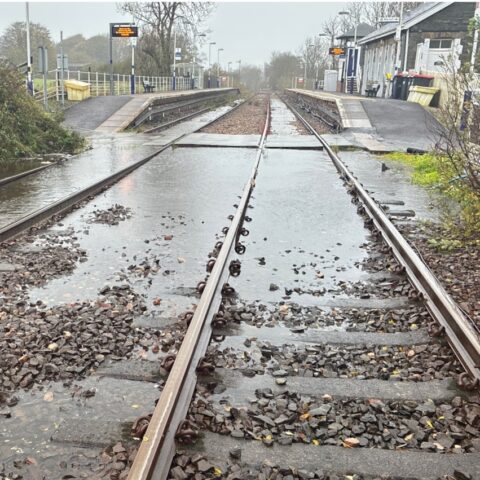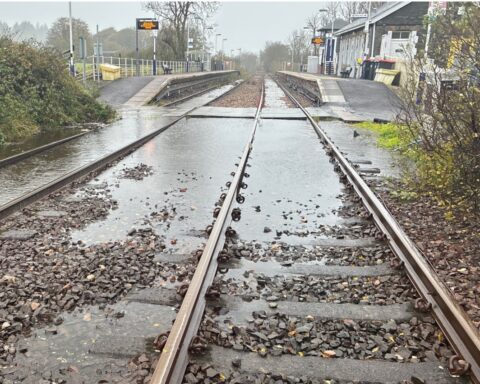

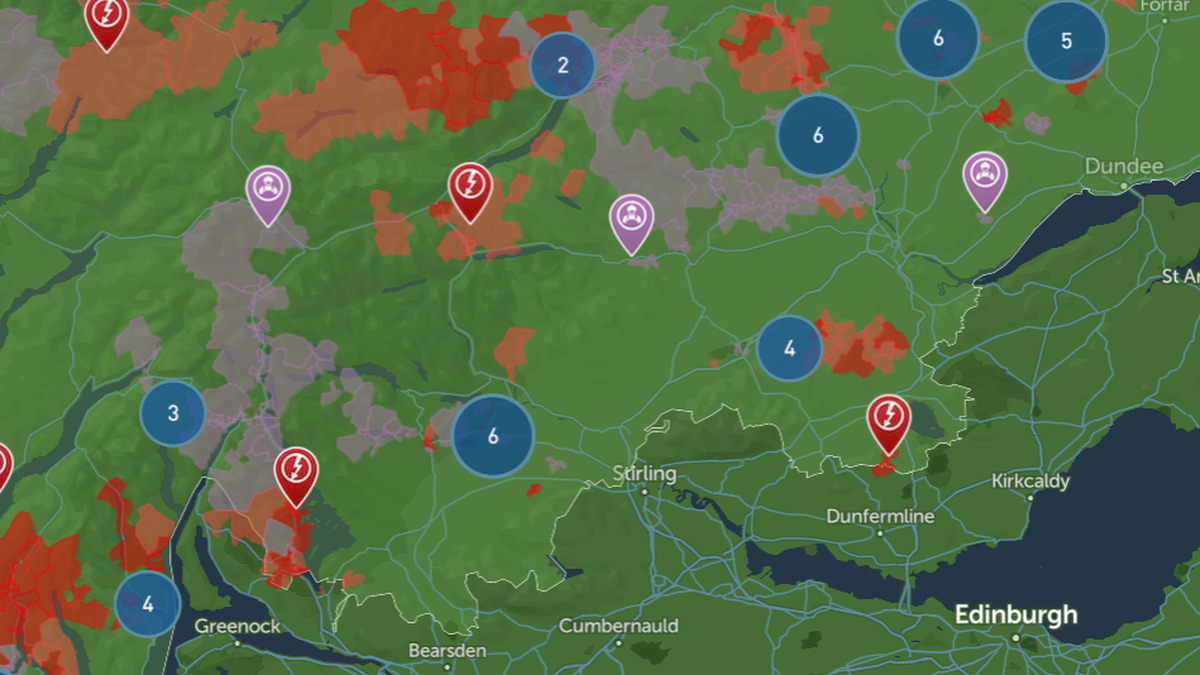
More than 22,000 homes and businesses in northern Scotland remained without electricity on Monday morning, 26 October, after Storm Boelo swept across the country with winds reaching 85mph. Some customers had been without power since Saturday, and engineers were still struggling to reach damaged lines through fallen trees, flooding and blocked roads.
By 10.30am on Monday, Scottish and Southern Electricity Networks Distribution, known as SSEN, said it had restored electricity to more than 76,000 customers. A further 22,000 remained disconnected. The company warned that some supplies could remain unavailable until Tuesday.
The explanation offered by the network operator was widespread storm damage, and there is substantial evidence that severe winds physically damaged infrastructure. But a separate question has emerged from an examination of technical reports published by Scotland’s electricity companies themselves.
How many customers lost electricity because automatic protection equipment detected a fault, and how many remained without supply because that equipment locked out, failed to isolate the damaged section or required engineers to intervene before power could safely be restored?
Electricity networks have relied on automatic disconnection equipment for decades. Such equipment is essential to public safety, particularly when trees strike overhead lines or conductors fall to the ground. However, the equipment can also malfunction, respond incorrectly to temporary electrical conditions or disconnect a larger section of the network than necessary.
Documents published by SP Energy Networks in 2026 confirm that engineers have identified precisely these types of problems during investigations into automatic switching equipment.
A separate research programme acknowledges that failures in protection systems can result in significantly more customers losing electricity than would have been affected if the equipment nearest the fault had operated correctly.
These findings do not establish that the same problems caused Storm Boelo’s outages. They establish that automatic protection is not infallible, that the network industry is aware of identifiable weaknesses and that the performance of these systems warrants scrutiny.
At the same time, both of Scotland’s main distribution network groups have been introducing artificial intelligence to help predict storm damage and organise their responses. The publicly described systems forecast faults and assist planning; there is no verified evidence that the new AI forecasting applications independently ordered electricity supplies to be disconnected during Storm Boelo.
The investigation is therefore concerned with two related but distinct questions: whether existing automated protection is operating correctly, and whether the newer forecasting systems have delivered the improvements in preparation and restoration that their developers anticipated.
When the Electricity Network Disconnects Itself
Most electricity customers never see the equipment responsible for disconnecting their supply.
Across Scotland, distribution networks contain circuit breakers, automatic reclosers, sectionalising devices, protection relays and remotely operated switches. Their purpose is to detect abnormal electrical conditions, isolate faults and, where possible, maintain supplies to parts of the network that remain safe.
Some faults are temporary. Wind can blow branches or debris against an overhead line, causing an electrical disturbance that disappears when the material moves away.
In these circumstances, protection equipment may disconnect the circuit briefly before attempting to restore electricity automatically. If the abnormal condition has cleared, supply can resume without an engineer travelling to the site.
Other faults are persistent. A conductor may have fallen, a transformer may have failed or a tree may remain in contact with an electrical line.
In those circumstances, repeated reconnection attempts could be dangerous. Protective equipment is therefore designed to stop attempting restoration after prescribed conditions are met, leaving the circuit disconnected until further action is authorised.
This condition is commonly described as lockout.
But a lockout does not necessarily mean that every metre of electrical line served by the disconnected circuit has been physically damaged. It means that the protection system has reached a condition requiring further human assessment or action before reconnection.
Depending on the circumstances, electricity may be restored by a control-room operator remotely switching around a damaged section, by an engineer operating equipment locally or by workers repairing the original fault.
During Storm Boelo, SSEN specifically reported that control-room engineers had restored thousands of customers through remote switching.
Its Monday update stated that remote rerouting continued where possible, alongside physical repairs and inspections.
The company has not yet published a detailed breakdown showing how many customers were restored through each method, or how many remained disconnected because of unresolved physical damage compared with those awaiting inspection or switching operations.
That information is essential to understanding the full consequences of the storm.
Automatic Switching Is Not New AI Technology
One important fact needs to be established before examining recent artificial intelligence projects: automatic electricity protection was operating in Scotland long before the current generation of AI software existed.
SP Distribution, the electricity distributor serving central and southern Scotland, documented its overhead-line automatic protection arrangements in a Long Term Development Statement published in November 2023.
The document records that its overhead-line protection policy was introduced in 1993–94.
It explains that automatic equipment can make successive attempts to reconnect a circuit after detecting certain faults, while sectionalising devices identify affected branches and allow unaffected parts of the network to return to service.
The company also confirms that protection settings are specific to their application.
Those arrangements were intended to improve reliability by reducing the time customers remained disconnected after temporary faults and limiting the number affected by permanent damage.
SSEN has similarly invested in automatic network restoration and remotely controlled switching over many years. Traditional protection equipment generally follows predetermined electrical operating rules, while modern AI systems can analyse large datasets and produce predictions or recommendations. Both technologies may operate within the same electricity company, but they perform different functions. It would therefore be incorrect to attribute an automatic circuit trip to a new AI system merely because the network operator also uses artificial intelligence. Equally, the fact that automatic protection predates AI does not establish that every protection setting, firmware version or switching procedure currently in use is correct.
SP Energy Networks Identified Problems with Automatic Sectionalising Equipment
The strongest evidence uncovered in this investigation comes from a research programme completed by SP Energy Networks in March 2026.
The project, called SMARTer Selection of Automatic Sectionaliser Links, was funded through the Network Innovation Allowance under reference NIA_SPEN_0093. Its recorded expenditure was £245,000.
Automatic sectionaliser links are devices used on electricity distribution lines to help isolate a faulty branch while permitting other parts of the network to remain connected or be restored.
The project investigated limitations in existing protection approaches and assessed alternative devices under laboratory and test-network conditions.
Its published findings identify several significant concerns.
Some existing automatic sectionalising devices depend on electrical current flowing through them to maintain their operating readiness. On lightly loaded rural circuits, especially during periods of low overnight demand, certain devices may become insufficiently energised to detect and respond correctly to subsequent fault conditions.
Other limitations arise when a fault produces a relatively low electrical current. The upstream protection system may detect the disturbance and disconnect the circuit, while a downstream sectionalising device fails to register enough current to identify and isolate the affected branch.
The result can be a wider interruption than would occur if the appropriate downstream equipment operated as intended.
These findings are particularly relevant to rural networks, where long overhead lines supply relatively small numbers of customers, often through branches with limited alternative routes.
The researchers also examined new equipment from several manufacturers, including ABB, Hubbell, Inael and NOJA Power.
During testing of the NOJA EcoLink device, engineers identified unexpected operations associated with inaccurate electrical current measurements.
In certain tests, the equipment recorded current values substantially higher than those measured by the independent test instruments, resulting in incorrect tripping behaviour.
Other unexpected trips occurred after temporary electrical conditions had settled and the actual load current remained below the intended operating threshold.
The project concluded that further hardware or firmware development would be required before wider deployment of that device.
These findings were recorded during research and testing. They do not establish that NOJA EcoLink devices caused public electricity outages in Scotland, and the published research should not be interpreted as evidence that the device was involved in Storm Boelo.
The significance is that realistic testing identified incorrect automatic operations that required further investigation.
The same research found that no single type of sectionalising equipment was suitable for every network configuration and that careful coordination of devices and settings remained essential.
Another Known Problem Can Disconnect More Customers Than Necessary
A separate SP Energy Networks programme provides further evidence that failures in electrical protection can unnecessarily enlarge the area affected by an outage.
The Interconnected HV Secondary Substation Battery Monitor project, reference NIA_SPEN_0091, began in March 2024 in collaboration with EA Technology.
The programme addresses failures involving batteries that supply the protection equipment installed at certain secondary substations.
These batteries allow protective devices to operate when electrical faults occur. If the battery supplying a local protection system fails, the device may not disconnect the damaged section as intended.
Instead, a protective device farther upstream may have to disconnect electricity to clear the fault.
That can interrupt supplies to a substantially larger group of customers.
SP Energy Networks’ published project description states that this type of failure occurs multiple times annually on interconnected high-voltage networks.
The company has proposed improved remote battery monitoring so that deteriorating batteries can be identified before an electrical fault occurs.
Its economic assessment estimates a potential net present value benefit of £6.4 million over 25 years, including reductions in regulatory penalties associated with customer interruptions and time without electricity.
That £6.4 million is a projected benefit from improving monitoring, not a calculation of losses already suffered by customers.
The project demonstrates something important: an individual fault need not damage an entire network section for the protection system to disconnect that larger section. The way protective devices operate, and whether their supporting equipment is working, can determine how many customers lose supply.
It does not prove that such a failure occurred during Storm Boelo. It establishes that the operator has identified a mechanism through which it can happen.
Protection Systems Can Be Manually Adjusted
Electrical protection arrangements are designed and configured by engineers. They are not necessarily fixed permanently when the equipment is installed.
The relevant considerations include what level and type of electrical disturbance should activate protection, how different devices coordinate with one another, whether reconnection should be attempted automatically and under what circumstances a circuit must remain disconnected.
Protection engineers must balance competing requirements.
Equipment that disconnects too readily can cause unnecessary interruptions. Equipment that fails to disconnect when a dangerous fault occurs can leave live conductors energised, increase damage or create a risk of electrocution and fire.
The objective is not simply to make a network more sensitive or less sensitive. It is to ensure that the correct device operates when required and isolates the smallest reasonably practicable part of the network without compromising safety.
The Electricity Safety, Quality and Continuity Regulations 2002 establish a relevant legal obligation.
Regulation 23 requires distribution networks to be arranged and equipped with appropriately located and configured protective devices so as to restrict, as far as reasonably practicable, the number of customers affected by faults.
The same regulation also requires distributors to take all reasonably practicable steps to avoid supply interruptions resulting from their own actions, subject to the regulation’s qualifications.
These are not guarantees of uninterrupted electricity. They establish standards against which the design and operation of a distribution network may be assessed.
An equipment malfunction does not automatically demonstrate a breach of the regulations. That would depend on the circumstances, the precautions reasonably available and the operator’s actions.
However, the existence of adjustable settings and recognised limitations makes it legitimate to ask whether the protection arrangements used during a major storm were suitable for the circuits concerned.
That includes whether operating modes were changed before the arrival of severe weather and whether any such changes affected the duration of subsequent outages.
Scotland’s Electricity Networks Are Also Using Artificial Intelligence
Alongside traditional automatic protection, Scotland’s network operators have been developing artificial intelligence systems intended to improve their response to storms.
These projects need to be identified individually because they do not all perform the same function.
The most substantial is Predict4Resilience, an AI-based storm forecasting platform developed through a partnership involving SP Energy Networks, the University of Glasgow and technology consultancy Sia Partners.
SSEN Distribution has also participated in the trial programme.
The beta phase has a published project value of approximately £5.02 million, funded through Ofgem’s Strategic Innovation Fund.
Predict4Resilience uses weather forecasts, geographical information and historical electricity fault records to predict where and when network damage is likely to occur.
The purpose is to give engineers earlier warning of potential disruption, allowing them to position repair crews, vehicles, mobile generation equipment and welfare support before a storm reaches the network.
SP Energy Networks reported that the system successfully forecast substantial disruption during Storm Amy in October 2025.
Its March 2026 account claimed that, on the most heavily affected day, the model forecast faults with 96% accuracy. That is the operator’s reported result from the trial, not an independently verified measure of the programme’s overall performance.
The project was also intended to reduce unnecessary mobilisation costs by improving the accuracy of storm preparation.
Its published descriptions identify forecasting and operational decision support as its functions. They do not establish that Predict4Resilience can directly command circuit breakers to disconnect customers.
However, the software’s role in determining how operators prepare for storms, allocate engineers and anticipate damage is relevant to the speed at which electricity can be restored.
The project therefore warrants examination even if it had no direct role in switching off the network.
Who Developed and Controls the Forecasting Software?
The publicly documented ownership and development arrangements place several organisations behind Predict4Resilience.
SP Energy Networks is part of ScottishPower, which belongs to the Spanish energy group Iberdrola. SSEN Distribution forms part of the Scottish-based SSE group.
The University of Glasgow contributed to the statistical forecasting research, while Sia Partners developed and hosted the computer software and supporting data systems.
Sia Partners is an international management and technology consultancy founded in France.
The project’s 2024 annual report states that the software and its supporting databases were hosted and stored by Sia Partners. It describes software access, cloud infrastructure, weather subscriptions, operating costs and maintenance as matters to be addressed through the project’s commercialisation arrangements.
The report anticipated that network operators might eventually obtain the software as a managed service rather than running every component independently.
The latest public project descriptions confirm live forecasting trials, but they do not provide a complete account of the final long-term licensing and maintenance contracts that may have been agreed during 2026.
That distinction matters because ownership of a network, ownership of its historical operating data, ownership of forecasting software and responsibility for maintaining that software can rest with different organisations.
However, none of these corporate arrangements establishes that Sia Partners controlled protective switching operations during Storm Boelo.
SSEN’s Separate Storm AI Project
SSEN Distribution has also developed a separate system called Storm AI, with Glasgow technology company Open Grid Systems.
The project began in December 2022 and concluded in March 2024, with recorded expenditure of £137,500.
Rather than deciding which circuits should disconnect, the software was developed to analyse photographs of damage to electricity infrastructure.
Its intended application was to help classify damaged equipment and improve estimates of how long repairs might take, particularly through SSEN’s Power Track customer information system.
The project examined machine-learning image recognition technologies, including commercially available services and a custom-built system developed using Python.
SSEN reported promising preliminary results but acknowledged limitations in the size of the dataset available for training the models.
The project documentation envisaged integration into customer-facing systems. It does not independently confirm the full extent to which the technology was deployed operationally during Storm Boelo.
The corporate ownership of Open Grid Systems has also changed. Aspen Technology acquired the business in November 2024, and American industrial technology company Emerson completed its acquisition of AspenTech in March 2025.
That ownership change does not establish responsibility for network disconnections. The Storm AI project’s published purpose concerns the assessment of damage and customer restoration information.
The current maintenance responsibilities for any operational deployment should nevertheless be identifiable through SSEN’s supplier arrangements.
Are Scotland’s Power Cuts Becoming More Frequent?
The longer-term picture is more complicated than the experience of individual households during recent storms might suggest.
Publicly reported reliability statistics generally measure customer interruptions per 100 connected customers, rather than counting every automatic operation of electrical protection equipment.
One circuit fault affecting hundreds of homes can therefore produce hundreds of customer interruptions in the statistics, while a device that trips and reconnects repeatedly may create several short interruptions that are reported differently.
SSEN’s preliminary figures for the financial year ending March 2026 show a deterioration in northern Scotland.
The reported interruption rate increased from 59 per 100 connected customers in 2024–25 to 71 in 2025–26, an increase of approximately 20%.
Average customer minutes lost also increased, from 69 to 79.
SSE attributed the deterioration largely to severe storms, including Floris and Amy. It reported that Storm Amy caused approximately 100 more network faults than Storm Éowyn earlier in 2025.
The company’s figures were described as estimates pending the annual regulatory process.
They demonstrate an increase in the reported interruption rate, but they do not demonstrate if automatic protection caused the increase or if many of those interruptions resulted from confirmed physical damage, temporary faults, incorrect equipment operation or delays in restoration.
A full comparison would also need to account for changing weather exposure, overhead-line infrastructure, vegetation management, connected customer numbers and modifications to network protection equipment.
Storm Boelo occurred in October 2026 and falls outside the reporting period covered by those annual figures.
The Most Revealing Numbers Are Not in the Headline Statistics
Ofgem’s reporting instructions reveal that electricity distributors are required to collect more detailed interruption information than appears in the familiar headline reliability figures.
Under its Regulatory Instructions and Guidance for electricity distribution, Ofgem requires companies to report short interruptions lasting less than three minutes and to distinguish between different types of switching and restoration.
The categories include automatic reclosing, automatic changeover, automatic restoration schemes, manually restored automatic disconnections and other switching operations.
Ofgem also requires information about customers who experience repeated interruptions.
Some short interruptions may be calculated using equipment-operation counters rather than individual electronic records of the exact time each operation occurred.
The existence of those reporting categories is important because a household can experience repeated brief failures of supply without those incidents being directly reflected in the principal measure of interruptions lasting three minutes or longer.
Ofgem’s guidance explicitly identifies the collection of short-interruption data as information that may be relevant to future regulatory incentives.
This creates a significant question about whether current financial incentives sufficiently reflect the disruption caused by repeated short outages.
The SP Energy Networks sectionaliser research provides further reason to examine that issue.
Its cost-benefit assessment concluded that replacing some existing automatic sectionalising devices with more advanced reclosers was generally not economically justified under current incentives where the main benefit would be reducing short interruptions.
The study did identify stronger benefits in particular circumstances, especially where equipment served heavily loaded circuits or substantial numbers of customers.
That finding does not show that SP Energy Networks failed to make an investment it was legally required to undertake. It shows that the economic case for improving reliability can depend on how particular interruptions are valued by the regulatory framework.
For customers who experience repeated interruptions, the difference between a short outage and a sustained outage may be significant even where the interruption has limited financial weight within the operator’s incentive calculations.
Why Rural Scotland Faces a Different Risk
The geographical distribution of Storm Boelo’s power cuts has renewed questions about the resilience of remote and rural electricity networks.
SSEN identified Argyll, Skye, the Western Isles and other exposed northern areas among the regions affected by widespread storm damage.
Central and southern Scotland also experienced interruptions, particularly in areas exposed to severe weather.
The relative experience of major cities and remote communities cannot be explained solely by the behaviour of automatic switching equipment.
Electricity networks in urban areas are frequently constructed using underground cables and may have alternative routes through which supplies can be restored.
Rural networks more commonly rely on long overhead lines, sometimes serving scattered properties through branches where an alternative supply route is not geographically or economically practical.
SP Distribution’s own engineering documentation describes this difference between urban underground networks and predominantly overhead rural circuits.
When a rural overhead line is damaged, a repair team may need to travel considerable distances, clear vegetation or replace equipment before electricity can safely be restored.
However, physical geography does not explain every possible restoration delay.
Where a network has multiple switching points, the ability to isolate a damaged section and restore unaffected customers depends partly on the design and correct operation of its protection equipment.
That is precisely why the findings of the automatic sectionaliser and substation protection projects matter.
They identify circumstances in which the protection system itself can affect the geographical extent of an outage.
Determining whether this happened during Storm Boelo would require individual network incident records rather than a comparison of rural and urban outage figures alone.
What Scotland’s Electricity Companies Have Been Asked to Disclose
Modern Scot has submitted written requests to Ofgem, SSEN Distribution and SP Energy Networks seeking the records necessary to investigate the frequency and consequences of automatic electricity disconnections.
The requests cover historical interruption figures, protection operations, restoration methods, equipment malfunctions, software changes and the specific circumstances surrounding Storm Boelo.
Ofgem has been asked to provide annual returns from 2005–06 onwards, including short interruptions, automatic switching events, repeated outages, manual restoration following automatic disconnection and exceptional storm-related incidents.
SSEN has been asked to identify how many customers were disconnected through automatic protection during Storm Boelo, how many circuits entered lockout and how many were subsequently found to have no permanent physical damage.
The company has also been asked to distinguish customers awaiting physical repairs from those awaiting inspection, control-room switching or other engineering authorisation.
SP Energy Networks has been asked to provide comparable historical information and explain what action followed the equipment limitations and unexpected operations identified in its published research.
Both network groups have also been asked whether protection operating modes were changed before or during the storm and whether any AI or machine-learning systems had authority to issue switching commands.
The requests do not seek operationally sensitive network diagrams, live electrical protection settings or information that could compromise infrastructure security.
They seek aggregated incident figures, explanations of responsibility and the evidence needed to distinguish safe protection from avoidable interruptions.
At the time of publication, responses to these enquiries had not yet been received. The absence of a response at this stage should not be interpreted as a refusal to provide the information.
Automatic Electrical Protection is Essential
Automatic electrical protection is essential to the safe operation of modern power networks.
No responsible examination of Storm Boelo can assume that circuits should have remained energised regardless of fallen conductors, damaged equipment or dangerous electrical faults.
The evidence of severe weather and widespread physical damage provides an established explanation for many of the disruptions reported by SSEN.
But the companies’ own technical research demonstrates that protective equipment can fail to operate as intended, that incorrect switching can occur and that faults affecting a small part of a network can sometimes disconnect a substantially larger area.
The available material does not establish how frequently these problems occur on Scotland’s operational networks, whether their incidence is rising or whether they contributed to the October 2026 outages.
It also does not establish that new artificial intelligence forecasting systems directly initiated those disconnections.
What the records establish is that these are recognised engineering problems, that they can affect the number of customers disconnected, and that Ofgem already requires network operators to collect categories of information capable of shedding light on automatic interruptions.
The immediate public-interest question is therefore precise: how many of the power cuts affecting Scotland were unavoidable consequences of physical damage, and how many were prolonged or widened by the design, settings, condition or operation of the network’s own protection systems?
For households that have spent successive days without heat, lighting, refrigeration or reliable communications, that distinction is more than a technical matter.
It determines whether every reasonably practicable measure was taken to keep electricity flowing to customers whose part of the network could safely have been supplied.
Scotland’s electricity companies possess the engineering records needed to answer that question. Their disclosure will determine whether the recent increase in northern Scotland’s reported interruptions is explained entirely by exceptional weather or whether weaknesses in automation, protection coordination and restoration arrangements have also contributed.
Sources
Storm Boelo — Monday 26 October Update. Scottish and Southern Electricity Networks Distribution, 26 October 2026.
Read the SSEN statement
Storm Boelo Evening Update. Scottish and Southern Electricity Networks Distribution, 25 October 2026.
Read the restoration statement
Storm Boelo Update. Scottish Government, 25 October 2026.
Read the government statement
SMARTer Selection of Automatic Sectionaliser Links, NIA_SPEN_0093. SP Energy Networks, project completed March 2026, findings and close-down report published 2026. Energy Networks Association Innovation Portal.
Read the equipment investigation
Interconnected HV Secondary Substation Battery Monitor, NIA_SPEN_0091. SP Energy Networks and EA Technology, project documentation 2024–2026. Energy Networks Association Innovation Portal.
Read the protection monitoring project
Long Term Development Statement, SP Distribution. SP Energy Networks, November 2023.
Read the network engineering statement
RIIO-ED2 Regulatory Instructions and Guidance — Annex F: Interruptions, Version 1.1. Ofgem, 1 February 2024, effective 1 March 2024.
Read the interruption reporting requirements
Electricity Safety, Quality and Continuity Regulations 2002, Regulation 23, as amended. UK Legislation.
Read the statutory protection requirements
Preliminary Results for the Year Ended 31 March 2026. SSE plc, May 2026, London Stock Exchange regulatory announcement.
Read the electricity reliability figures
Predict4Resilience, Beta Phase. SP Energy Networks, project documentation and annual reports 2023–2026.
Read the AI forecasting programme
Predict4Resilience: Beta Phase Annual Report 2024. SP Energy Networks, Sia Partners and University of Glasgow, 2024.
Read the software ownership and project development report
Behind the Scenes of SP Energy Networks’ Storm Prediction Trial. SP Energy Networks, March 2026.
Read the network operator’s trial findings
Predict4Resilience: Leveraging AI and Weather Data to Strengthen Grid Resilience. Sia Partners, 23 March 2026.
Read the developer’s account
Storm AI, NIA_SSEN_0065. SSEN Innovation, project completed March 2024, close-down reporting June 2024.
Read the Scottish AI project record
Aspen Technology Announces Acquisition of Open Grid Systems. Aspen Technology, 4 November 2024.
Read the acquisition announcement
Emerson Completes Acquisition of AspenTech. Emerson, 12 March 2025.
Read the corporate announcement