Nearly half of Scotland’s flowering plant species have declined in distribution over the past 50 years, prompting the launch of a national conservation strategy intended to halt the losses by 2030 and restore damaged plant populations and habitats by 2045.
The Scottish Plant Biodiversity Strategy, launched on 15 October 2026 by NatureScot and the Royal Botanic Garden Edinburgh, reveals that 47% of flowering plant species, 62% of moss species and 57% of lichen species have experienced declines in their geographical distribution since the 1970s.
The figures do not mean that nearly half of Scotland’s flowering plants have disappeared altogether. They mean that almost half of the species assessed have become less widespread, retreating from places where they were previously recorded.
For some species, that contraction has reached a critical stage. Scotland now has woodland flowers surviving at only a handful of locations, with conservationists collecting cuttings, growing replacement plants and moving threatened populations to new sites in attempts to prevent their disappearance.
The new strategy identifies ten priorities for national action, ranging from rebuilding damaged habitats and recovering endangered species to protecting plants through the planning system, improving botanical research and developing new sources of native seeds.
However, its publication also raises an important question about Scotland’s ability to deliver the programme. The strategy contains ambitious recovery objectives and monitoring arrangements, but does not establish a single costed national budget or guaranteed funding package covering all ten objectives.
What Scotland Has Lost Since 1970
The extent of Scotland’s botanical decline is particularly significant because the country’s plant life includes habitats of international importance.
Caledonian pinewoods support woodland species found in few other places in Britain. The Atlantic-facing western Highlands contain temperate rainforest communities rich in mosses, liverworts and lichens. Scotland’s peatlands, machair grasslands, coastal dunes and mountain habitats support plants adapted to distinctive combinations of climate, soils and geography.
These habitats are not simply collections of attractive or unusual species. Plants regulate water movement, stabilise soil, provide food and shelter for wildlife, store carbon and support the ecological processes on which agriculture, forestry and freshwater systems depend.
The new strategy identifies pollution, changes in land use, climate change, habitat fragmentation, invasive species and plant diseases as major pressures.
The significance of the distribution figures is that widespread decline can occur long before a species becomes extinct.
A wildflower may continue growing in Scotland while disappearing from numerous former sites. Populations that remain can become isolated from one another, reducing opportunities for reproduction and genetic exchange. Small, separated populations may be increasingly vulnerable to environmental change or accidental destruction.
For lichens and mosses, changes in air quality, woodland management and moisture conditions can gradually alter communities that have developed over exceptionally long periods.
The published figures describe long-term trends rather than the number of plants that died during 2026. They provide the historical baseline against which the new recovery programme must be assessed.
The Twinflower: Fewer Than 800 Plants Remaining in Britain
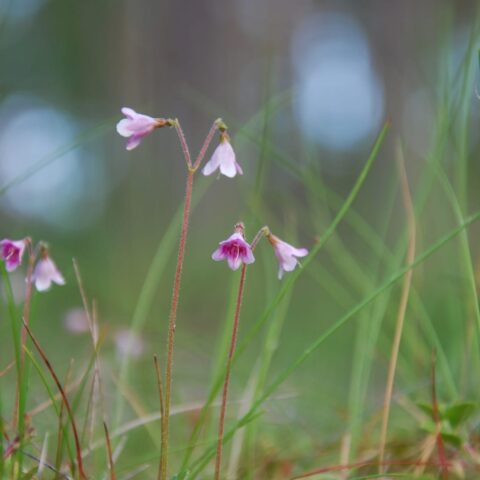
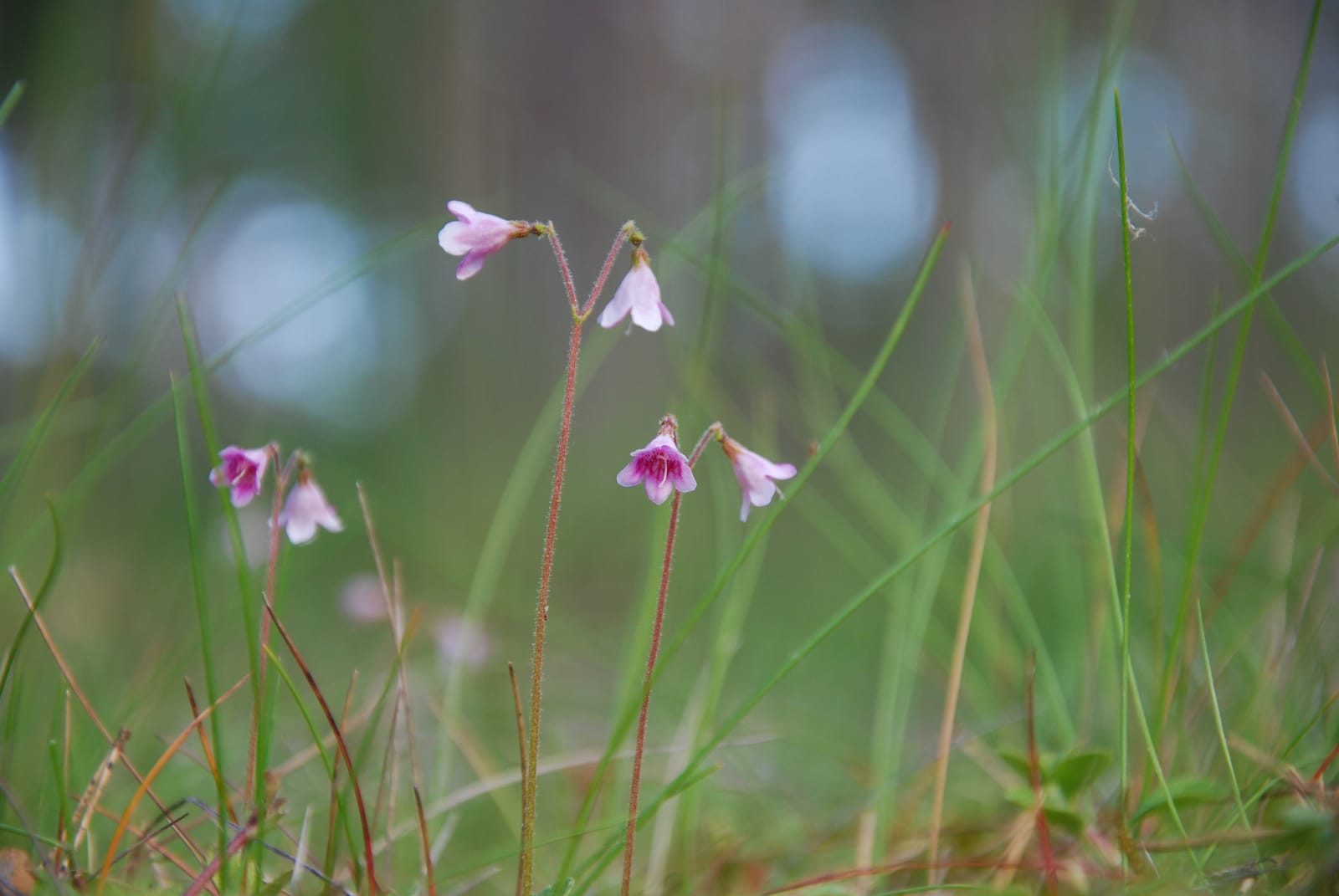
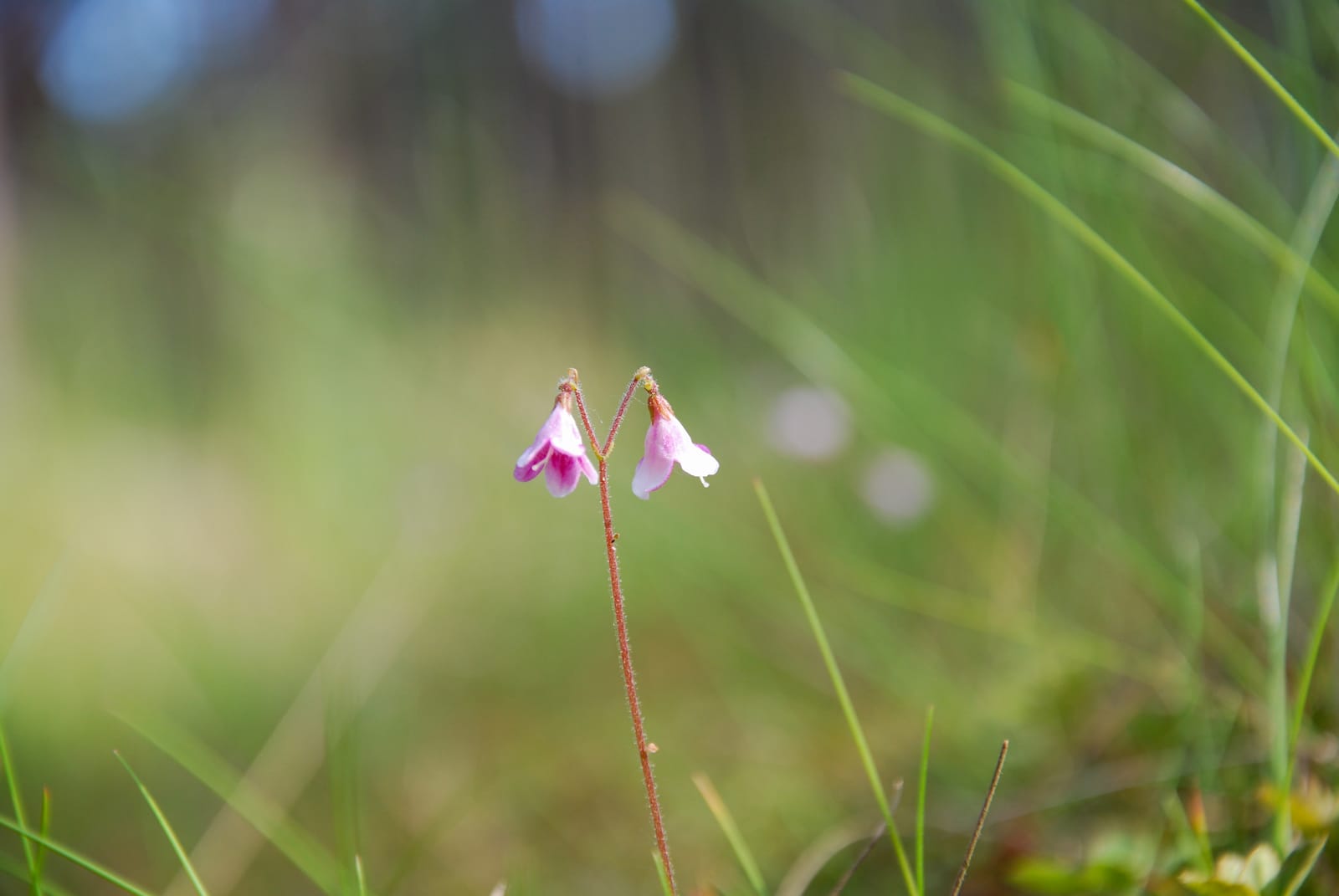 One of the clearest examples of the conservation challenge is twinflower, Linnaea borealis, a delicate woodland plant with two small pink, bell-shaped flowers growing from a slender stem.
Once more widespread through the country’s Caledonian pinewoods, twinflower has become increasingly rare as native woodland has been reduced and surviving populations have become isolated.
NatureScot and the Royal Botanic Garden Edinburgh report that fewer than 800 plants remain in the United Kingdom.
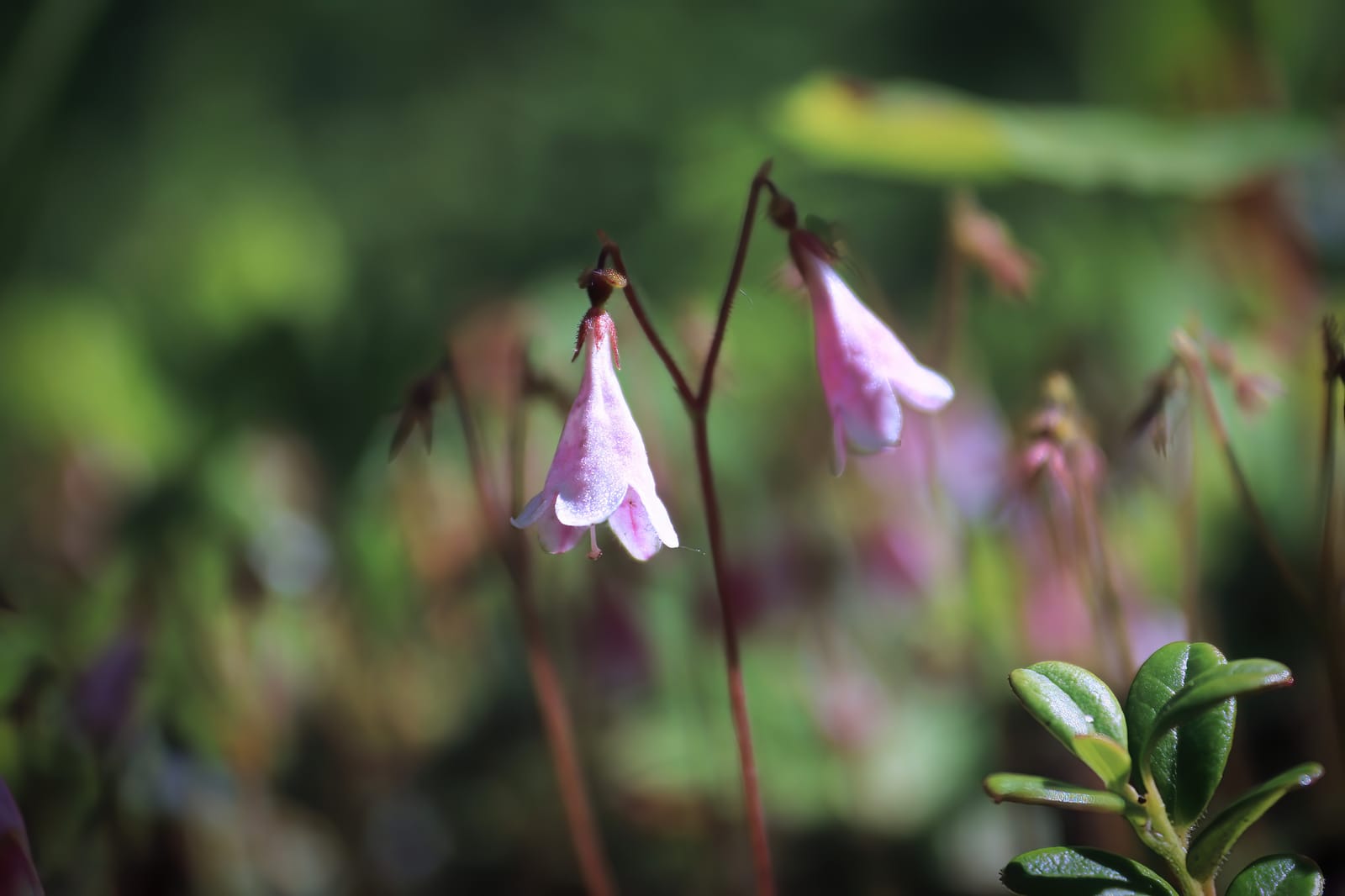
Twinflower spreads naturally through creeping stems, but successful sexual reproduction requires genetically compatible plants close enough for pollination. Isolated patches can therefore persist without readily establishing new genetically diverse populations.
During 2025, Plantlife Scotland, RSPB Scotland and local landowners established a twinflower nursery at RSPB Abernethy in the Cairngorms with support from NatureScot’s Nature Restoration Fund.
Volunteers and the Cairngorms Rare Plants Project have since moved more than 1,000 cuttings into prepared nursery sites. Twenty-six nursery beds have been filled, with a longer-term target of 98 beds.
The intention is to grow strong young plants that can eventually be established in suitable woodland habitats, helping reinforce depleted populations and create new opportunities for the species to spread.
But the production of more than 1,000 cuttings should not be confused with the recovery of more than 1,000 established wild plants. Nursery propagation represents an intermediate stage. The ultimate test will be whether transplanted populations survive, reproduce and become self-sustaining.
That distinction matters because species restoration requires more than increasing the number of plants held in cultivation. The conditions that originally caused the decline must also be addressed.
Another Rare Woodland Flower Survives at Only Seven Scottish Sites
The situation facing one-flowered wintergreen, Moneses uniflora, is similarly precarious.
This small woodland species produces a single white flower, usually in shaded pinewood habitats. It is now recorded at only seven sites in Scotland, of which just three are considered to support healthy populations.
Conservation organisations estimate that approximately half of the species’ entire British population has been lost over the past 50 years.
Recent work involving Plantlife, Forestry and Land Scotland, NatureScot and the Royal Botanic Garden Edinburgh has concentrated on rescuing threatened plants and establishing them in more secure habitats.
At Culbin Forest in Moray, individual plants have been moved from areas threatened by coastal erosion, with the intention of planting them within Culbin and other suitable northern woodlands.
The operation demonstrates that plant conservation can involve direct intervention when a remaining population faces an identifiable threat.
However, relocation is not a permanent solution unless receiving sites provide the conditions required for long-term survival. Woodland structure, soil conditions, associated fungi and local environmental pressures all influence whether a translocated population can become established.
The small number of surviving sites means that the success or failure of an individual conservation project could materially affect the species’ future in Scotland.
Ten Objectives, From Mountain Habitats to City Streets
The Scottish Plant Biodiversity Strategy is broader than the recovery of individual endangered flowers.
Its ten objectives cover spatial planning, ecological restoration, important plant areas, species conservation, native plants in climate adaptation, public access to plants, urban green infrastructure, sustainable plant use, botanical expertise and traditional knowledge.
One proposed measure is to integrate plant conservation into national and local planning frameworks by 2030.
The strategy calls for improved botanical information to be made available to planning authorities, so that important habitats and species populations can be identified when land-use decisions are being considered.
It also proposes stronger protection for Scotland’s Important Plant Areas, including sites not currently covered by appropriate statutory designation or long-term conservation arrangements.
The plan supports the wider ambition to protect and effectively manage 30% of Scotland’s land for nature, while recognising that the condition and management of protected sites matter as much as their designated boundaries.
For endangered species, the strategy proposes recovery plans, conservation seed banks and specialist programmes covering species for which Scotland has international responsibilities, including oceanic mosses, lichens, seagrasses and plants found at the edges of their geographical ranges.
It also calls for better conservation of genetic diversity and the development of native seed orchards, providing suitable material for habitat restoration without relying exclusively on commercially available planting stock.
Why the Strategy Also Concerns Farmers and Forestry
Scotland’s land management industries occupy a substantial part of the landscape in which plant biodiversity must recover.
The strategy proposes more extensive restoration of species-rich grasslands, peatlands, native woodland and river corridors.
It also raises questions about the type of trees planted for commercial forestry and climate objectives, particularly where planting or natural regeneration could threaten existing peatland, heathland or other habitats of high conservation value.
The plan supports greater use of appropriate native species, while acknowledging that the plants selected for restoration must also be suited to changing climatic conditions.
For agriculture, it proposes conservation measures for traditional arable plants, including species that have declined under modern farming practices.
These plants can be affected by intensive cultivation, herbicide use, the loss of field margins and changes in crop management.
Possible responses include conservation agreements, targeted changes to land management and the use of set-aside areas.
The practical challenge is that many of these measures require cooperation from private landowners and businesses. Their adoption will depend partly on funding, regulation, advice and whether land managers can incorporate conservation into economically viable operations.
Scotland Faces a Shortage of Botanical Expertise
One of the less visible problems identified in the strategy concerns the people needed to recognise and protect threatened plants.
Effective conservation requires specialists capable of identifying species, assessing habitats, monitoring changes and distinguishing genuinely rare plants from more common relatives.
The strategy calls for more students to enter plant science, horticulture and related disciplines, alongside expanded training for ecological surveyors and volunteer botanical recorders.
It proposes publication of a comprehensive Scottish flora and species-status assessment by 2030, followed by regular updates.
The plan also calls for improved species Red Lists, which classify extinction risk and help conservation bodies identify populations requiring urgent intervention.
These activities depend on long-term scientific recording. A decline cannot be measured reliably unless species are surveyed consistently and the resulting data are preserved, accessible and comparable over time.
The Royal Botanic Garden Edinburgh, NatureScot and botanical recording societies will therefore have a continuing role extending beyond individual restoration projects.
Who Will Pay for Scotland’s Plant Recovery?
The new strategy is accompanied by a delivery framework identifying research requirements, potential delivery mechanisms, responsible organisations and indicators against which progress can be assessed.
Oversight will be provided by a governance group involving NatureScot, the Royal Botanic Garden Edinburgh, Plantlife Scotland and Plantlife Link Scotland.
The framework identifies possible funding sources, including existing nature restoration grants, environmental schemes, forestry support and public and private investment.
However, the published strategy does not assign a single overall cost to its programme or guarantee that each proposed measure has secured multi-year funding.
This leaves an important distinction between publishing a national recovery strategy and financing its implementation at the scale required.
Some projects are already operating, including the Cairngorms twinflower nursery and the rescue work involving one-flowered wintergreen. Other proposals, such as nationwide improvements in botanical recording, recovery planning and protected-area management, require sustained work across multiple organisations.
The framework contains measures for monitoring progress, but the financial commitments attached to individual objectives will need to be established as delivery develops.
What Must Be Achieved by 2030?
The strategy adopts Scotland’s wider biodiversity ambition of halting further loss by 2030 and restoring and regenerating biodiversity by 2045.
That gives the programme a short initial period in which to demonstrate whether declining trends are changing.
Progress cannot be assessed simply by counting nursery plants, restoration grants or new partnerships. Those activities are necessary inputs, but they do not establish that wild populations have recovered.
The more important measurements will include the number of endangered species with functioning recovery programmes, changes in their geographical distribution, the condition of important habitats, the success of translocations and whether formerly isolated populations are becoming more resilient.
For Scotland’s rarest plants, even small conservation projects may have substantial consequences. For more widespread species, reversing decades of decline will require improvements across farming, forestry, urban development, pollution control and landscape management.
The 15 October strategy establishes a national framework for that work. Its effectiveness will ultimately be judged by what remains growing in Scotland’s countryside, woodlands, wetlands and coastal habitats, rather than by the number of objectives contained in the document.
Sources
Scotland Sows the Seed to Save the Nation’s Plants. NatureScot, 15 October 2026.
https://www.nature.scot/scotland-sows-seed-save-nations-plants
Scottish Plant Biodiversity Strategy and Delivery Framework. NatureScot, Royal Botanic Garden Edinburgh and partner organisations, October 2026.
Read the full strategy
Scottish Biodiversity Strategy. Royal Botanic Garden Edinburgh, 15 October 2026.
https://www.rbge.org.uk/news/articles/scottish-biodiversity-strategy/
Conservation Prioritisation and Scottish Plant Biodiversity Strategy. Royal Botanic Garden Edinburgh, October 2026.
Read the conservation programme
Woodland Plants and Their Conservation. NatureScot.
Read the habitat information
Scotland’s Strategic Framework for Biodiversity: Plantlife’s Response. Plantlife Scotland.
Read the conservation priorities
Scottish Biodiversity Delivery Plan 2024–2030. Scottish Government, November 2024.
Read the national delivery plan