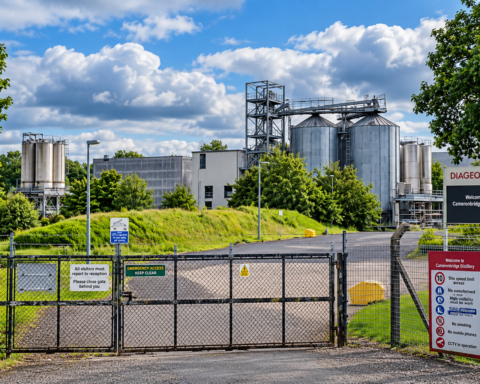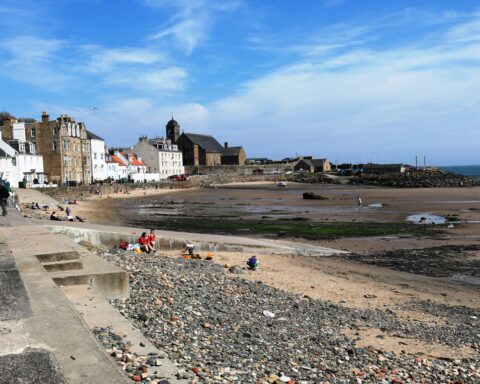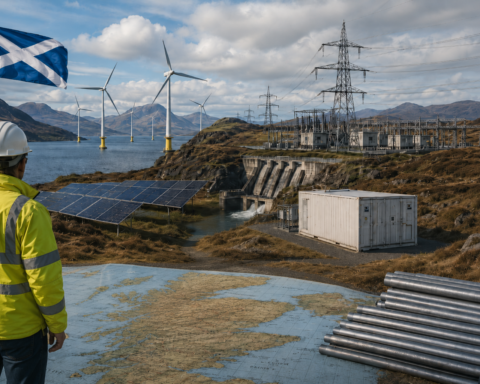

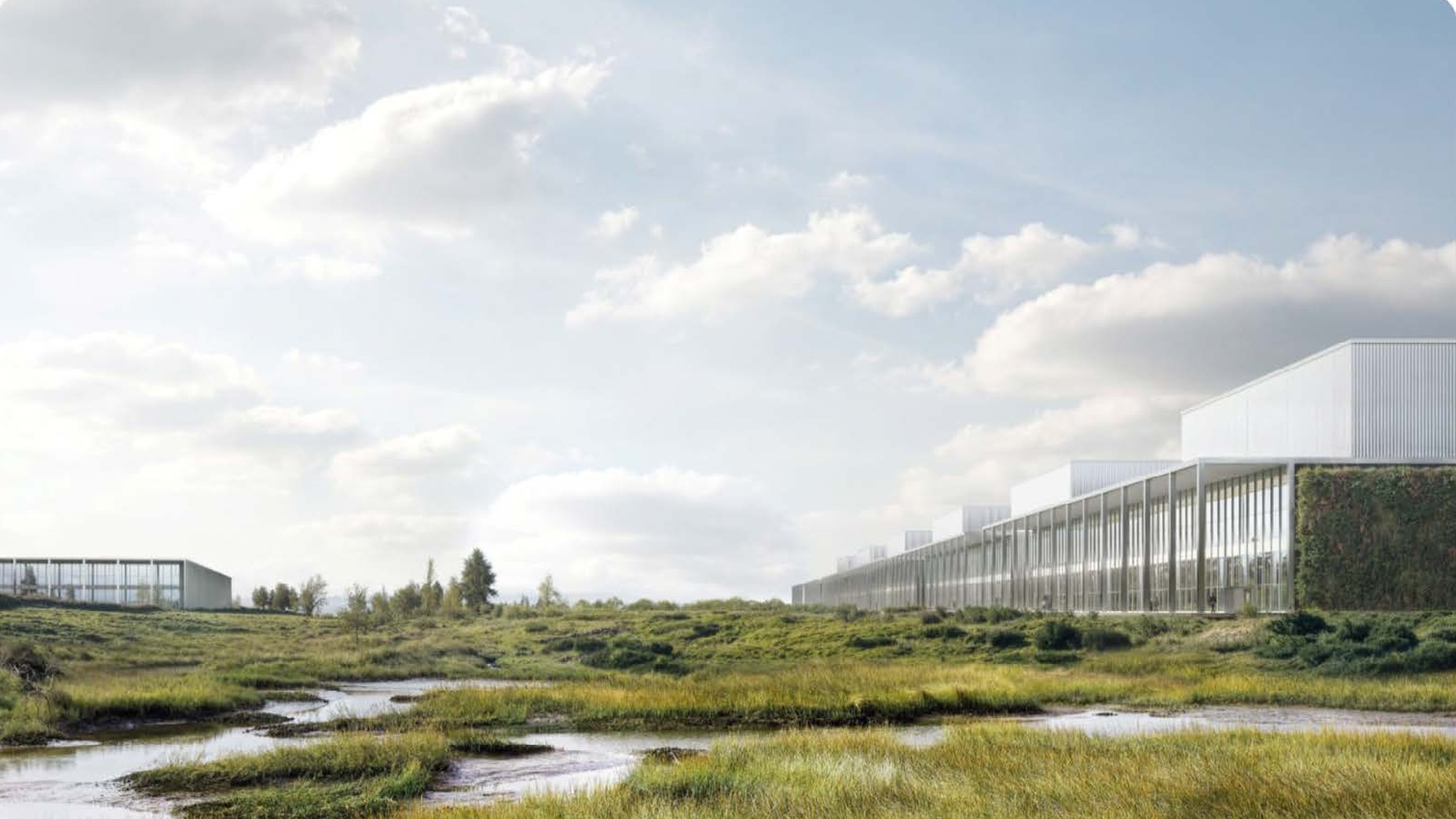
A proposed hyperscale AI data centre near Auchtertool would form part of a £15 billion Scottish network promoted by ILI Group. Local residents and conservation campaigners say the scale of the project raises questions over energy demand, rural land, water use, noise, heat and whether Scotland has a clear policy for AI infrastructure.
A Fife village has become the latest frontline in Scotland’s argument over artificial intelligence, energy demand and rural land after plans were lodged for a 600MW hyperscale data centre near Auchtertool.
The proposed Cato data centre would be built on land north west of Auchtertool, near Burntisland, and forms part of The Stoics, a planned network of three hyperscale green data centres across Scotland’s Central Belt. The developer, ILI Group, says the network would link sites in Fife, North Lanarkshire and East Ayrshire and support demand from AI, cloud computing and next generation digital services.
The dispute has moved quickly beyond a local planning objection. A single 600MW facility operating at high utilisation would draw electricity on a scale comparable with a large share of Scottish household demand. Campaigners say the application shows Scotland being asked to host infrastructure for global AI and cloud computing before the country has agreed how much power, land, water and grid capacity should be devoted to hyperscale data centres.
The Fife application is listed by Action to Protect Rural Scotland as planning reference 26/01243/PPP on the Fife planning portal. APRS says the planning permission in principle application was published on 25 May 2026 and that Fife is screening the proposal for Environmental Impact Assessment. The organisation says the plans relate to a 600MW data centre on farmland near Auchtertool, between Kirkcaldy and Cowdenbeath.
ILI describes The Stoics as a green digital network across Scotland’s Central Belt, with Cato in Fife, Aurelius in North Lanarkshire and Rufus in East Ayrshire. The company says each site has secured grid connection, land rights and entered the planning process, and that the network is intended to make Scotland a global hub for sustainable digital infrastructure.
The developer presents the project as part of Scotland’s clean energy future. Its materials say the data centres are designed to operate on renewable power, use advanced heat recovery, low carbon materials, environmental enhancements, woodland and wetland creation, and support Scotland’s AI and cloud computing capacity.
The opposition is focused on scale, location and detail. APRS says the submitted plans show buildings covering Halyard’s Castle and raises concerns over greenhouse gas emissions, diesel or biodiesel backup generators, environmental detail and noise impacts. The Courier reported objections from residents and Auchtertool Community Council, including concerns over the size of the development beside the village, energy and water use, noise, heat loss, wildlife, access to Auchtertool Linn Wildlife Site and the absence of a named end user.
The energy arithmetic explains why the proposal has attracted attention beyond Fife. APRS says a 600MW data centre operating at an estimated 80 per cent capacity would use around 4.2 million MWh a year, or 4,200GWh. It says that broadly matches the planning material’s estimate of ultimate annual energy use of around 4,000GWh.
Scotland’s total electricity consumption in 2024 was 21.7TWh, according to Scottish Government energy statistics published in December 2025. A 4TWh data centre would therefore be equivalent to about 18 per cent of Scotland’s current annual electricity consumption. If the 4.2TWh figure is used, the share rises to just under 20 per cent.
The household comparison needs care. National Records of Scotland says Scotland had 2.55 million households in 2024. APRS calculates that the proposed Fife site would use energy equivalent to more than half of Scotland’s households. That comparison appears to refer to household electricity consumption rather than total household energy use, because data centres draw electricity rather than household gas. On that basis, the claim is broadly within the range suggested by the annual electricity figures.
The power figure also sits against Scotland’s peak demand. National Energy System Operator says Scotland’s current winter peak gross demand is just over 4GW and remains below 5GW in 2030 across its Future Energy Scenarios pathways. A 600MW data centre would be equivalent to about 15 per cent of Scotland’s current winter peak gross demand if operating at full power.
That does not mean the proposal would cause an immediate local power shortage. Data centres are connected through grid agreements, contracted supply, phasing, backup systems and energy market structures. It does show why residents, conservationists and energy campaigners are treating the proposal as a national infrastructure question rather than a local commercial development.
The wider policy background helps explain why Scotland is attractive to developers. The Scottish Government has promoted green data centres for several years, saying Scotland’s renewable energy potential, cooler climate and connectivity could support zero carbon, cost competitive data hosting. Its green data centre material acknowledges that data centres are very large consumers of energy, while arguing that Scotland’s renewable generation creates an opportunity to become a leader in the sector.
The UK Government is also pushing AI infrastructure. Its AI Growth Zone policy says grid connections are the single biggest blocker for data centres and proposes measures to accelerate connections, remove speculative demand from the grid queue, reserve future capacity for AI Growth Zones, and offer pricing support where projects locate in areas such as Scotland and reduce system constraint costs. The policy says qualifying data centres in Scotland could receive electricity cost reductions of up to £24 per MWh from April 2027, subject to legislation and consultation.
The UK policy argument is that data centres in Scotland could use electricity that might otherwise be constrained when wind generation exceeds transmission capacity. In plain English, if Scotland is generating power that cannot easily be moved south through the grid, large electricity users located closer to generation could theoretically reduce some system costs. The question for communities is how that theory works when several hyperscale sites seek permanent, round the clock demand on land close to villages.
There is no shortage of global demand. The International Energy Agency says data centre electricity consumption is projected to more than double by 2030, reaching about 945TWh, with AI as the main driver alongside wider digital services. The IEA says AI focused data centre consumption grows faster than overall data centre consumption.
Britain is already modelling sharp growth. A National Grid data centre impact study says data centres already account for about 4 per cent of GB electricity demand and could rise to 11 per cent by 2035. It also cites NESO’s 2025 Future Energy Scenarios, which model data centre demand rising from 7.6TWh in 2024 to between 20TWh and 41TWh by 2035.
Ireland offers the warning most often cited by campaigners. Ireland’s Central Statistics Office reported that data centres used 22 per cent of metered electricity in 2024, up from 5 per cent in 2015. The same release said data centre metered electricity consumption rose from 6,335GWh in 2023 to 6,969GWh in 2024. That experience shows how quickly data centre demand can move from a technology investment issue to an electricity system issue.
The cost question is also unsettled. APRS argues that large data centre demand could feed into energy price pressure, citing overseas concerns over grid strain and infrastructure costs. The UK Government’s AI Growth Zone document says its proposed pricing support would be designed so that there is no additional cost for other electricity billpayers, but the detail remains subject to consultation and legislation.
Water is another issue that can be hidden by the language of green infrastructure. Some data centres use substantial water for cooling, though exact demand depends on design, climate, cooling method, reuse systems and operating model. The Fife proposal will need clearer public detail on cooling technology, water demand, discharge, heat recovery and whether any claimed local heat benefit has a named recipient, timetable and enforceable delivery route. Without that, heat recovery remains a promise rather than a public service.
The planning route adds another point of scrutiny. Planning permission in principle can establish the acceptability of development before all technical details are fixed. That can be legitimate for large projects, but for a hyperscale data centre it leaves communities asking whether the most consequential details, including end user, energy contracts, backup generation, cooling, noise, heat reuse and grid infrastructure, will be settled after the principle of development has already moved in the developer’s favour.
The heritage issue also needs examination. APRS says the submitted plans show buildings covering Halyard’s Castle. If confirmed in the planning documents, the application will need scrutiny against archaeology, cultural heritage and landscape policy. Rural land is not empty simply because it is not urban. It can contain archaeology, habitats, paths, farming use, drainage systems, views, local memory and the ordinary peace of a village that did not invite a server campus to the parish boundary.
The developer’s case rests on investment, jobs and Scotland’s digital future. ILI says The Stoics would bring major private investment, construction activity, long term roles, supply chain opportunities and a strategic digital hub for Scotland. Industry coverage has described the network as a £15 billion plan spanning Fife, East Ayrshire and North Lanarkshire.
The public test is what those benefits mean locally. Hyperscale data centres can create substantial construction activity, but the number of permanent operational jobs can be far smaller than the power demand suggests. The application and economic statements should therefore be read for permanent local jobs, training commitments, rates revenue, supply chain guarantees, community benefit, energy arrangements and enforceable obligations rather than investment language alone.
The national question is now unavoidable. Scotland has positioned itself as a green data centre location because it has renewable electricity, cooler climate, land and a policy desire to attract digital infrastructure. AI has changed the scale of the proposition. What once sounded like server hosting now involves facilities drawing hundreds of megawatts, potentially operating continuously, with effects on land, grid planning, energy prices, water systems, emissions accounting and rural communities.
Fife’s decision will be a planning decision, but the Auchtertool case has exposed a policy gap. Scotland needs a transparent framework for hyperscale AI infrastructure before village by village planning fights become the default way of deciding how much of the country’s electricity future is handed to computation.
Action to Protect Rural Scotland, “ILI Cato, Auchtertool, Fife”
ILI Group, “Data Centres: The Stoics, A Green Digital Network for Scotland”
ILI Group, “Cato Data Centre Project” consultation page
DIGIT, “Plans revealed for £15bn data centre network across Scotland”, 4 November 2025
Scottish Government Digital Connectivity, “Green data centres”
UK Government, “Delivering AI Growth Zones”, 13 November 2025
Scottish Government, “Energy Statistics for Scotland Q3 2025”, published 18 December 2025
National Records of Scotland, “Households and Dwellings in Scotland, 2024”, published 26 June 2025
National Energy System Operator, “Scottish boundaries”, Electricity Ten Year Statement
International Energy Agency, “Energy and AI: Executive summary”
International Energy Agency, “Energy demand from AI”
National Grid, “Data Centre Impact Study”, November 2025
Ireland Central Statistics Office, “Data Centres Metered Electricity Consumption 2024”, 10 June 2025
Ireland Central Statistics Office, “Data Centres Metered Electricity Consumption 2024: Key Findings”
House of Commons Library, “Data centres: planning policy, sustainability, and resilience”, 2026