Scotland’s expanding electric coach network is attracting millions of pounds in private investment, increasing the number of services between Glasgow and the Highlands, and offering some passengers journeys costing just £4. But behind the cheap fares and expanding timetables lies a more complicated financial picture involving public subsidies, Chinese vehicle manufacturing and concerns about the future of Scotland’s own bus industry.
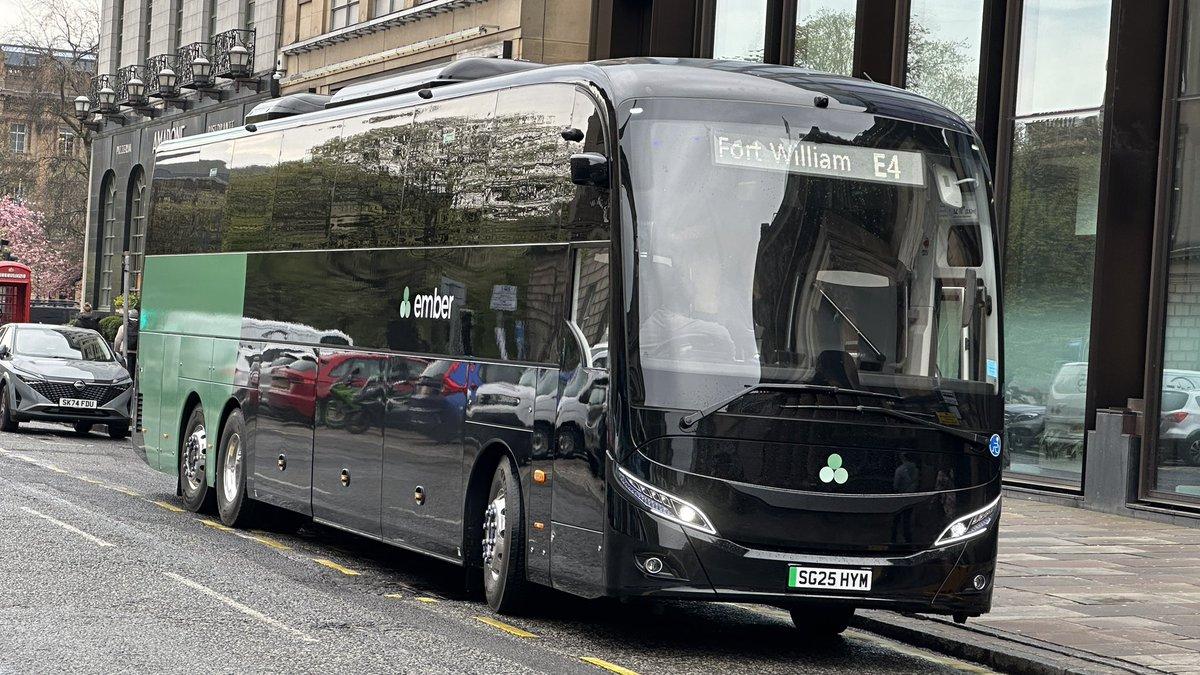
On Wednesday, 28 October 2026, electric coach operator Ember will increase its Glasgow to Fort William service to seven return journeys daily, roughly one departure every two hours throughout the day.
The expansion follows an £18 million private investment announcement earlier this month and a Scottish Government funding award worth £13.17 million towards another 100 electric coaches and associated infrastructure.
All 100 coaches in the publicly supported project will be supplied by Yutong, a Chinese manufacturer. Meanwhile, Alexander Dennis, Scotland’s principal bus manufacturer, has been restructuring its Scottish operations and warning that public transport investment is increasingly supporting manufacturing overseas.
There is another financial question. Ember’s advertised £4 fare between Glasgow and Fort William is made possible by government-supported fare caps, with public money reimbursing operators for much of the difference between the discounted price and the normal fare.
The result is a transport expansion receiving public support through two separate mechanisms: capital funding for vehicles and infrastructure, and continuing financial support for eligible passenger fares.
£13.17 Million for Chinese-Made Coaches
In March 2026, the Scottish Government announced the recipients of funding under the third Scottish Zero Emission Bus Challenge Fund, known as ScotZEB3.
Ember received the largest individual award, amounting to £13,174,147 towards a project costing £53,790,510.
The remaining £40,616,363 was identified as private investment.
The project covers 100 Yutong electric coaches and 43 charging points. The funding award remains subject to the finalisation of grant agreements and due diligence, meaning the published award should not be confused with money already paid in full.
Across ScotZEB3, the Scottish Government approved £45 million in public funding to support 334 zero-emission vehicles and associated infrastructure.
The published allocations identify 166 Yutong vehicles across three operators: 100 for Ember, 44 for Stagecoach and 22 for First Bus. That represents almost half the vehicles supported under the programme.
Other awards support vehicles supplied by Alexander Dennis, Wrightbus and Volvo, demonstrating that the funding is not exclusively directed towards overseas manufacturers.
Nevertheless, the scale of the Yutong orders has become an important point of contention within Scotland’s manufacturing industry.
Ember Has Received Public Funding Before
The latest award is not the company’s first substantial contribution from the Scottish Government.
Transport Scotland’s published records show that Ember Core Ltd received and drew down £5,562,126 under the first phase of ScotZEB, supporting 26 vehicles and associated infrastructure.
If the latest £13.17 million conditional award is finalised at its published value, the two programmes will represent almost £18.74 million in public capital support associated with Ember projects.
That figure does not mean £18.74 million has already been paid, nor does it account for the company’s private investment or any separate passenger fare reimbursements.
The government argues that such funding accelerates the replacement of diesel vehicles, supports charging infrastructure, reduces emissions and improves services across communities that can be expensive to serve.
The relevant economic question is whether the long-term public benefits justify the amount invested, particularly when significant manufacturing expenditure flows to suppliers outside Scotland.
Why Does a £15.55 Journey Now Cost £4?
One of Ember’s most striking advertised offers is the Glasgow to Fort William single fare, which the company says fell from £15.55 to £4 in September.
The reduction came from the interaction of two government-backed bus fare-cap schemes, rather than a sudden reduction in the underlying cost of operating a coach.
The Highlands and Islands scheme limits eligible journeys within its area to £2. A second scheme introduced in Strathclyde on 7 September applies a similar cap across participating services in Glasgow and surrounding areas.
Where an eligible journey crosses both fare-cap regions without entering another regional transport partnership area, the passenger can pay no more than £4 for a single journey.
The operators, however, do not simply absorb the full difference between the original fare and the amount paid by passengers.
Transport Scotland provides reimbursement calculated as a percentage of the difference between the normal fare and the capped fare.
For 2026–27, that reimbursement rate is 90% across participating services in Strathclyde and 90% for most mainland Highlands and Islands services.
Consequently, the amount paid at the ticket office or through a booking website does not represent the full revenue received by the operator for an eligible subsidised journey.
The precise public reimbursement for an individual Ember Glasgow to Fort William ticket depends on the applicable normal fare and scheme calculations. Published information does not provide a complete breakdown of Ember’s total reimbursement income on this route.
The £4 fare is therefore a genuine saving for passengers, but it is not evidence that the journey can be provided commercially for £4 without public financial assistance.
Could Cheap Coaches Cost Scotland’s Railways Millions?
A newly published Scottish Government business case identifies another consequence of the fare-cap policy that has received less attention than the reduced ticket prices.
Transport Scotland’s assessment, published on 6 October, warns that substantially cheaper bus travel could divert passengers away from ScotRail services where the two modes compete along similar corridors.
The report estimates that the wider Strathclyde fare-cap scheme could place between £25 million and £45 million of annual ScotRail revenue at risk.
These are provisional estimates, subject to considerable uncertainty. They are not losses already recorded and should not be attributed specifically to Ember or the Glasgow to Fort William route.
However, the government’s own assessment uses Glasgow to Fort William as one example of the substantial price difference between rail and capped bus services.
Its comparison lists a ScotRail anytime single fare of £38.80 against an eligible bus fare of £4.
For an individual passenger, that difference may make the coach an obvious financial choice. For the public finances, the calculation is more complicated.
ScotRail is publicly owned, and a reduction in its passenger revenue can increase the public support required to sustain railway operations, particularly because many railway costs remain fixed regardless of passenger numbers.
The government argues that cheaper bus fares provide wider economic and social benefits, especially for households facing transport costs that restrict access to work, education and services.
Its October business case estimates the wider Strathclyde scheme could cost approximately £115 million to £150 million annually when potential rail revenue impacts are included, although the estimates vary significantly according to demand and reimbursement assumptions.
The assessment concludes that the policy is likely to offer positive value for money despite those costs, with affordability and social inclusion forming central parts of its justification.
The unresolved question is how much of the additional bus demand comes from people previously travelling by private car, and how much comes from passengers who would otherwise have used an already publicly supported railway.
Scotland’s Bus Manufacturer Has a Different View
The decision to purchase Chinese-made coaches is particularly significant because Scotland retains a specialist bus manufacturing industry.
Alexander Dennis, a subsidiary of the Canadian NFI Group, has long operated manufacturing facilities around Falkirk and Larbert.
However, the company has experienced substantial financial and competitive pressures as bus operators increasingly purchase vehicles from overseas manufacturers.
In March, Alexander Dennis announced plans to concentrate its Scottish manufacturing operations on chassis production at Larbert, while ending operations at its legacy Falkirk facility and transferring bus body manufacturing to Scarborough.
The changes placed up to 115 positions at risk while retaining approximately 350 Scottish roles, according to the company’s announcement.
On 6 October, Alexander Dennis issued a further statement calling for stronger government support for domestic bus manufacturing.
The company argued that changes to the Scottish Government’s funding programme had disrupted its expected order pipeline and contributed to its decision to reorganise production.
It also maintained that publicly subsidised orders for imported vehicles were being placed while its Scottish operations had spare capacity.
Alexander Dennis says it has retained the capability to restore bus body manufacturing in Scotland if sufficient demand and long-term orders emerge.
This is the manufacturer’s stated position. The Scottish Government disputes aspects of the company’s account of previous support arrangements, including the circumstances surrounding an offered furlough grant.
In a statement to the Scottish Parliament on 30 September, the government said it had offered up to £4.1 million to support workers during a period of reduced production, but that the grant conditions had not been met following changes to the manufacturer’s operating plans.
Ministers also pointed to substantial previous research and development support for Alexander Dennis, including £30.5 million awarded through Scottish Enterprise over the preceding decade.
The disagreement illustrates the difficulty of pursuing two objectives simultaneously: helping transport operators acquire vehicles at competitive prices while preserving Scottish industrial manufacturing capacity.
Why Ember Says It Cannot Buy Scottish Coaches
Ember has publicly defended its choice of Chinese-manufactured vehicles.
The company says it repeatedly approached Alexander Dennis about supplying an electric coach suitable for its long-distance services, but was informed that an appropriate vehicle was not available and that there were no plans to develop one for that market.
That is Ember’s account of the discussions.
Electric intercity coaches have different commercial and engineering requirements from urban buses, including luggage accommodation, passenger facilities, journey range and operating characteristics.
A manufacturer offering battery-electric urban buses does not necessarily have a suitable long-distance coach available for immediate purchase.
Ember says it selected Yutong because the company could supply vehicles meeting its requirements. It also reports that Yutong has invested in Scotland through locally based staff, maintenance support, training and planned additional work connected with the latest funding programme.
Those activities provide some economic benefit within Scotland, although they are different from manufacturing complete vehicles domestically.
Ember has also expressed interest in developing a Scottish-manufactured electric coach in the future, provided a commercially and technically viable project can be established.
No such manufacturing agreement or production timetable has been announced.
Another £18 Million From Private Investors
Despite the debate over public funding, Ember is also attracting substantial private capital.
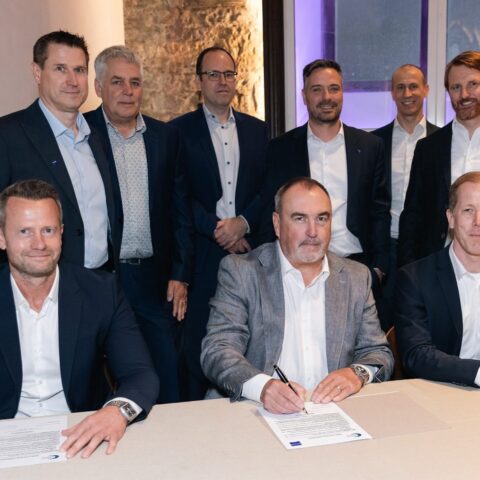
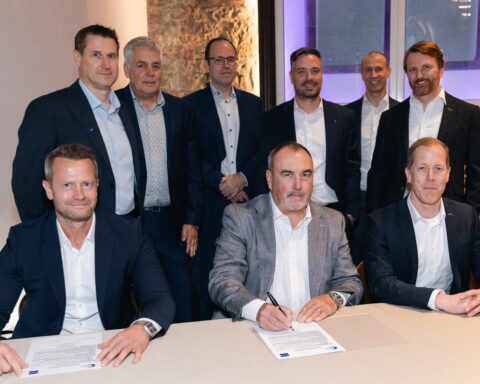
On 8 October, the company announced that it had raised £18 million in fresh equity investment at a pre-investment valuation of £180 million.
Existing institutional investors participated, alongside a new minority investor, the Lithuania-based Strioga Family Foundation.
Ember says it now operates 120 electric coaches and carries millions of passengers annually.
The company intends to introduce another 100 vehicles over approximately 18 months, expanding the frequency and geographical reach of its services.
The newly announced Glasgow to Fort William timetable is one example of that approach.
From 28 October, three additional return journeys will bring the route to seven in each direction every day.
That is a practical improvement for passengers who previously faced fewer departure choices. More frequent services can make public transport useful for appointments, work and leisure journeys that would otherwise require a car.
Private investment also represents a significant contribution towards the capital required to build the network.
However, the existence of private investment does not remove the need to examine the continuing public financial contribution, particularly where an operator benefits from both vehicle grants and passenger fare reimbursement schemes.
The Longer-Term Cost of an Electric Network
Ember argues that electric vehicles can offer operating advantages through lower energy expenditure, reduced emissions at the point of use and greater control over charging infrastructure.
The company has developed its own software platform to manage ticketing, vehicle movements, drivers, charging and other operational requirements.
But the overall economic comparison with diesel coaches requires more than the cost of electricity.
Vehicle purchase prices, battery replacement, charging infrastructure, maintenance, vehicle lifespan, electricity tariffs and eventual disposal or recycling all influence the total cost of ownership.
Publicly available announcements about Ember’s expansion do not provide a comprehensive independently audited comparison showing the full lifetime costs of its electric fleet against equivalent diesel operations.
Nor do they establish how much continuing public financial support will be required once all the planned vehicles are operating.
These considerations do not negate the potential benefits of electric coaches, including reduced tailpipe pollution and lower operating emissions where the electricity supply allows.
They do mean that cheaper fares, private investment and environmental benefits must be assessed separately rather than treated as interchangeable measures of commercial success.
What Will Scotland Receive for Its Investment?
Scotland’s electric coach network is expanding, with additional services, significant private investment and government support for vehicles and passenger fares.
The immediate transport benefit is clear: passengers will have more departure choices between Glasgow and Fort William from 28 October, and eligible journeys can cost considerably less than before the fare caps were introduced.
The wider economic result is less straightforward.
Public money is helping finance imported vehicles, domestic bus manufacturing is undergoing restructuring, and the government’s own analysis identifies a possible loss of revenue from publicly owned rail services as passengers respond to dramatically different ticket prices.
At the same time, government funding is intended to deliver benefits that private operators might not provide at the same scale or speed, including improved regional connections, emissions reductions and lower travel costs for households.
Determining the long-term value of the investment will require evidence of actual passenger growth, changes in car and rail use, total public expenditure, and the extent to which new transport activity supports Scottish employment and businesses.
The seven daily return journeys beginning on 28 October represent a measurable service expansion. Whether the wider system delivers lasting economic value for Scotland will depend on more than the number of electric coaches on its roads.
Sources
- Ember — More Services Between Fort William and Glasgow, 15 October 2026; £18 Million Investment, 8 October 2026; and Fare Cap Announcement, 3 September 2026
- Transport Scotland — Scottish Zero Emission Bus Challenge Fund, Phase 1 and Phase 3 Award Records
- Transport Scotland — £45 Million for Zero Emission Buses, 25 March 2026
- Transport Scotland — £2 Bus Fare Cap, Scheme Rules and Reimbursement Rates, 2026–27
- Transport Scotland — Outline Business Case for the £2 Bus Fare Cap in Strathclyde, 6 October 2026
- Transport Scotland — Socio-Economic Case, Including Impact on ScotRail, 6 October 2026
- Alexander Dennis — Alexander Dennis Urges Stronger Support for Domestic Bus Manufacturing, 6 October 2026
- Alexander Dennis — Proposed Scottish Manufacturing Strategy, 31 March 2026
- Scottish Parliament — Official Report, Alexander Dennis Statement, 30 September 2026