

A new memoir is bringing the streets, families and everyday experiences of west Edinburgh back into focus, recording a childhood that unfolded during one of the most significant periods of technological and cultural change in modern Scottish life.
STENHOUSE: Growing Up in Edinburgh and Beyond, written by Edinburgh-born author Bill Rectangle, follows his experiences from early childhood in the late 1970s through the 1980s and into the early 1990s.
Rectangle is concerned less with Edinburgh’s internationally recognised monuments and historic architecture than with the ordinary places where generations of its residents actually lived: housing schemes, school playgrounds, local shops, parks, football pitches and family homes.
The memoir recalls a period when children spent much of their free time outdoors, when friendships were organised through neighbourhood familiarity rather than instant communication, and when video recorders, electronic games and the first home computers were beginning to change domestic life.
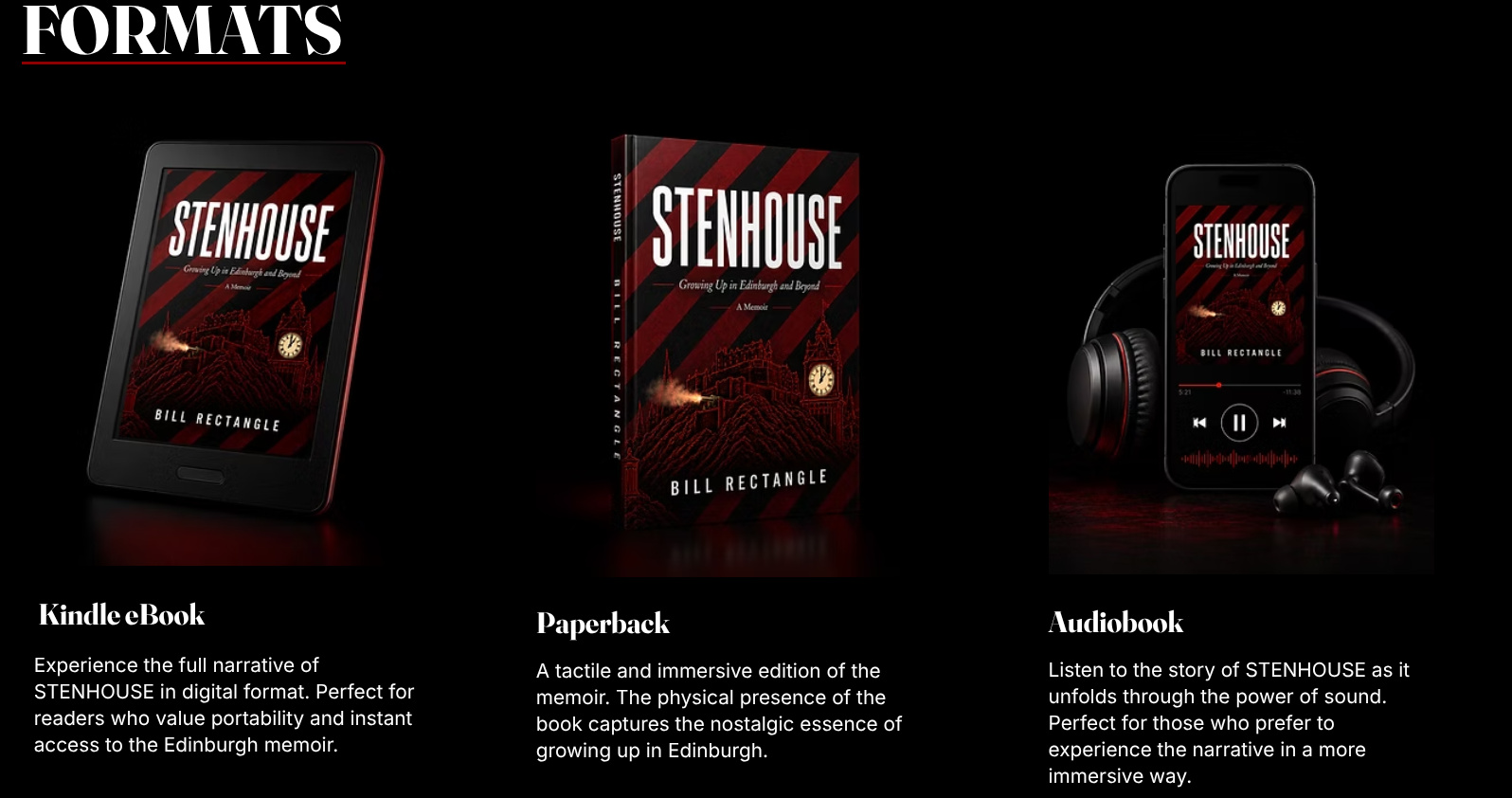
Rectangle, who now lives in West Lothian, has independently published the book through White Hat Media, making it available in paperback, Kindle and an audiobook narrated in his own Edinburgh voice.
His account is both a personal recollection and an attempt to preserve aspects of Scotland’s recent social history that seldom appear in formal historical records.
The Edinburgh Beyond the Postcards
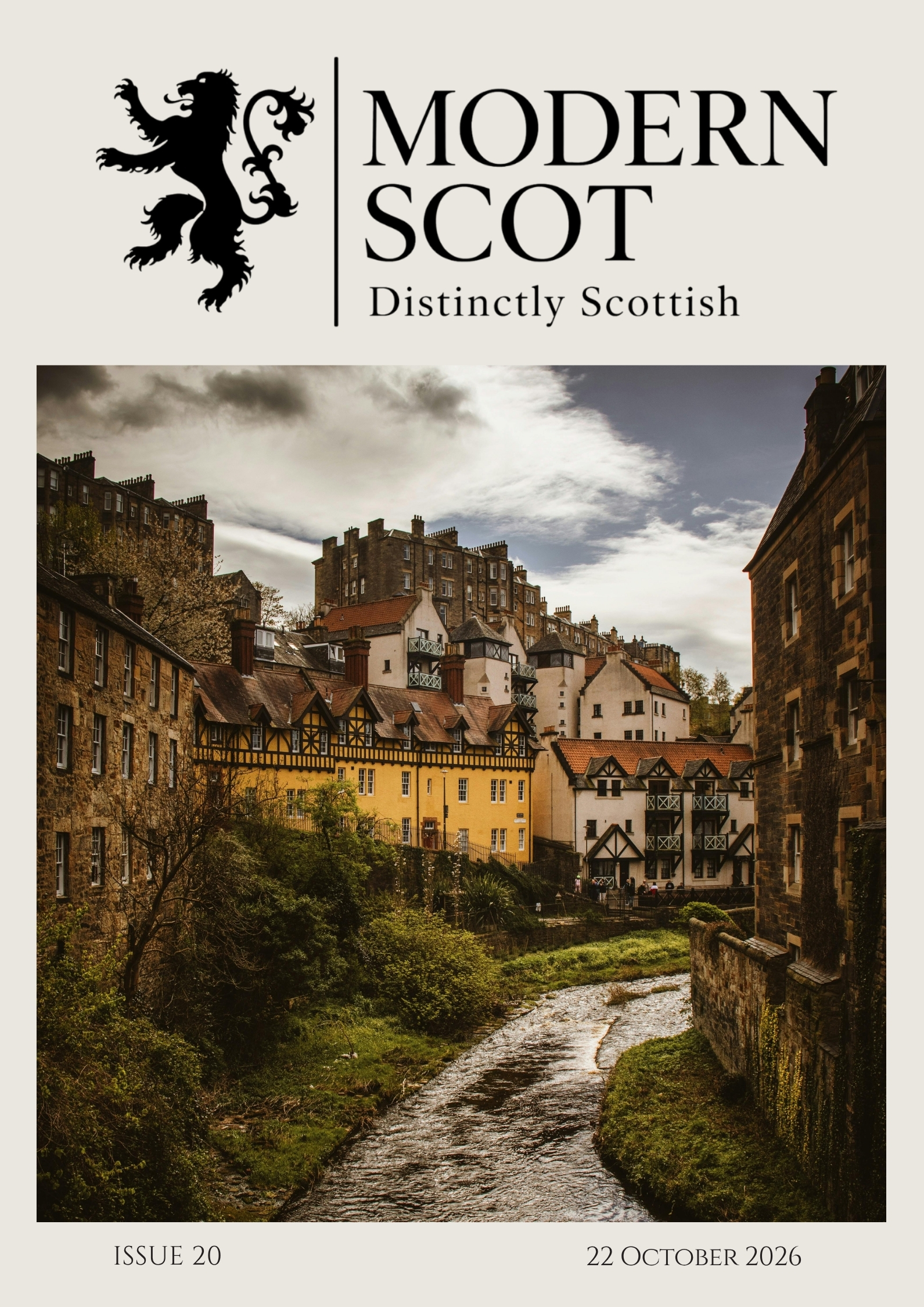
Stenhouse, in the west of Edinburgh, has a history extending considerably further back than the residential streets familiar to Rectangle’s generation.
The area’s surviving historic buildings include Stenhouse Mill, a substantial stone building dating from 1623, constructed for Patrick Ellis. Historic Environment Scotland records it as a Category A listed building, reflecting its national architectural and historic importance.
Much of the surrounding residential neighbourhood developed in the twentieth century, particularly during Edinburgh’s expansion of municipal housing between the wars.
Ebenezer James MacRae, appointed Edinburgh’s City Architect in 1925 and Director of Housing in 1926, was responsible with his team for major housing developments across the city, including Stenhouse, Saughton, Piershill, Prestonfield and Craigmillar.
In November 2024, Edinburgh councillors formally recognised MacRae’s contribution, noting the quality of the social housing developed under his direction, including its space standards and provision of natural light.
These planned residential districts became the everyday environment of thousands of Edinburgh families.
By the time Rectangle was growing up, the housing, schools, streets and public spaces established by earlier generations had become a familiar network of places in which children developed friendships, explored their surroundings and established a sense of belonging.
His memoir approaches that environment from the perspective of somebody who experienced it, rather than through the plans and official decisions that created it.
Football, Skateboards and the Freedom of Childhood
The recollections described in the book encompass school life, football, bicycles, skateboarding, ice skating, skiing, music, family relationships and the local characters who became part of Rectangle’s childhood.
In published interviews about the memoir, Rectangle has described a childhood spent moving between neighbourhood streets, playing fields, parks and the Water of Leith.
Football occupied an important place in those years, from informal games with friends to more organised participation in local teams.
Skateboarding developed into another significant interest. Rectangle recalls constructing makeshift ramps and travelling into the city, where Bristo Square became an established gathering place for Edinburgh skateboarders.
He remembers a period when access to purpose-built facilities was limited, making places such as Livingston particularly important to young people interested in the sport.
Today, the skatepark at nearby Saughton provides a permanent facility for activities that an earlier generation often pursued wherever suitable ground could be found.
Saughton Park itself offers an example of how Edinburgh’s public spaces have changed while retaining their place in community life.
Purchased by Edinburgh Corporation in 1900, the grounds hosted the Scottish National Exhibition of 1908 and subsequently developed into a major public park. During the twentieth century, sports facilities, gardens and recreational areas were progressively added.
The Saughton Sports Complex was constructed during the 1970s, while a dedicated skatepark opened in 2010. Between 2016 and 2020, the wider park underwent an extensive restoration programme supported by approximately £8.5 million in investment.
Rectangle has identified the transformation of Saughton Park and the provision of dedicated skateboarding facilities as particularly notable changes in the area he remembers.
Such comparisons give the memoir a wider geographical interest. The buildings and streets remain identifiable, but their uses, surroundings and significance to successive generations continue to evolve.
Growing Up as Scotland Entered the Computer Age
A feature of STENHOUSE is the relationship between Rectangle’s childhood fascination with technology and his later professional career.
He has worked in information technology for more than thirty years, progressing through technical support, computing infrastructure, digital systems and cybersecurity.
His early interest began with devices that were becoming increasingly familiar in Scottish homes during the 1980s: calculators, video recorders, electronic games and home computers.
These machines arrived during a period when household communication and entertainment were changing rapidly, but before mobile phones and permanent internet connections became ordinary features of daily life.
For children growing up at that time, the transition was gradual. Outdoor games, records, television programmes and local friendships continued alongside the arrival of increasingly sophisticated electronic devices.
The memoir explores that period through the experience of one Edinburgh household and neighbourhood rather than presenting a comprehensive technological history.
Rectangle has said that the curiosity developed during those early encounters with electronics remained with him throughout his career.
The personal connection between childhood experience and professional development forms part of the book’s broader account of how the world changed between the late twentieth century and the present.
How Reliable Is a Childhood Memory?
The book’s approach is that it is presented as a literary memoir, not as a documentary history of Edinburgh.
Rectangle has been open about the process of reconstructing remembered scenes, including conversations, surroundings and sensory details.
He describes using family discussions, photographs, familiar locations and checks against historical information to strengthen his recollections wherever possible.
He also acknowledges that remembered dialogue is necessarily reconstructed and that some names and identifying details have been changed to protect privacy.
This matters when considering the historical value of personal memoirs.
Memories can preserve observations that are absent from official documents, including the atmosphere of particular streets, the personalities of neighbours, family routines and the informal rules of childhood friendships.
They are nevertheless personal accounts, shaped by individual experience and the passage of time. They do not provide the same form of evidence as contemporary records, photographs or dated documents.
Rectangle’s decision to distinguish remembered experience from independently verifiable history allows the book to be understood on its intended terms.
Its subject is not simply what Edinburgh looked like during the 1980s, but what living in one part of the city meant to somebody growing up there.
An Unusual Route Into Publishing
Rectangle’s journey from a long career in information technology to publishing a memoir is another aspect of the project.
In interviews published during September 2026, he explained that reading and written English had presented difficulties during his early school years, when he required additional support.
He subsequently pursued further education and developed his professional career, although the ambition to write about his childhood remained.
He eventually began assembling his memories into a chronological manuscript, organising recollections of people, locations and events from his earliest years through to leaving school.
According to his published account, the project began with approximately 50,000 to 60,000 words of recollections and developed into a completed memoir of 80,837 words across 69 chapters.
He describes his approach as the Cinematic Layering Technique, in which a remembered incident is developed through additional attention to atmosphere, movement, dialogue and setting.
The audiobook runs for approximately eight hours and is narrated by Rectangle himself, preserving the Edinburgh voice in which he originally experienced many of the people and places he describes.
Remembering a Place Without Pretending It Was Perfect
Rectangle has resisted presenting his childhood as an era that was necessarily better than the present.
In his published interviews, he has acknowledged that children now have opportunities through technology, education and communication that were unavailable during his early years.
His memoir also incorporates difficult experiences alongside the humour, friendships and adventures of growing up. A personal account of the past can become an idealised reconstruction in which familiar places appear permanently secure and childhood freedoms seem uncomplicated. Rectangle has instead described his intention as recording both the pleasures and difficulties of the period.
The setting is recognisably Scottish, but the experiences are not confined to Edinburgh. Families across the country experienced similar changes in leisure, domestic technology, communication and the organisation of everyday life during the final decades of the twentieth century.
The particulars of Stenhouse provide the memoir with its identity, while the changes it records reflect developments affecting communities far beyond the city.
Preserving the History That Rarely Enters the Archives
Scotland possesses extensive records of its major historical events, public institutions, industries and buildings. The details of ordinary childhoods are less consistently preserved.
Official records may establish when a housing estate was constructed, when a school opened or when a park was restored. They cannot necessarily establish how children used those places, how friendships developed or which everyday encounters remained important decades later.
Personal memoirs can help preserve that less formal history, particularly when they identify their own limitations and make clear where recollection rather than documentary evidence provides the foundation.
Rectangle has indicated that he is considering further writing about the years following his departure from school, together with possible adaptations of his original memoir for younger readers.
For now, STENHOUSE: Growing Up in Edinburgh and Beyond stands as an account of one boy’s experience of the Scottish capital during a period when neighbourhood life and domestic technology were changing together.
About the Book
Title: STENHOUSE: Growing Up in Edinburgh and Beyond
Author: Bill Rectangle
Publisher: White Hat Media
Publication: 2026
Formats: Paperback, Kindle and author-narrated audiobook
Official website: https://www.whitehatmedia.org/
Sources
STENHOUSE: Growing Up in Edinburgh and Beyond. White Hat Media, 2026.
https://www.whitehatmedia.org/
Bill Rectangle — Author of Stenhouse. The Book Hook Online, 10 September 2026.
https://thebookhook.online/author-interviews/bill-rectangle/
The Author Interview Featuring Bill Rectangle. My Random Musings, 25 September 2026.
https://www.myrandommusings.co.uk/2026/09/the-author-interview-featuring-bill-rectangle/
City Architect Centenary — Recognition of Ebenezer James MacRae’s Housing Developments. City of Edinburgh Council, minutes of 7 November 2024.
https://democracy.edinburgh.gov.uk/
Stenhouse Mill (House), Stenhouse Mill Lane and Crescent — Listed Building LB28125. Historic Environment Scotland, designation dated 14 December 1970.
https://portal.historicenvironment.scot/
Saughton Park: 10-Year Management and Maintenance Plan. City of Edinburgh Council, March 2023.
https://www.edinburgh.gov.uk/downloads/file/30085/saughton-park-management-plan