Temporary arrangements have kept landfill sites on Mull and Islay operating. Council papers and a revised national capacity assessment show the transport, treatment and planning problems still being worked through as Scotland moves away from burying biodegradable waste.
Landfill sites on Mull and Islay are operating under temporary arrangements lasting until 31 December 2026, according to council records, almost ten months after Scotland’s ban on landfilling biodegradable municipal waste took effect.
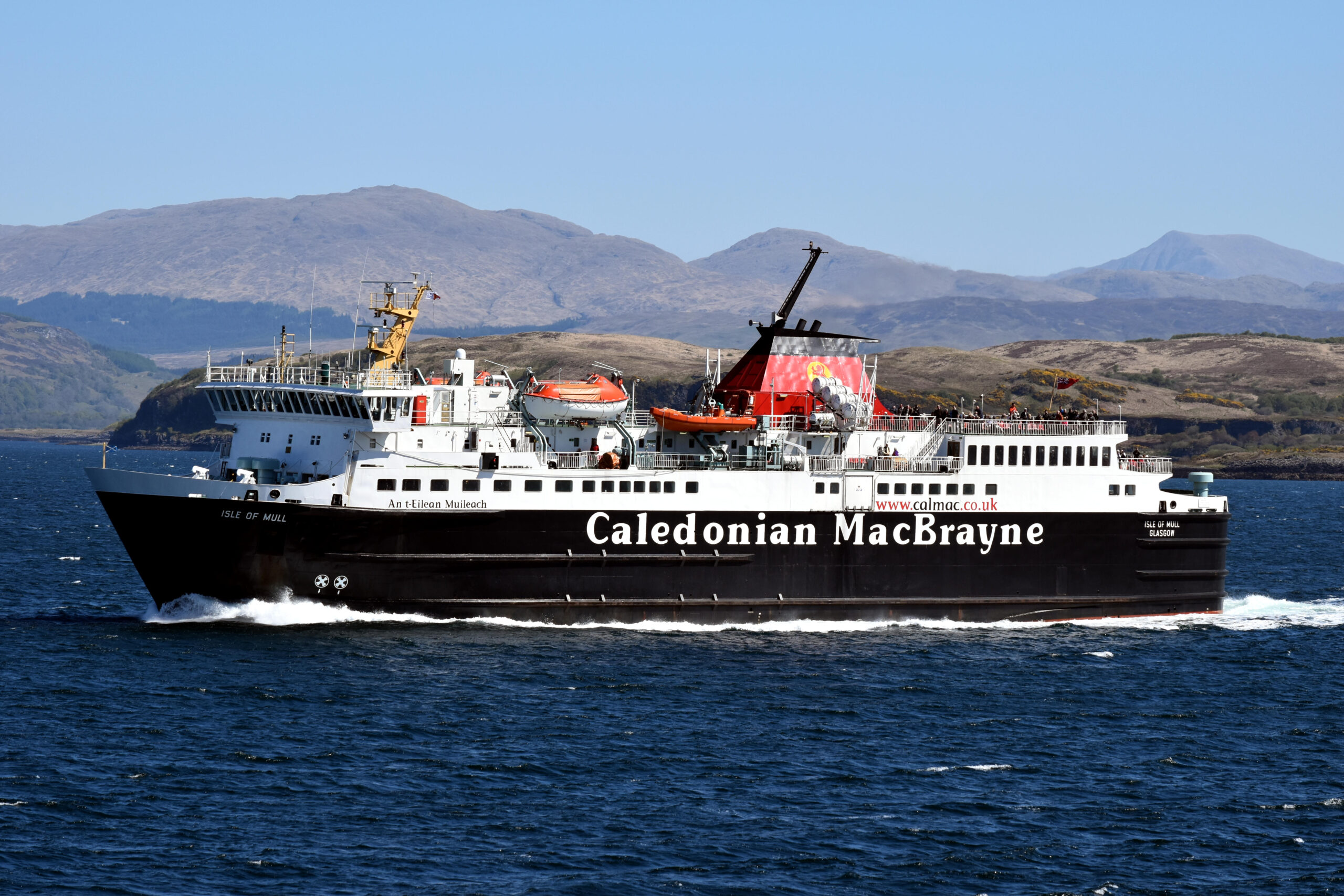
Argyll and Bute Council records identify ferry capacity, reliability and the consequences for island businesses as reasons for retaining Gartbreck on Islay and Glengorm on Mull while longer-term solutions are developed. A waste-management report considered by councillors on 9 October also records concerns raised by the council’s and Biffa’s waste-treatment contractors about available capacity, with joint contingency planning under way.
The transition has already sharply reduced landfill use. Council-wide figures in its quarterly performance report record 798 tonnes landfilled between April and June 2026, compared with 3,267 tonnes in the same quarter a year earlier. Landfilling has ended at Lingerton, near Lochgilphead, and Dalinlongart in Cowal.
For April to June, the council reports 39.1% of waste recycled or composted and another 56% sent for recovery. The combined figure is 95.1%, but recovery includes treatment for energy production and is recorded separately from recycling. Residual waste from Coll and Tiree has already been transported to the central belt for processing into fuel for energy-from-waste facilities since 2024.
Six-month arrangements
The ban remains in law. It covers biodegradable municipal waste, including mixed residual household waste and similar waste from businesses. The Scottish Environment Protection Agency has adopted a conditional approach to compliance and enforcement from 1 January 2026 until 31 December 2027, ahead of full enforcement from 1 January 2028.
SEPA says operators should prioritise prevention, reuse, recycling and available non-landfill treatment. Waste producers and managers must notify SEPA and receive confirmation before transferring waste under the arrangements. Each notification can cover no more than six months, and other permit conditions continue to apply.
Argyll’s current island arrangements therefore end before the national transitional framework does. The council’s performance report records that further six-month arrangements were granted through at least 31 December 2026. That date is the limit of the presently reported permission, rather than an announced permanent closure date for both sites.
SEPA says its approach aims to protect the environment and minimise whole-system greenhouse-gas emissions during the capacity gap, including by avoiding long-distance haulage or export. Continued landfill use is conditional; the regulator can withdraw its temporary position if its requirements are not met or significant harm occurs or is likely.
Capacity on paper and capacity in use
SLR Consulting’s assessment for Zero Waste Scotland, published in August, uses 2024 waste data and information available during preparation in March 2026. It estimates a 2026 capacity gap of 360,000 to 530,000 tonnes a year across scenarios with different recycling, waste-reduction and export assumptions.
By 2028, permitted energy-from-waste capacity could reach approximately 2.37 million tonnes annually if expected projects are completed on time. Estimated operational capacity is lower, at 1.96 million to 2.08 million tonnes. The operational estimate uses observed Scottish and UK throughput averages rather than assuming that every permitted tonne can be processed.
It also warns that available spare capacity may be insufficient during planned maintenance, while a prolonged shutdown at a large plant could require exports or emergency landfill permission. Spare space can be constrained by contracts, geography and operating conditions.
Unlike the assessment published in 2024, the updated modelling does not identify significant overcapacity in any of its scenarios. Exports remain part of the system’s capacity balance; the forecast gap is not a measurement of waste left uncollected.
The carbon calculation
The environmental case for diverting biodegradable material from landfill rests partly on avoiding the methane produced as it decomposes. Moving material into an incinerator introduces a different emissions calculation, affected by what is burned and how the resulting energy is used.
Zero Waste Scotland’s life-cycle study, revised in 2021 using mainly 2018 data, estimated an average life-cycle climate impact per tonne of waste 27% lower for energy-from-waste treatment than landfill, for the waste composition studied. It also identified fossil carbon, principally from plastics, as the largest influence on incineration’s climate impact. Food and paper were central to the landfill calculation.
Changing what households and businesses put into residual waste changes that comparison. The study places waste prevention, reuse and recycling ahead of either disposal route. Its historical national estimate does not provide a measured carbon saving for Argyll’s present combination of transport, processing and final treatment.
Carbon pricing for incineration is also on a revised timetable. An official UK emissions-trading update on 26 August said full inclusion of waste incineration would not take place in 2028 as originally intended. Voluntary monitoring, reporting and verification began in January 2026; a replacement implementation timetable and final design are still to follow.
A capacity limit still being developed
Scotland’s difficulty is to provide reliable treatment for waste produced now while reducing the volume requiring treatment in future. The independent Stop, Sort, Burn, Bury review, published in May 2022, recommended an indicative limit on residual-waste treatment that would decline over time. It also urged councils to address the risk that long-term contracts could tie them to treatment arrangements inconsistent with future waste-reduction targets.
The review recognised that remote and rural authorities could need different solutions. It recommended urgent work with councils lacking a settled route for their residual waste and allowed for a small amount of additional capacity where fully justified.
Environmental Standards Scotland returned to the capacity issue in an update published on 30 September 2026. Its earlier investigation had identified gaps in planning and environmental permitting, together with the absence of an indicative treatment cap, that risked allowing capacity to grow without adequate consideration of future national needs.
The watchdog recorded that the updated capacity analysis had been delivered. The cap itself is still being developed through Scotland’s Residual Waste Plan, due in 2027. Work continues on its methodology, evidence and modelling.
The Scottish Government has also reaffirmed that national capacity will be considered in environmental authorisation decisions once the cap methodology is established. ESS says the cap and its integration into permitting remain in progress, and it will continue monitoring delivery.
The remaining work in Argyll
Closing a landfill also leaves engineering work behind. At Lingerton, the council reports that earlier closure reduced the waste available to form the contours needed to manage surface-water runoff, complicating capping and restoration.
Officers also consider a six-month extension to March 2027 necessary to manage the transition from the council’s 25-year waste contract. The October committee noted the report. The financial consequences of the proposed extension are being assessed for a further report in December, when the islands’ currently reported landfill permissions will also approach their expiry.
Sources
Waste Management Update
Argyll and Bute Council, report considered 9 October 2026
https://www.argyll-bute.gov.uk/moderngov/documents/s235003/WASTE%20MANAGEMENT%20UPDATE.pdf
Environment, Development and Infrastructure Committee: agenda and minutes
Argyll and Bute Council, 9 October 2026
https://www.argyll-bute.gov.uk/moderngov/ieListDocuments.aspx?CId=546&MId=17014
2026/27 FQ1 Bute and Cowal Performance Report
Argyll and Bute Council, April–June 2026 reporting period
https://www.argyll-bute.gov.uk/sites/default/files/2026-09/FQ1%202026-27%20BC%20Performance%20Report.pdf
Biodegradable municipal waste landfill ban
Scottish Environment Protection Agency, accessed 21 October 2026
https://beta.sepa.scot/topics/waste/landfill/biodegradable-municipal-waste-landfill-ban/
Temporary Regulatory Position Statement on the Ban on Landfilling Biodegradable Municipal Waste
Scottish Environment Protection Agency, 29 October 2025
https://beta.sepa.scot/media/glfl0vmg/bmw-landfill-ban-temporary-position-statement-1025.docx
Energy from Waste Capacity Update for Scotland
SLR Consulting for Zero Waste Scotland, August 2026; published 10 August 2026
https://www.zerowastescotland.org.uk/resources/energy-waste-capacity-report
The climate change impact of burning municipal waste in Scotland
Zero Waste Scotland, study revised July 2021
https://www.zerowastescotland.org.uk/resources/climate-change-impact-burning-municipal-waste-scotland
UK Emissions Trading Scheme scope expansion: waste
UK Government, updated 26 August 2026
https://www.gov.uk/government/consultations/uk-emissions-trading-scheme-scope-expansion-waste
Stop, Sort, Burn, Bury: independent review of incineration in the waste hierarchy
Scottish Government, 10 May 2022
https://www.gov.scot/publications/stop-sort-burn-bury-independent-review-role-incineration-waste-hierarchy-scotland/
Incineration Capacity: Case Update
Environmental Standards Scotland, 30 September 2026
https://environmentalstandards.scot/our-work/our-investigation-reports/incineration-capacity-case-update-september-2026/