
I have been reading about the proposed Highland Visitor Levy, and I have questions. This will surprise nobody who knows me. I have questions about most things. I once kept a washing-machine engineer in the kitchen for forty minutes because he said the noise was “within normal parameters” and I wanted to know whose normal parameters we were discussing.
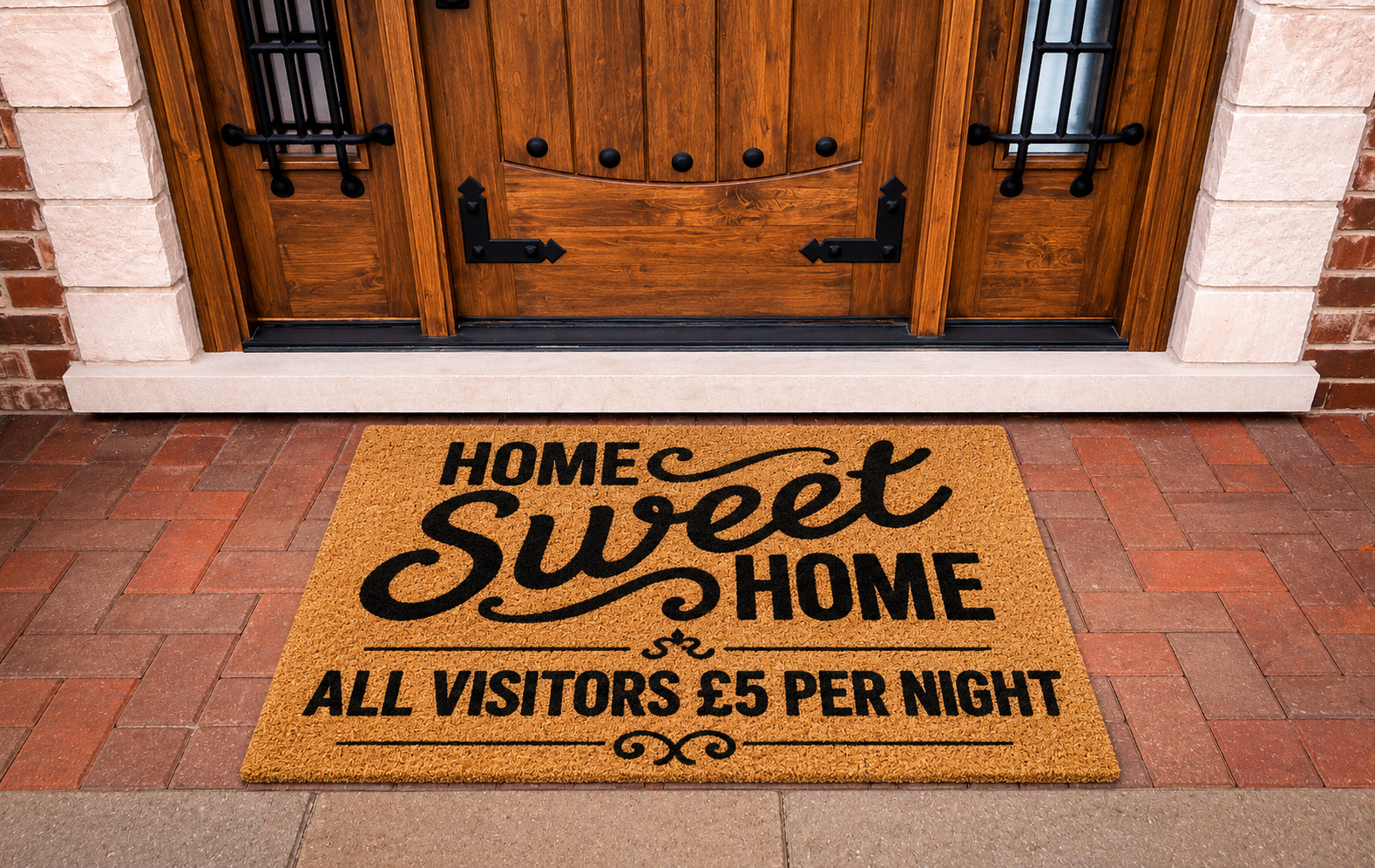
The Highland Council is consulting on a visitor levy which, if eventually approved, could mean a charge of £5 per room per night for hotels, B&Bs and similar accommodation, and £2 for hostels, campsites and caravan parks. This sounds straightforward. Nothing straightforward has ever required a twelve-week consultation.
I explained the proposal to Mr Gunn over breakfast.
“They’re thinking of charging visitors five pounds a night,” I said.
Mr Gunn continued buttering his toast. “To stay here?”
“In the Highlands.”
He stopped buttering. “Not in this house?”
“No.”
He resumed. This is one of the differences between us. I hear about a new system of taxation and immediately considers its social, economic and moral consequences. He establishes whether it affects the family and then continues eating.
The difficulty, as I see it, is not the five pounds. The difficulty is establishing who is a visitor. This is considerably more complicated in the Highlands than officials may realise.
We have tourists. Tourists are easy.
A tourist is a person wearing a waterproof jacket that cost more than your first car while standing in horizontal rain saying, “Apparently it clears up quite quickly.”
A tourist has a map.
A tourist stops the car in the middle of the road because there is a deer. A local stops because there are twelve deer.
A tourist photographs a Highland cow. A local wonders whose cow it is and why it is out.
The tourists can be identified.
But what about friends who are like relatives? My friend could arrive from Perth on Friday and stay until Monday. Is she a visitor? Technically, yes. Emotionally, no. Financially, possibly. She will sleep in the spare room, use hot water, consume electricity, eat biscuits and almost certainly leave a towel somewhere it cannot possibly dry.
If she stays three nights, is that £15? And if so, who collects it? Me? Because I am not comfortable presenting a card machine after pudding.
“Would you like coffee?”
“Yes, please.”
“That’ll be fifteen pounds.”
Families have stopped speaking for less.
And what happens if she brings something? This is important. A visitor who arrives empty-handed is one thing. A visitor carrying a Victoria sponge is economically different. Surely there must be an offset. Three nights at £5 is £15. One good Victoria sponge is easily worth eight. If she also brings eggs, we are approaching neutrality. By the time a woman arrives with a cake, six eggs and a jar of homemade raspberry jam, I would argue I owe her money.
I mentioned this to Mr Gunn. He said the levy would apply to paid accommodation. This was irritating because he was correct and spoiled several minutes of excellent reasoning.
The proposal is actually per room rather than per person, which creates another interesting social situation. Suppose two people share a room. Five pounds. Suppose four people somehow share the room. Still five pounds. Immediately I can see Scots reorganising sleeping arrangements. We are not mean. We are efficient. There is a difference, recognised mainly in Scotland.
My grandmother could have fitted eleven relatives into a two-bedroom house if somebody had told her there was a charge per room. People would have been sleeping vertically.
Someone would be in the bath.
“Don’t turn the tap on. Your Uncle Alec’s in there.”
Children would be placed in drawers. Aunties would be stacked according to snoring risk. By midnight the entire extended family would occupy one taxable room while three perfectly good bedrooms stood empty on principle.
This is not tax avoidance.
This is heritage.
The £2 charge for campsites also interests me. I have always admired camping because it involves paying money to live temporarily without the things you already own. You leave a house containing a bed, heating, electricity, a refrigerator and a lavatory in order to sleep on the ground beside a nylon wall while cooking beans outdoors.
Then you describe this as getting away from it all.
You certainly have.
Most of it is back at the house.
Now you may eventually pay another £2 for the privilege.
I imagine arriving at a Highland campsite after six hours in the rain.
“Good evening. Do you have a reservation?”
“Yes.”
“Tent?”
“Yes.”
“Electric hook-up?”
“No.”
“Running water?”
“No.”
“Bed?” “No.”
“Toilet in the tent?”
“Good God, no.”
“Excellent. That’ll be another two pounds.”
At least the proposed scheme recognises winter. The levy is intended to operate for nine months, excluding December, January and February. This is sensible. Anyone voluntarily holidaying in the Highlands in January has already paid. Not necessarily financially. But somewhere.
A January visitor has stood on a headland in waterproof trousers while sleet enters through the only opening in the jacket. They have watched daylight begin at approximately lunchtime and finish during the soup course. They have walked three miles to admire a view consisting entirely of cloud. Then they have returned to their accommodation, removed seven wet garments and discovered the weather forecast says “turning unsettled.” Charging another five pounds would seem vindictive.
Perhaps there should actually be a winter rebate. Stay in August: £5. Stay in October: £3. Stay in November: £1 and our apologies. Stay in January: somebody from the council meets you at the border with a flask.
The accommodation providers would apparently retain 5% of the levy to help with administration. Five per cent. I have run a household. Whenever someone says a small percentage will compensate you for administration, hide. Administration is not a percentage. Administration is a lifestyle.
There will be records. There are always records. Somewhere there will be a portal. There is always a portal.
Nobody ever says, “We have developed a simple system. Margaret has a biscuit tin.”
No. There will be an online account. There will be a password. The password will require eight characters, one number, one capital letter, one symbol and an emotional commitment you are not prepared to make.
Then there will be two-factor authentication. The authentication code will arrive on the telephone belonging to the person who set the account up eighteen months ago and has since moved to New Zealand.
Eventually a woman running a three-room B&B near Ullapool will be standing in her kitchen at eleven o’clock at night trying to remit £35 while a website tells her: SESSION EXPIRED.
She will say something not included in the Sustainable Tourism Strategy.
Meanwhile, upstairs, a German couple will be sleeping peacefully, having successfully visited Scotland without completing any administration whatsoever.
I am also interested in what the money may eventually be used for. I would like one small portion set aside for signs explaining passing places.
Not decorative signs. Not interpretive signs. Not signs with a QR code leading to an interactive visitor experience.
A large sign. Possibly illuminated.
THIS IS A PASSING PLACE.
USE IT.
YES, YOU.
If £9 million cannot achieve this, civilisation has failed.
I would also allocate funds to public lavatories. Visitors need lavatories. Women of a certain age regard the location of lavatories as essential geographical information. Women over fifty navigate Britain according to toilets.
“Inverness?”
“Forty minutes.”
“Public toilets?”
“Twenty-three.”
That is the useful map.
I would improve bins as well. Not because tourists are uniquely untidy. Most tourists are perfectly decent people who would happily put rubbish in a bin if Scotland occasionally provided one before the rubbish had celebrated a birthday.
And parking. We should spend some on parking. There are Highland beauty spots where forty people arrive simultaneously to experience solitude. They park along both sides of a narrow road, climb out carrying walking poles. Nothing destroys the romance of the Highlands quite like being trapped behind a rented motorhome while a man in expensive outdoor clothing photographs a sheep.
Still, I do have sympathy with visitors. They come here because it is beautiful. We tell them to come. There are websites telling them to come. There are advertisements telling them to come. There are photographs of empty beaches telling them to come. Then they arrive at the empty beach and discover 146 other people who saw the same photograph.
We cannot invite people into the house and then spend the entire evening looking surprised that they are sitting on the furniture. Tourism matters here. So perhaps asking overnight visitors to contribute a little towards the places they use is perfectly reasonable.
I am merely concerned about where it ends. Because once government discovers a category called “visitor,” somebody eventually develops subcategories: day visitor, overnight visitor, business visitor, leisure visitor, returning visitor, seasonal visitor, visitor with motorhome, visitor without motorhome, visitor who claims not to be a visitor because his grandmother came from Golspie.
This last category could be substantial.
There is a particular kind of visitor who arrives from Canada, America, Australia or New Zealand and announces within six minutes that he is actually Scottish. Not of Scottish ancestry. Scottish. His great-great-great-grandfather left in 1847. His name is Brad. He owns a tartan waistcoat. He has come home.
You cannot charge Brad a visitor levy. Brad has waited 179 years to return to the ancestral homeland. Brad will appeal. He has documentation. By teatime Brad will have established that he is descended from Robert the Bruce, Flora MacDonald and possibly a minor geological feature near Fort William. He will then ask where the clan castle is. Someone will point towards a hotel. He will stay there. Five pounds. Welcome home, Brad.
There is another category officials must consider: the person who owns a holiday home and insists they are local. This requires delicate handling.
“How long have you lived here?”
“Twenty-seven years.”
“Oh.”
“We come every Easter.”
That is not the same measurement.
I propose a Highland Visitor Test.
Question one: You meet another vehicle on a single-track road. The passing place is six feet behind you. What do you do? If you answer “reverse,” proceed to question two. If you answer “wait for the other person to reverse 400 yards around three blind bends,” you are a visitor.
Question two: The forecast says “light rain.” What do you wear? If you answer “a light jacket,” visitor. If you answer “everything,” local.
Question three: Someone says, “It’ll maybe brighten up.” Do you believe them? If yes, you’re a visitor.
Question four: You are offered tea. Do you say:
A. “No, thank you.”
B. “Do you have herbal?”
C. “Just half a cup.”
D. “Aye.”
Only one of these people is local.
Question five: A sheep is standing in the road. Do you photograph it? Visitor. Do you swear at it by name? Local.
There. I have saved the council twelve weeks.