
SSE Plans 130 New Scottish Jobs at Berwick Bank as Seabird Conditions Remain Unresolved
The offshore wind developer has announced a further 455 Scottish roles linked to its Berwick Bank B project, but most are existing or project-supported positions. Construction still depends on a final investment decision, while a disputed seabird compensation requirement has yet to be satisfied.
SSE has announced plans for 130 new jobs in Glasgow and Montrose as part of a wider package supporting 455 Scottish positions through its proposed Berwick Bank B offshore wind farm.
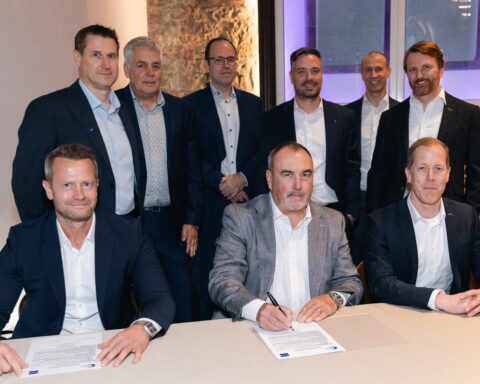
The announcement, made on 11 November, follows the selection of Siemens Energy as preferred supplier for wind turbines and offshore substations for the 1.4-gigawatt development in the outer Firth of Forth.
However, the distinction between new jobs and existing employment is significant. Of the 455 Scottish roles identified, SSE classifies 130 as newly created. The remaining 325 are positions expected to be supported through project delivery, engineering and servicing.
The project has secured a 20-year electricity generation contract and received Scottish Government consent, but construction is not yet guaranteed. SSE has not made its final investment decision, currently expected towards the end of 2027, and the Siemens Energy appointment remains subject to a final contract award.
There is also an unresolved environmental requirement.
In late October, SSE withdrew a proposed change to the conditions governing compensation for seabirds affected by the development. The company had sought permission to provide separate compensation plans as individual phases progressed, rather than securing approval of a plan covering the entire wind farm before construction.
That request has now been withdrawn, leaving the original requirement for a project-wide seabird compensation plan in place.
The development illustrates both the industrial opportunities arising from Scotland’s offshore wind expansion and the financial and environmental conditions that major projects must satisfy before proposed employment and investment become reality.
Where the Scottish Jobs Would Be Based
The latest announcement identifies employment across Glasgow, Montrose and a further port location in northern Scotland that has not yet been selected.
SSE plans to support 200 engineering and project delivery positions at its Waterloo Street office in Glasgow.
Of these, 80 are described as new jobs, expanding the team responsible for delivering Berwick Bank B.
Siemens Energy expects to support a further 255 positions across Scotland.
These include 50 project delivery roles associated with its new Glasgow office, 50 newly created positions at Montrose Port and up to 155 jobs connected with turbine pre-assembly operations at a northern Scottish port.
The identity of the port intended to accommodate the pre-assembly activity has not been announced.
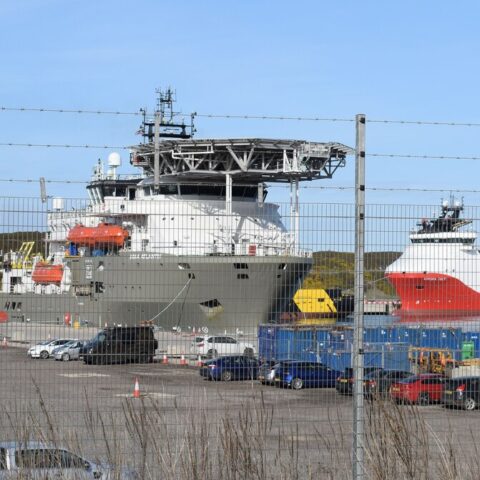
For Scotland’s port operators, this represents a potential commercial opportunity. Offshore wind construction requires substantial areas of land, heavy-lift equipment, quayside capacity and specialist marine services.
However, the jobs associated with that proposed activity should not be treated as confirmed employment at a named location before the relevant port and commercial arrangements are agreed.
The 50 newly created Siemens Energy positions at Montrose are intended to support servicing and maintenance during the wind farm’s first five years of operation.
They are separate from an earlier announcement by SSE concerning its proposed long-term operations base at Montrose Port.
In September, the company selected Montrose as its preferred operations and maintenance location for Berwick Bank B, identifying 100 new full-time jobs for technicians and engineers over the wind farm’s anticipated operating life of more than 35 years.
It also identified approximately 30 construction roles associated with redeveloping existing port offices.
The September and November announcements therefore concern different elements of the project’s employment requirements.
The latest 50 Siemens Energy positions should not be confused with SSE’s previously announced 100 long-term operational jobs.
Siemens Energy is also expanding its broader Scottish business, with a new Glasgow office expected to employ up to 150 people across renewable energy, grid infrastructure and servicing activities.
That company-wide figure is not an additional 150 Berwick Bank jobs. Some positions overlap with the project’s identified staffing requirements.
For employment projections to be meaningful, it is necessary to distinguish genuinely new posts, existing employees assigned to the project, temporary construction work and positions expected to continue throughout the wind farm’s operational life.
A Wider Package Exceeding 2,600 UK Jobs
The Scottish announcement forms part of a larger arrangement between SSE and Siemens Energy.
Across Britain, the companies expect the preferred supplier agreement to support 2,677 manufacturing, engineering, construction management and servicing roles.
Of that total, 2,222 are associated with Siemens Energy’s established operations in northern England.
These include turbine blade manufacturing in Hull, engineering and project delivery in Manchester, and offshore substation assembly and delivery activities in Newcastle.
The Scottish component accounts for the remaining 455 positions.
The scale of the arrangement demonstrates how a single offshore wind project can support employment well beyond the coastal area in which turbines are installed.
Wind farms depend on manufacturing, electrical engineering, foundation construction, subsea cable installation, port handling, specialist vessels and long-term maintenance.
Their supply chains extend across regions and can involve companies whose principal operations are outside the country hosting the generating equipment.
However, the 2,677 figure does not represent 2,677 wholly new jobs.
SSE describes the English component as existing and project-based employment. The Scottish component likewise includes substantial numbers of positions supported rather than created.
The more precise finding is that the preferred supplier arrangement is expected to support 2,677 UK roles, including 130 newly created Scottish posts identified in the latest announcement.
The distinction matters when assessing claims about the economic benefits of renewable energy investment.
Maintaining skilled employment is valuable, particularly in industries exposed to irregular project schedules and international competition. But protecting an existing job is not the same as creating an additional position.
Earlier Aberdeen Contract Accounts for Hundreds More Jobs
The Siemens Energy arrangement follows another significant supply-chain announcement made on 20 October.
SSE selected Aberdeen-based Seaway7, part of the Subsea7 group, as preferred supplier for the engineering, procurement, construction and installation of turbine foundations and subsea cables.
That agreement is expected to support 465 jobs across Britain, including approximately 400 in Scotland.
The projected work includes around 160 direct Seaway7 positions, with activity led from Aberdeen.
A further 105 jobs are expected to be supported indirectly through the UK supply chain.
Another 200 direct and indirect roles are associated with foundation marshalling operations at a Scottish port that has not yet been named.
These employment figures are projections associated with the proposed contract. Like the Siemens Energy appointment, Seaway7’s agreement is subject to final contract award and SSE’s investment decision.
Together with the September Montrose announcement, the two supplier arrangements take the number of Scottish positions SSE says will be created or supported through Berwick Bank B to almost 1,000.
That figure is cumulative: it combines previously announced positions with the latest 455 roles.
It should not be interpreted as almost 1,000 new permanent jobs, nor as evidence that all the positions have already been filled.
Nevertheless, the involvement of Seaway7 demonstrates how existing North Sea engineering capability may support Scotland’s emerging offshore wind industry.
The company has previously worked with SSE on developments including Beatrice and Seagreen, as well as projects elsewhere in British waters.
Foundation installation, subsea engineering and cable operations draw on experience developed over decades in the offshore oil and gas sector.
For Aberdeen and the wider North East, continued access to such contracts could help preserve specialist capabilities while the country’s energy industry changes.
The commercial challenge remains converting preferred supplier agreements and projected employment into funded contracts and work actually delivered from Scottish facilities.
The Electricity Contract Is Signed, but Investment Approval Is Outstanding
Berwick Bank B reached an important financial milestone in January when it secured a Contract for Difference through the UK Government’s seventh allocation round for renewable electricity generation.
The contract covers 1,380 megawatts of offshore wind capacity over 20 years.
Its strike price is £89.49 per megawatt-hour at 2024 prices, subject to subsequent indexation for inflation.
SSE formally signed the agreement with the Low Carbon Contracts Company in March.
Contracts for Difference are intended to reduce revenue uncertainty for renewable electricity developers.
When the relevant reference electricity price is below the contract’s strike price, payments generally support the generator. When the reference price exceeds the strike price, the generator makes payments back through the scheme.
The arrangement provides greater predictability for investment, although it does not eliminate construction costs, financing risks or obligations under environmental and planning legislation.
Nor does the strike price mean that households will pay £89.49 per megawatt-hour for their electricity.
Consumer bills depend on wholesale prices, network charges, supply costs, policy arrangements and other components of the electricity system.
SSE’s contract award gives Berwick Bank B an important route towards commercial development, but the company must still determine whether the project meets its investment requirements.
The final investment decision is expected late in 2027.
Subject to that decision, preparatory offshore construction could begin in 2028, with installation of turbines and offshore substations scheduled between 2030 and 2032.
The timescale is significant for Scottish suppliers. Some employment would arise during engineering and preparation, while other roles depend on construction, equipment installation or the beginning of commercial operations.
Not all the announced jobs would therefore materialise at the same time.
Seabird Compensation Remains a Major Condition
The latest economic announcement arrives against a continuing dispute over the environmental consequences of the wider Berwick Bank project.
Scottish Ministers granted consent for the offshore wind farm in July 2025.
However, the decision acknowledged that the proposed location is exceptionally important for seabirds and imposed conditions requiring the developer to provide suitable compensation for adverse effects.
The necessary seabird compensation plan must be approved before relevant construction work can begin.
The issue is particularly sensitive because the outer Firth of Forth supports internationally important breeding colonies.
These include northern gannets at Bass Rock, seabirds around the Isle of May, and colonies at Fowlsheugh and St Abbs.
The area also provides important feeding grounds for species including puffins, guillemots, razorbills and kittiwakes.
Environmental assessments have identified significant potential impacts arising from the proposed wind farm.
RSPB Scotland has highlighted projections for the full Berwick Bank development involving approximately 2,808 guillemots, 815 kittiwakes, 261 gannets, 154 razorbills and 66 puffins annually.
These are modelled estimates of impacts associated with collision and displacement, rather than recorded deaths. They relate to the wider proposed development and should not be attributed in their entirety to the 1.4GW Berwick Bank B phase.
The projections also depend on assumptions about bird movements, population responses and the eventual design and operation of the wind farm.
RSPB Scotland accepts that renewable energy is essential to addressing climate change, which itself threatens seabirds, but argues that Berwick Bank is located in an unusually sensitive area and that less damaging alternatives should be prioritised.
The Scottish Seabird Centre has raised similar objections.
The organisations argue that compensation measures cannot reliably replace the ecological value of breeding colonies and feeding grounds affected by a development of this scale.
The Scottish Government reached a different conclusion when determining the application.
Ministers accepted the importance of the project to renewable electricity generation and energy security, while requiring compensation arrangements to be developed and approved before construction.
This means the original consent was not an unconditional authorisation to begin building.
SSE Withdraws Proposed Change to Environmental Conditions
The position changed again during 2026.
In April, SSE applied to vary elements of the development’s consent and marine licences to allow certain conditions to be satisfied separately for each phase.
One proposed change concerned the seabird compensation requirement.
Under the variation sought, the developer could have submitted and obtained approval for a separate compensation plan for each development phase before construction of that phase.
The existing arrangement instead requires a project-wide plan.
Conservation organisations objected to the proposed relaxation, arguing that compensation should address the cumulative effects of the development rather than allowing individual phases to proceed under separate arrangements.
However, a statement from the developer, published by East Lammermuir Community Council on 29 October and subsequently updated, confirmed that SSE had withdrawn this part of its variation request.
The company explained that it had continued developing compensation measures for a project-wide plan and no longer considered the requested alteration necessary.
It also confirmed that the withdrawal did not change other aspects of its application to vary consent conditions.
The development is important because it means the original project-wide seabird compensation requirement remains in place.
It does not mean that every environmental objection has been resolved or that the compensation plan has received approval.
In August, the Scottish Government told Parliament that SSE was expected to submit the plan towards the end of 2026.
Ministers said consideration of the plan would involve consultation with NatureScot, Natural England and other advisers where required.
The publicly available material examined for this article does not establish that the final plan has yet been approved.
As a result, the project faces two separate outstanding requirements: SSE’s commercial investment decision and satisfaction of the conditions governing environmental compensation.
The first concerns whether the company commits the necessary capital.
The second concerns whether the proposed measures meet the requirements imposed when Scottish Ministers consented to the development.
Both matter to the construction timetable and the employment associated with it.
Scotland’s Offshore Wind Opportunity
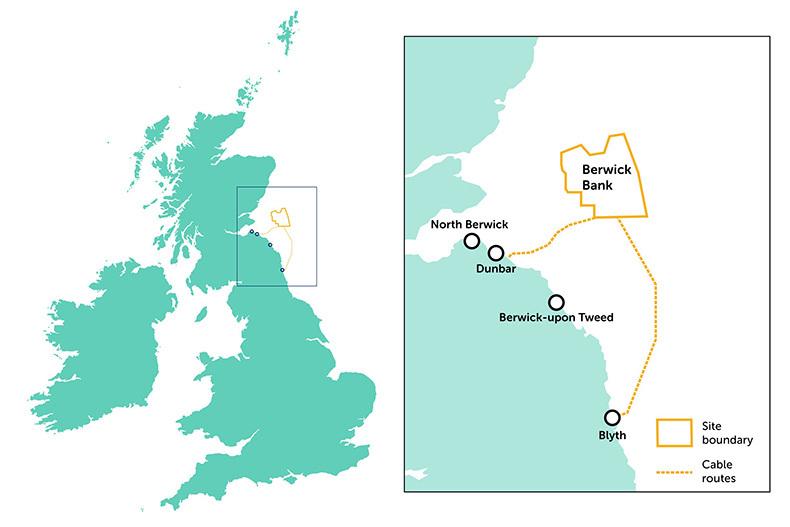
Berwick Bank B is the first phase of a much larger development proposed for the outer Firth of Forth, approximately 38 kilometres from the Scottish Borders coast.
The wider project is divided into three phases, designated A, B and C.
Its original consent documentation and much of SSE’s published project information refer to an intended generating capacity of approximately 4.1GW.
The company’s latest November announcement describes the combined project as 4.3GW, although the statement does not explain the difference from the earlier capacity figure.
The distinction should be retained when evaluating projected electricity output and the scale of the development.
SSE estimates that, if the entire project were built, it could provide electricity equivalent to more than 6% of Britain’s current annual demand.
That estimate concerns the full proposed development, not Berwick Bank B alone.
The electricity would contribute to the wider British transmission system, with proposed grid connections in East Lothian and Northumberland.
Actual generation would depend on the final installed capacity, wind conditions, operating performance and any restrictions affecting electricity transmission.
For Scotland, the economic opportunity extends beyond electricity generation.
The development could support work in engineering, vessel operations, offshore construction, power transmission, maintenance and specialist manufacturing.
Montrose is already developing a role as an offshore wind operations centre, serving existing projects including Seagreen.
Aberdeen’s offshore engineering businesses have experience relevant to subsea installation and turbine foundations.
Glasgow continues to attract engineering and project management functions associated with renewable energy and electricity networks.
The latest agreements suggest that these established capabilities remain commercially relevant to new offshore wind developments.
But the distribution of economic benefits also matters.
A large proportion of the Siemens Energy employment announced on 11 November is associated with its operations in England, including blade manufacturing and substation-related work.
Scottish businesses could secure further activity through foundation handling, port services, maintenance and other specialist contracts, but some proposed locations remain unconfirmed.
Ensuring that construction expenditure leads to sustained Scottish industrial capacity will depend on the contracts eventually awarded, the location of manufacturing and assembly operations, and the ability of domestic suppliers to compete.
What the Announcements Establish
The latest SSE announcement is evidence of further progress in developing the supply chain for Berwick Bank B.
Siemens Energy has been selected as preferred supplier for turbines and substations, while Seaway7 has been selected for foundations and subsea cabling.
Montrose has been identified as the preferred long-term operations base, and the project has secured a 20-year electricity price-support contract.
These are substantive commercial developments.
The distinction is that preferred supplier status is not equivalent to a completed contract, and a supported-employment estimate is not the same as a new job already created.
The 130 new Scottish positions announced on 11 November are a relatively small part of the 455 Scottish roles associated with the Siemens Energy package, while the broader figure of almost 1,000 Scottish positions combines new jobs, existing employment and temporary project-related activity.
The environmental position is also more complicated than the latest jobs announcement suggests.
Although the original offshore consent was granted in 2025, the seabird compensation requirement remains material to the project’s ability to proceed.
SSE’s withdrawal of the proposed change to that requirement indicates that a project-wide compensation plan remains the intended approach.
Whether the plan will satisfy the Scottish Government’s conditions remains an outstanding question.
Berwick Bank B therefore offers a substantial potential contribution to Scotland’s offshore energy industry, particularly through engineering and port operations in Glasgow, Aberdeen and Montrose.
The decisive measure of progress will be how many contracts become binding, how many new workers are actually recruited, whether the remaining conditions are satisfied and whether construction begins on the proposed timetable.
Those outcomes, rather than the headline total of jobs supported, will determine the scale of the project’s eventual contribution to Scotland’s economy.
Sources
More Than 2,600 UK Jobs Backed by SSE’s Berwick Bank B. SSE. 11 November 2026.
https://www.sse.com/news-and-views/2026/11/berwick-bank-b-to-support-more-than-2-600-uk-jobs-across-england-and-scotland/
Almost 500 UK Offshore Wind Jobs to Be Supported Through Seaway7 Agreement for SSE’s Berwick Bank B Project. SSE Renewables. 20 October 2026.
https://www.sserenewables.com/news-and-views/2026/10/almost-500-uk-offshore-wind-jobs-to-be-supported-through-seaway7-agreement-for-sse-s-berwick-bank-b-project/
SSE Confirms 100 New Jobs as Montrose Port Selected for Berwick Bank B Offshore Wind Operations Base. SSE. 28 September 2026.
https://www.sse.com/news-and-views/2026/09/sse-confirms-100-new-jobs-as-montrose-port-selected-for-berwick-bank-b-offshore-wind-operations-base/
SSE Secures CfD for Berwick Bank Wind Farm. SSE Renewables. 14 January 2026.
https://www.sserenewables.com/news-and-views/2026/01/sse-secures-cfd-for-berwick-bank-wind-farm/
SSE Renewables Signs CfD for Berwick Bank Phase B. SSE Renewables. 25 March 2026.
https://www.sserenewables.com/news-and-views/2026/03/sse-renewables-signs-cfd-for-berwick-bank-phase-b/
Growing Offshore Wind: Consent and Marine Licences Granted for Berwick Bank. Scottish Government. 31 July 2025.
https://www.gov.scot/news/growing-offshore-wind-2/
Berwick Bank’s Removal of the Variation Request for Seabird Compensation Plan. East Lammermuir Community Council, reproducing developer’s statement. 29 October 2026; updated 5 November.
https://elcc.scot/2026/10/29/berwick-banks-removal-of-the-variation-request-for-seabird-compensation-plan/
Berwick Bank Offshore Wind Farm: RSPB Position and Timeline. RSPB Scotland. Accessed 11 November 2026.
https://www.rspb.org.uk/helping-nature/what-we-do/influence-government-and-business/casework/berwick-bank-offshore-windfarm
Berwick Bank Developer Applies to Change Plans. RSPB Scotland. 2 June 2026.
https://www.rspb.org.uk/whats-happening/berwick-bank/berwick-bank-developer-applies-to-change-plans
Berwick Bank Offshore Wind Farm: Conservation and Campaign Information. Scottish Seabird Centre. Updated 2026.
https://www.seabird.org/conservation/berwick-bank-offshore-windfarm
Scottish Parliamentary Written Question S7W-02273: Berwick Bank Seabird Compensation Plan. Scottish Parliament. Answered 24 August 2026.
https://www.parliament.scot/chamber-and-committees/questions-and-answers/?page=97
Berwick Bank Wind Farm: Planning and Consents. SSE Renewables.
https://www.berwickbank.com/planning-overview
Berwick Bank Offshore Wind Farm: Project Overview. SSE Renewables.
https://www.sserenewables.com/offshore-wind/projects/berwick-bank/