
Four areas of eastern Scotland remain at the highest level of SEPA’s water-scarcity system despite the return of rain, with 136 abstraction licences temporarily restricted and one Fife river gauge having recorded its second-lowest flow in six decades.
Rain has returned to Scotland, rivers have risen in places and some catchments that spent part of the summer under severe pressure have recovered. Along sections of the east coast, the dry season has not ended with the weather.
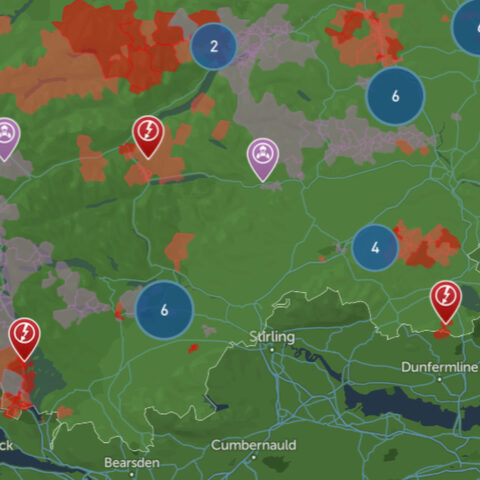
Stonehaven, the North Esk, North Fife and the East Neuk of Fife are at Significant Water Scarcity in the Scottish Environment Protection Agency’s latest published weekly assessment, dated 10 September.
The classification is the highest level in SEPA’s water-scarcity system. It is reached when representative river flows remain exceptionally low for 30 consecutive days.
Temporary restrictions are now applying to 136 licences allowing water to be taken from the environment in the four affected areas, primarily for agriculture.
The restrictions are not an indication that public drinking water is about to run out. SEPA’s scarcity system measures pressure on rivers, burns, groundwater and the wider water environment. Scottish Water manages the public mains supply separately.
What the restrictions show is that parts of eastern Scotland have remained dry for long enough that rainfall measured over days is competing with a deficit accumulated over months.
Fife provides the clearest example.
North Fife and the East Neuk first reached Significant Scarcity on 28 July after river flows had remained below the recognised low-flow threshold for 30 consecutive days. SEPA imposed restrictions affecting 99 abstraction licences, most of them supporting agricultural activity.
Rain subsequently raised river flows enough for both areas to leave Significant Scarcity in early August.
The recovery did not last.
Very low flows returned and persisted. By 10 September, both parts of Fife had crossed the 30-day threshold again and entered Significant Scarcity for a second time in the same summer.
On the River Eden, the Kemback gauging station has supplied one of the starkest measurements of the year. Earlier this summer it recorded its second-lowest flow in a record extending back 60 years.
The river runs through one of Scotland’s most intensively farmed regions, where surface water is an economic resource as well as an environmental one. Vegetable and other irrigated crops require water at particular points in their growing cycle, creating concentrated seasonal demand in catchments that can already be naturally drier than much of western Scotland.
By September, much of the main irrigation season had passed, reducing immediate demand for many growers. That does not remove the underlying hydrological problem. Different crops require water at different stages, and some businesses continue to depend on authorised abstraction after the main summer irrigation period.
SEPA’s restrictions remain tied to river conditions rather than the calendar.
The regulator monitors rainfall, groundwater, soil moisture and river flows, but the move into Significant Scarcity is based on sustained river behaviour. Its Drought Risk Assessment Tool tracks the number of consecutive days that flows at long-established gauging stations remain below a recognised low-flow threshold known as Q95.
Once that period reaches 30 days, regulatory action can follow.
Restrictions are intended to prevent already depleted rivers from being reduced further by authorised abstraction. Some uses are treated differently under SEPA guidance, including drinking-water supplies, groundwater abstraction, low-volume activities and certain operations where water is quickly returned to the same watercourse.
The system has become increasingly familiar to Scottish farmers and other businesses that rely directly on rivers and burns.
In 2022, SEPA temporarily suspended abstraction licences because of Significant Water Scarcity for the first time. Restrictions were imposed again in parts of Scotland during 2023. The mechanism that had existed largely as contingency planning has increasingly become part of summer water management.
This year the pressure has moved around the country as rainfall patterns changed.
At different points over the summer, Significant Scarcity has affected areas of the Borders, Aberdeenshire, Tayside, Dumfries and Galloway and Fife. More than 170 authorisations were affected by restrictions at the peak of the regulatory response in August.
Some rivers subsequently recovered.
Upper Tweed and Mid Tweed and Lauderdale had moved out of Significant Scarcity by the 10 September report. The Earn, Almond and Dee in Galloway also improved, while the Nith and Clyde returned to normal conditions.
Eastern Scotland continued to behave differently.
Ground conditions remained dry and groundwater levels were described by SEPA as very low for the time of year. Those deeper stores respond more slowly than a river can respond to a storm.
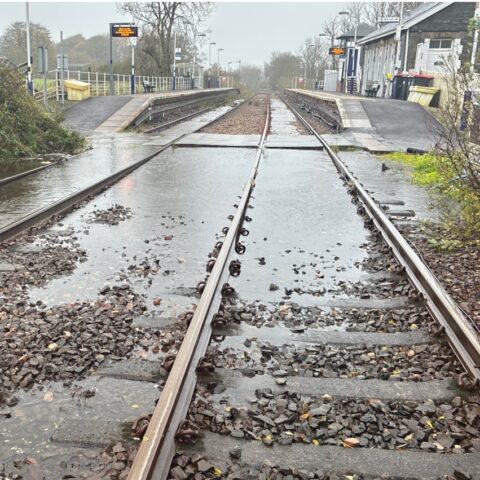
That helps explain an apparent contradiction familiar from recent Scottish weather: heavy rain, or even local flooding, can occur while a catchment remains in water scarcity.
A short period of intense rainfall can raise a river rapidly and produce surface-water problems without replenishing soil moisture and groundwater accumulated over a much longer period. If the river then falls again, the broader deficit remains.
SEPA had recorded Significant Scarcity somewhere in Scotland in each of six consecutive weekly reports by the beginning of September. The latest report continued that sequence.
The weather record also shows why national rainfall totals can conceal what is happening in individual eastern catchments.
Scotland as a whole received close to its usual rainfall over summer 2026, but the distribution was highly uneven. July brought only about 41 per cent of average rainfall across Scotland, with meaningful rain concentrated mainly in the north and west. In August, eastern Scotland received about 70.6mm, around 73 per cent of its 1991-2020 average.
East Lothian had already recorded only 59 per cent of its average rainfall during June.
SEPA says parts of Fife have accumulated below-average rainfall since March.
The result is not simply a dry riverbed. Low flows reduce the volume of habitat available to aquatic species and leave less water to absorb environmental pressures. The purpose of abstraction restrictions is to retain more water in the system while conditions remain unusually low.
The economic consequences run in the opposite direction. Water left in a river cannot simultaneously be used to irrigate a crop.
Scotland’s water-scarcity planning therefore operates as a controlled reduction in economic use when environmental conditions cross defined thresholds, with restrictions lifted when flows recover sufficiently.
Agriculture is particularly exposed because eastern Scotland combines relatively dry conditions with some of the country’s most productive land and highest concentrations of irrigated vegetable crops.
Scottish Government advice now tells farmers and growers to plan explicitly for drought and possible abstraction restrictions, including through water storage, rainwater collection, alternative supplies, soil-moisture monitoring and more efficient irrigation.
That planning reflects a broader change in how water scarcity is being treated.
The Scottish Government’s latest adaptation reporting records eastern Scotland experiencing its driest hydrological year since 1976 during 2025 after poor groundwater recharge and prolonged dry conditions. Government-supported research cited in its environmental research strategy points towards more frequent and longer hydrological droughts by the middle of the century, with climate change identified as the principal driver rather than increased abstraction demand.
The conditions of September 2026 cannot be reduced to a single national measure of drought. Large parts of Scotland are not at Significant Scarcity, and several catchments have improved sharply after rain.
The pattern is geographical and cumulative.
A river in the Borders can recover while one in Fife falls back below its low-flow threshold. Western rain does little for eastern groundwater. A wet weekend can interrupt a run of dry weather without restoring the stores beneath the soil.
That is the position now confronting the four east-coast scarcity areas.
Autumn has arrived. The abstraction restrictions have not yet gone with summer.
Sources
Scottish Environment Protection Agency — Water Scarcity Report, 10 September 2026.
SEPA water scarcity report — 10 September 2026
Scottish Environment Protection Agency — Recent rain has not erased dry summer’s impact on Scotland’s east coast rivers, 10 September 2026.
SEPA east-coast water scarcity release
Scottish Environment Protection Agency — Temporary abstraction restrictions extended into Fife, 28 July 2026.
SEPA Fife abstraction restrictions
Scottish Environment Protection Agency — Significant Water Scarcity guidance.
SEPA Significant Scarcity guidance
Scottish Environment Protection Agency — Summer’s legacy lingers into autumn for Scotland’s south and east, 3 September 2026.
SEPA September scarcity assessment
Met Office — July 2026 weather statistics.
Met Office July 2026 regional statistics
Met Office — August 2026 weather statistics.
Met Office August 2026 regional statistics
Met Office — June 2026 county rainfall statistics.
Met Office June 2026 statistics
Scottish Government — Scottish National Adaptation Plan annual report 2025-2026.
Scottish Government adaptation report
Scottish Government — Sustainable and regenerative agriculture: code of practice.
Scottish Government water-scarcity guidance for agriculture
Scottish Government — Environment, Natural Resources and Agriculture Research Strategy 2027-2032.
Scottish Government environmental research strategy