
One of Scotland’s oldest forms of land management is about to enter a new legal system. From 15 September, every act of muirburn in Scotland will require a licence, with additional restrictions where the fire is set on deep peat. The change reaches across grouse moors, farms, crofts, sporting estates, conservation projects and some of the country’s largest stores of carbon.
Every autumn, after the vegetation begins to dry and the traditional burning season opens, fires appear across parts of Scotland’s uplands.
They are often deliberate.
For generations, farmers, crofters, gamekeepers and land managers have burned patches of heather and other moorland vegetation to alter what grows there.
The practice is known as muirburn.
From 15 September 2026, carrying it out anywhere in Scotland without a licence will become an offence.
The new system is being introduced under the Wildlife Management and Muirburn (Scotland) Act 2024 and will be administered by NatureScot.
Applications are already open.
The change creates a national licensing regime around an activity that has shaped large areas of Scotland’s upland landscape but which has also become increasingly connected to arguments over peatland, carbon, wildlife, grouse shooting and wildfire.
It will also require land managers to establish something that has not previously determined the legality of ordinary muirburn in this way: how deep the peat is beneath the vegetation they intend to burn.
What Scotland means by muirburn
Muirburn has a specific meaning in the new law.
The Wildlife Management and Muirburn (Scotland) Act defines it as the setting of fire to, or burning of, any heath or muir.
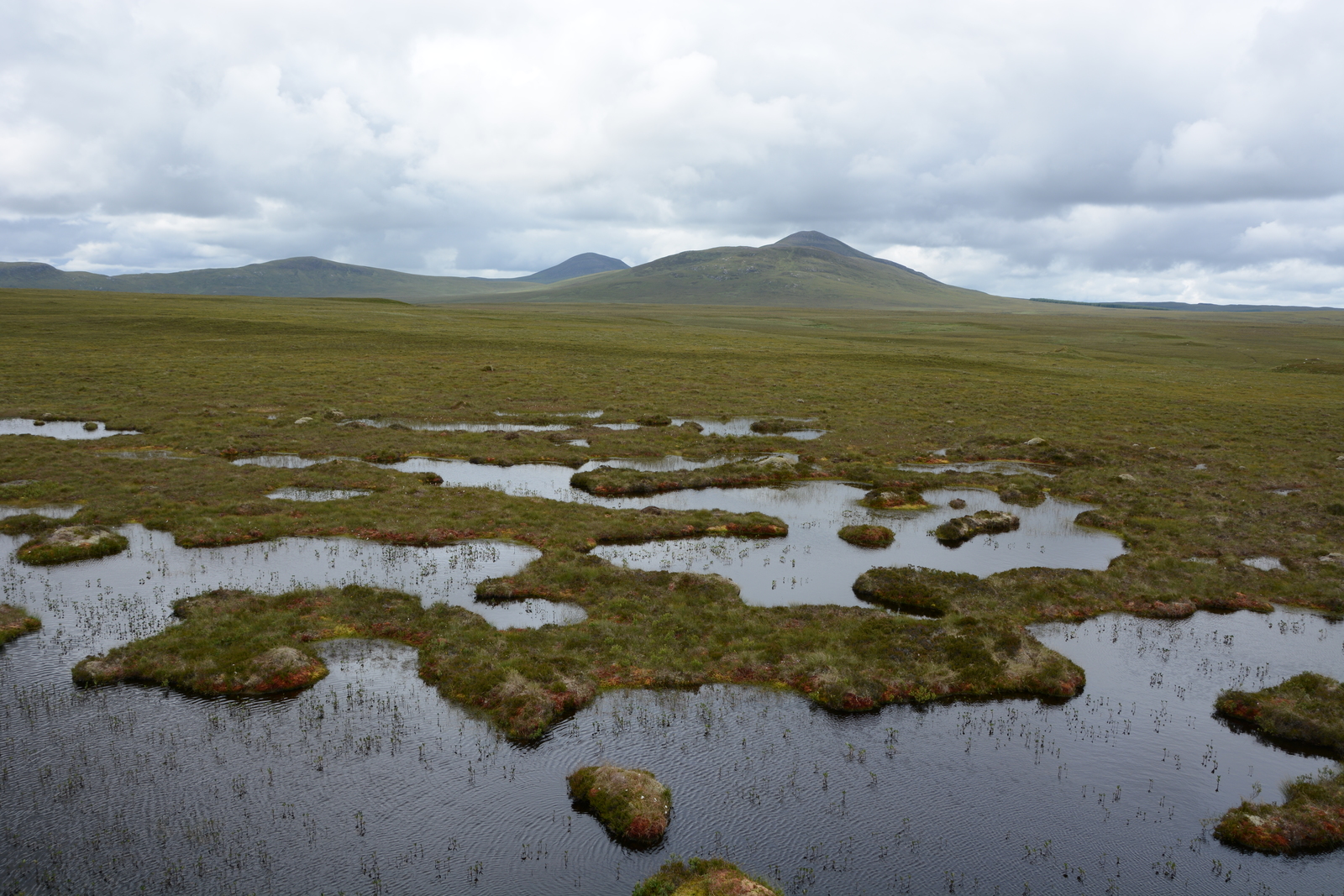
Muir is the Scots word for moor. NatureScot describes the habitats involved as predominantly open ground characterised by heather and moorland grasses.
The fire is deliberately managed.
Land managers normally burn relatively small areas rather than an entire moor. The resulting pattern creates vegetation of different ages.
Young heather and grasses can provide grazing and food. Older vegetation can provide cover. Burning can also remove accumulated vegetation and create breaks in combustible material.
The practice has consequently been used for several purposes.
On sporting estates it has been associated particularly with management of habitat for red grouse.
Farmers and crofters have used it to improve grazing.
Conservation managers can use carefully controlled fire as a habitat-management technique.
It can also be used as part of wildfire management.
The new law does not prohibit muirburn.
It changes the circumstances in which it can legally take place.
This does not mean burning peat in your home requires a licence
Muirburn is not the same thing as cutting peat for domestic fuel and later burning that peat in a stove or fireplace.
The licensing system regulates deliberate burning of vegetation growing on heath and moorland.
Peat itself has traditionally been cut, dried and used as domestic fuel in parts of Scotland, particularly in some island and rural communities.
Scottish Government environmental policy continues to permit peat cutting for domestic use.
The Government has also specifically retained peat-burning heating systems within Scotland’s rules for new buildings. Changes introduced from January 2025 allow bioenergy, including wood burners and peat-burning systems, in homes and other buildings under the New Build Heat Standard.
A person burning cut peat in a domestic stove or fire is therefore not carrying out muirburn merely by using that fuel.
The relevance of peat to the new muirburn system concerns what lies beneath the vegetation being burned outdoors.
If the moorland vegetation is growing above sufficiently deep peat, the land falls into a different legal category.
Forty centimetres changes the rules
The Act defines peatland for muirburn purposes as land where the soil contains a layer of peat more than 40 centimetres deep.
That measurement determines which licensing rules apply.
NatureScot has created an interactive map classifying land as peatland, non-peatland or uncertain.
Where the available information cannot establish peat depth, applicants seeking permission to burn for a non-peatland purpose may have to carry out physical surveys.
NatureScot requires uncertain areas to be surveyed on a 100-metre grid.
A peat probe is inserted into the ground and the depth recorded.
Applicants must submit results using NatureScot’s prescribed template.
If an uncertain area is not surveyed, it is treated as peatland for licensing purposes.
The result is that the underground structure of the moor becomes part of the regulatory system governing fire above it.
Burning on peatland will face narrower rules
The Act creates different permitted purposes depending on whether land is classified as peatland.
On non-peatland moor, a licence may be issued for seven purposes.
These include managing habitat for moorland game or wildlife, improving grazing for livestock, managing or restoring the natural environment, reducing wildfire risks, research and training.
On peatland, only five purposes are available.
They are restoring the natural environment; preventing or reducing wildfire damage to habitats; preventing or reducing wildfire risks to people or property; research; and training.
Managing habitat for moorland game is not included as a peatland purpose.
Neither is improving grazing for livestock.
NatureScot must also apply an additional test.
For non-peatland, proposed muirburn must be appropriate for the stated purpose.
For peatland, it must be both appropriate and necessary.
NatureScot’s applicant guidance says its assessment can consider the proposed scale of burning, the risks involved, the likely outcome and whether the objective could instead be achieved on non-peatland.
Peat is accumulated landscape
Peat forms when plant material accumulates in waterlogged conditions and decomposes only partially.
The process is slow.
Layers build over centuries and, in some Scottish peatlands, millennia.
Scotland contains extensive blanket bog, particularly across the Highlands and islands, as well as raised bog and other peat soils elsewhere.
These landscapes contain large quantities of carbon accumulated from previous vegetation.
When peat remains wet and functioning, much of that carbon stays in the ground.
When peat is drained, eroded or otherwise degraded, carbon can be released.
Scotland has consequently moved from treating peatland principally as marginal agricultural or sporting ground towards treating it simultaneously as habitat, hydrological infrastructure and a major carbon store.
The Scottish Government has committed substantial public funding to peatland restoration through Peatland ACTION and related programmes.
Restoration can involve blocking drainage channels, reprofiling eroded peat, stabilising bare surfaces and re-establishing vegetation.
Muirburn law now sits within that larger change in the treatment of peat.
Fire does not interact with every moor in the same way
The environmental effects of muirburn depend on where, when and how it is carried out.
Fire can alter vegetation structure, species composition and the amount of combustible material present.
Its effects can vary according to soil, peat depth, moisture, vegetation, weather, fire intensity and frequency.
A controlled surface burn on appropriate ground is not the same physical event as a fire that ignites or damages peat.
Dry peat itself can burn.
Once fire enters peat, it can continue below the surface, sometimes after visible flames have disappeared. Such fires can be difficult to extinguish and can consume carbon accumulated over long periods.
Scotland’s recent wildfire experience contributed directly to the timetable for the licensing system.
The legislation had originally been expected to bring the muirburn provisions into effect from January 2026.
In October 2025, Agriculture Minister Jim Fairlie announced that implementation would move to autumn 2026 following wildfires that had affected several parts of Scotland and damaged peatland.
The Scottish Government said the delay would allow further consideration of how licensing could be introduced without reducing the ability of land managers and the Scottish Fire and Rescue Service to prevent and respond to wildfire.
The commencement date is now 15 September 2026, the opening day of the standard Scottish muirburn season.
Wildfire has complicated the argument over burning
Removing vegetation by controlled burning can reduce the quantity of fuel available to a later wildfire.
That is one reason wildfire prevention remains a permitted purpose under the new legislation, including on peatland.
The relationship is not uniform across every landscape.
Vegetation can also be managed mechanically through cutting, mowing or other techniques. Rewetting degraded peat changes the flammability of the land itself. Grazing affects vegetation structure. Firebreaks can be created without burning an entire management area.
Different techniques have different costs and are not equally practical on steep, remote or inaccessible ground.
The new licensing regime does not prescribe a single replacement for muirburn.
For peatland applications, however, NatureScot can examine whether burning is necessary to achieve the stated objective.
That places alternative management methods within the licensing decision.
The grouse moor is part of the history
Muirburn is closely associated with Scotland’s managed grouse moors.
Red grouse feed heavily on heather. Land managed for driven grouse shooting has traditionally been burned in small patches to produce a mosaic of younger heather for feeding and older heather for shelter.
That management system became particularly prominent as sporting estates developed during the nineteenth century.
The resulting landscape can look natural while also being intensively managed.
Heather age, predator control, drainage, grazing and burning have all influenced the appearance and ecology of some moors.
The 2024 Act places muirburn within a wider package of wildlife-management legislation that also introduced licensing for land used to kill red grouse.
The legislation followed years of political and scientific argument over grouse-moor management, raptor persecution, traps and snares, burning and the condition of peatland.
From September, burning for the purpose of managing moorland game can continue on non-peatland where a licence is granted.
It is not one of the statutory purposes for which muirburn can be licensed on peatland.
Farmers and crofters are also affected
Scottish muirburn is not confined to sporting estates.
It has also been used to manage rough grazing.
Burning older vegetation can encourage younger growth that livestock can graze more readily.
The new system retains improving the grazing potential of moorland for livestock as a licensing purpose on non-peatland.
It does not permit that purpose on peatland.
The difference has practical implications in parts of Scotland where grazing land and peat soils overlap.
Applicants will need to know which parts of their land fall into each category.
A holding may contain both.
NatureScot’s licensing maps are intended to define the areas on which different purposes can be authorised.
Everyone carrying out muirburn will require training
The legislation also changes who can participate in a burn.
NatureScot says everyone intending to carry out muirburn must complete the Muirburn Practitioner Foundation Course.
The course is accredited by Lantra and contains online learning and practical assessment.
Only people who have completed the course will be permitted to participate in muirburn under the new system.
The licence itself must be held by the owner or occupier of the land, or applied for on their behalf.
A licence can run for a maximum of five years.
Licence holders must have regard to the new Muirburn Code.
Neighbours enter the legal process
The new code also formalises notification around proposed burning.
People carrying out muirburn must notify relevant landowners and occupiers within one kilometre of the proposed site, unless those people have stated in writing that they do not wish to receive notifications.
The notification must be given within the prescribed period before burning.
Where ten or more people require notification, the code provides for notice through a local newspaper.
Further information about the location, extent and timing of a proposed burn must be supplied where requested under the statutory arrangements.
The system therefore creates records around activity that could previously take place primarily as a matter of estate, farm or local land management.
Scotland’s moors are being asked to perform several functions at once
The legislation arrives during a broader change in how upland Scotland is used.
The same landscapes can contain sporting estates, sheep farms, crofts, forestry, wind farms, electricity infrastructure, water catchments, protected habitats and peatland restoration projects.
They also store carbon and support tourism and recreation.
Those uses can overlap geographically without sharing the same management objectives.
A piece of moor can be viewed as grazing land, grouse habitat, a carbon store, a wildfire risk, an ecological restoration site and part of a private estate at the same time.
The muirburn licensing system does not resolve those competing land uses.
It creates statutory conditions governing one of the techniques used to manage them.
The map beneath the moor will now determine what can happen above it
NatureScot’s peatland map is likely to become an increasingly familiar document for estates, farms and crofts applying for licences.
It combines existing survey information with modelled peat data from the James Hutton Institute.
The map is not treated as infallible.
Areas can be classified as uncertain, and applicants can submit physical survey evidence.
Land shown as peatland can also be challenged with survey data where an applicant seeks a non-peatland licence.
The system effectively converts peat depth into a regulatory boundary.
Two neighbouring pieces of heather moor may look similar at the surface while falling under different licensing rules because one contains peat deeper than 40 centimetres.
The person seeking to burn will have to establish which is which.
15 September begins the first licensed season
The standard Scottish muirburn season runs from 15 September to 31 March.
Out-of-season burning can be authorised for a narrower range of purposes, including environmental management, wildfire prevention and research.
Burning for moorland game management or improving livestock grazing cannot be licensed outside the normal season.
From the opening day of the 2026 season, carrying out muirburn without a licence will be an offence.
NatureScot will therefore begin the first season in which Scotland has a national record of authorised muirburn areas, purposes and licence holders.
For peatland, applicants will also have to demonstrate necessity.
For non-peatland, the traditional purposes of game management and grazing can continue within the licensing system.
Domestic peat fuel remains outside that definition of muirburn.
Scotland will continue to have controlled fires on its hills after 15 September.
The change is that each legal burn will now sit inside a national system recording where it can happen, why it is being done and whether the ground beneath it is peatland.
SOURCES
Muirburn Licensing — NatureScot — updated September 2026 — https://www.nature.scot/professional-advice/protected-areas-and-species/licensing/muirburn-licensing
Muirburn Licensing: Guidance for Applicants — NatureScot — 2026 — https://www.nature.scot/doc/muirburn-licensing-guidance-applicants
Guidance — The Muirburn Code — NatureScot — 2026 — https://www.nature.scot/doc/guidance-muirburn-code
Muirburn Code — NatureScot — updated 15 July 2026 — https://www.nature.scot/professional-advice/land-and-sea-management/managing-land/upland-and-moorland/muirburn-code
Wildlife Management and Muirburn (Scotland) Act 2024 — legislation.gov.uk — 30 April 2024 — https://www.legislation.gov.uk/asp/2024/4/contents
Muirbuirn Licence Scheme — Scottish Government — 9 October 2025 — https://www.gov.scot/news/muirbuirn-licence-scheme/
Agricultural Reform: Environmental Report — Strategic Environmental Assessment — Appendix D Assessment Findings — Scottish Government — 12 November 2025 — https://www.gov.scot/publications/sea-agricultural-reform-environmental-report/pages/13/
Guidance — Licensing — Out of Season Muirburn — NatureScot — updated 2026 — https://www.nature.scot/doc/guidance-licensing-out-season-muirburn