
In 1949, Angus MacLellan of Frobost in South Uist recited a Gaelic ballad about Fionn MacCumhail and a magical sword. His voice was recorded by folklorist John Lorne Campbell. More than seventy years later, the recording can still be heard through a Scottish website that has brought thousands of historic voices onto the internet.
Tobar an Dualchais, also known as Kist o Riches, is an online archive of Scottish speech, music, songs, storytelling and everyday life. Its recordings extend back to the 1930s and include Gaelic, Scots and English speakers from communities across Scotland and its diaspora.
The National Library of Scotland’s sound collections directory records approximately 50,000 items in the online archive.
The recordings come principally from three collections: the University of Edinburgh’s School of Scottish Studies Archives, the National Trust for Scotland’s Canna Collection and BBC Radio nan Gàidheal.
Together, they preserve interviews, stories, oral traditions, local histories, songs, poetry and accounts of occupations that have changed considerably over the past century.
Voices From the Islands, Farms and Fishing Communities
The collection includes people discussing crofting, fishing, farming, working conditions, marriage, emigration and village life.
Some recordings concern major historical events. Others describe ordinary activities: the preparation of food, the care of livestock, journeys between settlements, local customs and family traditions.
The speakers often use words and expressions associated with their own districts, providing evidence of how Scottish languages and dialects were spoken during the twentieth century.
Among the recordings is Jimmy MacBeath from Portsoy singing the bothy ballad Drumdelgie at the People’s Festival Cèilidh in 1952. The singer is introduced by Hamish Henderson.
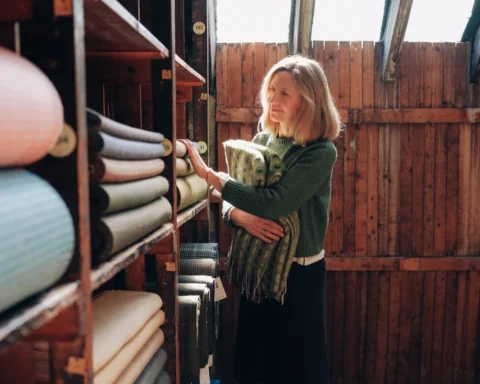
There is also a 1962 recording of Màiri Munro from Lochboisdale singing the Gaelic waulking song Hò Fàil O-ho Ghràidh. Waulking songs accompanied the traditional process of working newly woven cloth, with singers using rhythm to coordinate the movement of the fabric.
In another recording, made in 1982, Aberdeen storyteller Stanley Robertson tells a story about an elderly couple and a magical bannock.
The archive also contains an interview with Lachlan MacDonald, who discusses his childhood on St Kilda in a 1985 BBC Radio nan Gàidheal programme.
The People Who Collected the Recordings
The School of Scottish Studies was established at the University of Edinburgh in 1951 to collect and study Scotland’s oral traditions.
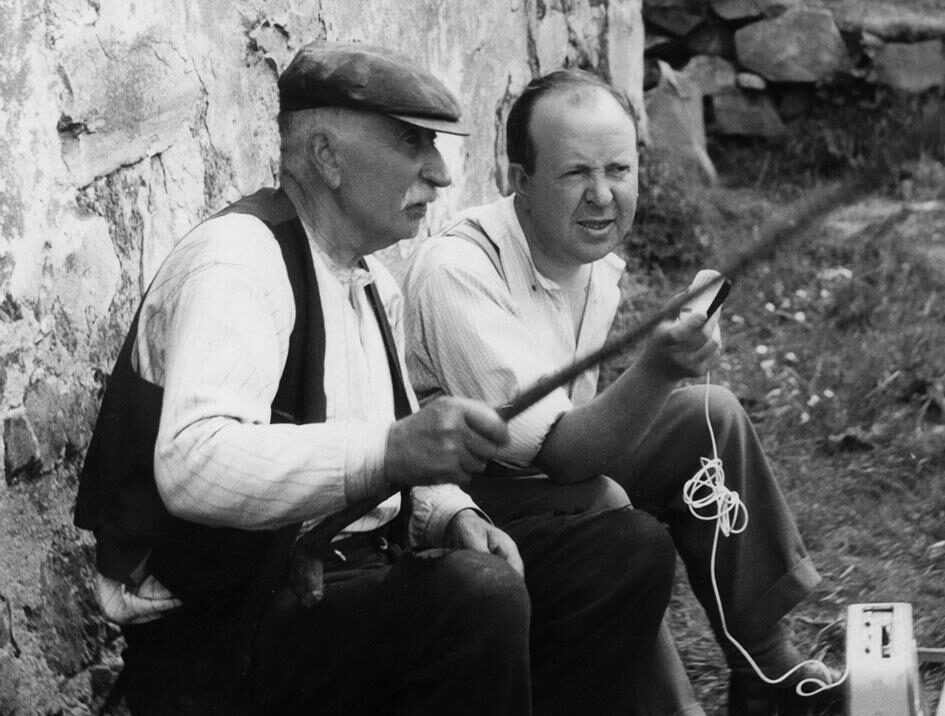
Researchers travelled with recording equipment to homes and communities, often interviewing people whose recollections reached back into the nineteenth century.
John Lorne Campbell and Margaret Fay Shaw undertook earlier recording work, particularly in Gaelic-speaking communities. Their Canna collection includes recordings made in Scotland and Nova Scotia during the 1930s, 1940s and 1950s.
Many of the original recordings were made on equipment that is now obsolete. The digitisation programme has transferred material from older formats into digital files that can be preserved and accessed online.
The work also involves identifying speakers, documenting locations, cataloguing subjects and establishing permissions.
Searching the Collection
Visitors can search recordings by subject, title, contributor and other catalogue information.
A person researching a family village may find interviews conducted there decades ago. A musician may locate an earlier performance of a traditional song. Local historians can examine how residents described occupations, customs and events in their own words.
The archive is also used in Gaelic language work. Its recordings have supplied words and expressions to Faclair na Gàidhlig, the historical dictionary project documenting the Scottish Gaelic language.
Not every recording held by the contributing archives has been placed online, and the sound quality of older material varies.
The University of Edinburgh also provides access to material through its physical School of Scottish Studies Archives.
Scotland’s Spoken History
Written records commonly preserve the activities of governments, institutions, landowners and public officials. Tobar an Dualchais contains the recorded recollections of crofters, fishermen, musicians, storytellers, labourers and families.
Their accounts document local events, customs and working lives, often in the languages and dialects used in their homes.
The website remains available for public use, with recordings searchable and playable online.
Website: https://www.tobarandualchais.co.uk/