
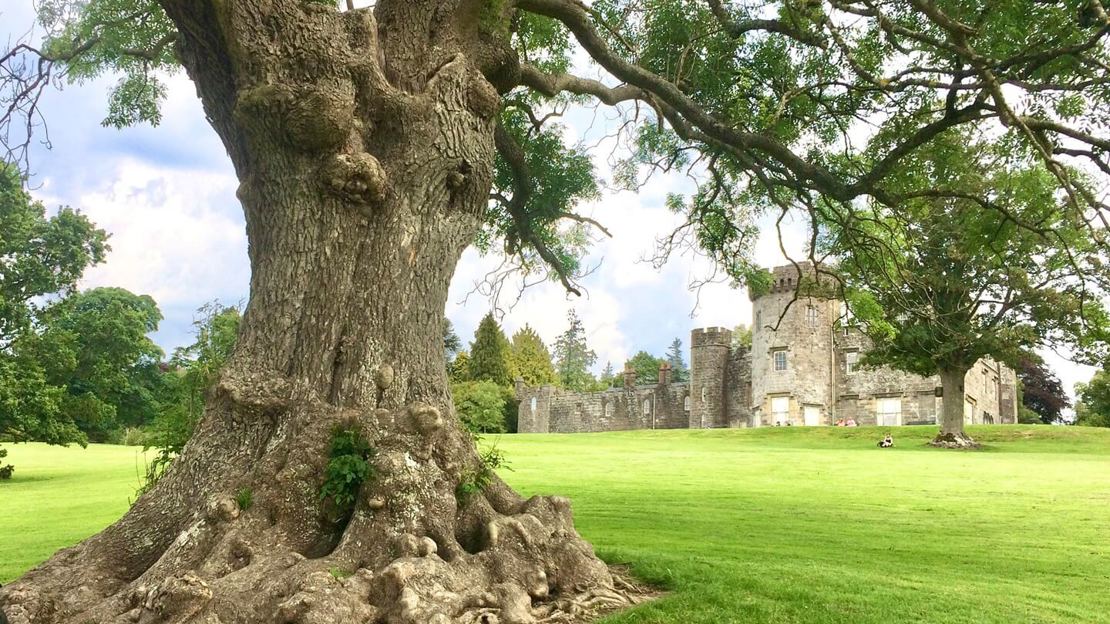
The veteran ash on the southern shore of Loch Lomond has endured hurricane-force winds, a suspected lightning strike, ash dieback and generations of visitors. Its nomination also draws attention to the uncertain future facing Scotland’s remaining mature ash trees.
A veteran ash tree standing on the lawn before Balloch Castle has been shortlisted for the Woodland Trust’s UK Tree of the Year 2026 competition, placing one of West Dunbartonshire’s most familiar natural landmarks among ten trees selected for their ability to survive extraordinary conditions.
The Balloch Castle Ash has a girth of 4.3 metres and occupies an exposed position overlooking the southern end of Loch Lomond. West Dunbartonshire Council describes it as approximately 200 years old, while the Woodland Trust’s more cautious competition record lists its age as more than 150 years. No definitive planting record has been identified, but either estimate places the tree within the period in which the former Balloch estate was being developed into the designed landscape visible today.
The tree was selected from public nominations as one of two wildcard entries in the competition. It is joined on the shortlist by the Earlstoun Lightning Oak near Dalry in Dumfries and Galloway, giving Scotland two of this year’s ten finalists. The theme for 2026 is “Against All Odds”, with shortlisted trees having endured disease, extreme weather, development, wartime damage and, in one case, life on top of a church tower.
In Balloch, the evidence of endurance is visible in the ash’s broad, heavily buttressed base, damaged trunk and irregular form. The Woodland Trust says it is believed to have been struck by lightning and has remained standing through repeated storms, including the destructive weather that crossed central Scotland in January 1968.
That event is commonly remembered as the 1968 hurricane, although it was not a tropical hurricane. Contemporary records described hurricane-force winds of exceptional strength across central and southern Scotland. Forest Research recorded a severe westerly gale on 15 January that caused extensive windthrow in Scottish forests, while reports from the Vale of Leven described mature trees being brought down around Balloch and Drymen Road.
The ash later acquired an accidental place in Scottish music history. It stood facing the stage when Oasis played Balloch Castle Country Park in August 1996, part of a period in which the park became a major outdoor concert venue. Runrig and REM have also performed there, and the ash has remained in the middle of the park’s public life as the crowds and stages have come and gone.
Its surroundings are themselves nationally recognised. Balloch Castle Country Park contains roughly 200 acres of ornamental woodland, open parkland, gardens, meadow and shoreline. The present Gothic-style castle was built in 1808 for the Glasgow merchant and banker John Buchanan of Ardoch, who began laying out the estate and planting unusual trees and shrubs. The work was continued after Gibson Stott bought the property in 1830.
Glasgow Corporation bought the estate during the early 20th century to improve public access and encourage travel to Balloch. It later became a country park and now forms the only country park within Loch Lomond and The Trossachs National Park. Historic Environment Scotland’s inventory describes the designed landscape as having outstanding scenic, architectural and nature-conservation value, with its historic collection of trees and shrubs receiving a high assessment for horticultural interest.
The nomination is especially pertinent because the Balloch tree is living with ash dieback rather than having defeated it conclusively. The fungal disease, caused by Hymenoscyphus fraxineus, produces progressive leaf loss and damages the tree’s ability to transport water. Younger ash trees frequently die, while older specimens may decline more slowly or remain alive for years, sometimes with the disease compounded by root infections and other stresses.
Forestry and Land Scotland estimates that between 50 and 75 per cent of Scotland’s approximately 11 million mature ash trees could die over the next two decades. Diseased trees can become brittle and require careful assessment where they stand beside paths, roads or buildings. However, forestry guidance also cautions against removing every affected tree prematurely: some continue to survive, and disease-tolerant trees are needed to produce the next generation of naturally resistant ash.
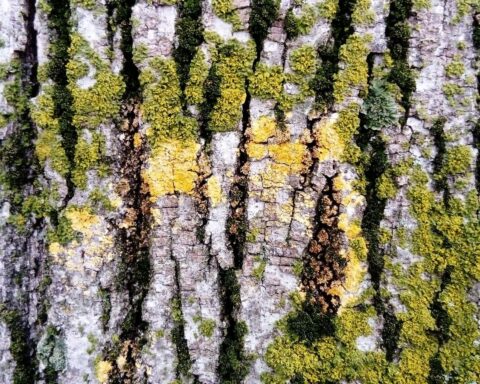
Older ash trees also carry ecological value that cannot quickly be replaced by planting saplings. Their comparatively alkaline bark supports mosses and lichens, while damaged limbs, hollows, crevices and decaying wood provide habitat for fungi, insects, birds and other wildlife. NatureScot identifies old ash as particularly valuable for important lichen communities, including species associated with Scotland’s western woodlands.
The Balloch tree must also contend with its popularity. The Woodland Trust estimates that more than one million people visit the park each year and lists heavy footfall among the pressures it has survived. Visitors regularly sit beneath the canopy, picnic beside the trunk and stand on the exposed roots for photographs. The attention demonstrates the tree’s place in the community, but continued survival will depend upon inspection and careful management as disease, weather and public use place competing demands on an ageing living structure.
Councillor David McBride, West Dunbartonshire Council’s convener of infrastructure, regeneration and economic development, said the tree had been enjoyed by generations of residents and visitors and had become part of the character of Balloch Park. Vice-convener Councillor Lawrence O’Neill said the nomination offered an opportunity to celebrate the area’s natural environment and encouraged the public to support it.
The competition itself should not be confused with a new statutory protection. Balloch Castle’s wider designed landscape is included in Scotland’s national inventory, but inclusion does not place a duty upon an owner to maintain or improve a site. Individual trees may receive separate protection through planning controls, including Tree Preservation Orders, but a Tree of the Year nomination is principally intended to raise public awareness.
Scottish trees have won the past two UK competitions. The remote Skipinnish Oak was victorious in 2024, followed by Glasgow’s Argyle Street Ash in 2025. Both entered as public wildcards, the same route by which the Balloch Castle Ash reached this year’s final shortlist.
Voting remains open until 5pm on 29 September, with the winner due to be announced in early October. Whatever the result, the nomination records the Balloch ash as more than attractive scenery. It is a surviving part of an early 19th-century landscape, a witness to one of Scotland’s most destructive storms, an accidental concertgoer and one of the mature native trees now carrying the consequences of a disease reshaping the Scottish countryside.
Sources
Woodland Trust — Vote For Your Tree Of The Year 2026
https://www.woodlandtrust.org.uk/trees-woods-and-wildlife/british-trees/tree-of-the-year/
Woodland Trust — Tree Of The Year 2026 Shortlist Announced
https://www.woodlandtrust.org.uk/press-centre/2026/07/tree-of-the-year-shortlist-uk-toughest-trees/
West Dunbartonshire Council — Balloch Ash Tree Nominated As Tree Of The Year
https://www.west-dunbarton.gov.uk/council/newsroom/news/2026/july/balloch-ash-tree-of-the-year
West Dunbartonshire Council — Balloch Castle Country Park
https://www.west-dunbarton.gov.uk/leisure-parks-events/parks-and-greenspaces/parks/balloch-castle-country-park
West Dunbartonshire Council — Balloch Castle
https://www.west-dunbarton.gov.uk/leisure-parks-events/museums-and-galleries/collections/buildings/castles-and-country-houses/castles-and-country-houses-vale-of-leven/balloch-castle
Historic Environment Scotland — Balloch Castle Designed Landscape
https://www.trove.scot/designation/GDL00042
Forestry And Land Scotland — Ash Dieback
https://forestryandland.gov.scot/what-we-do/conservation/habitat-conservation/pests-and-diseases/ash-dieback
Scottish Forestry — Ash Dieback In Scotland
https://www.forestry.gov.scot/ash-dieback-scotland
NatureScot — Ashwood
https://www.nature.scot/landscapes-and-habitats/habitat-types/woodland-habitats/ashwood
Forest Research — Windblow Of Scottish Forests In January 1968
https://www.forestresearch.gov.uk/publications/archive-windblow-of-scottish-forests-in-january-1968/
UK Parliament — Scotland Storm Damage, 16 January 1968
https://api.parliament.uk/historic-hansard/commons/1968/jan/16/scotland-storm-damage